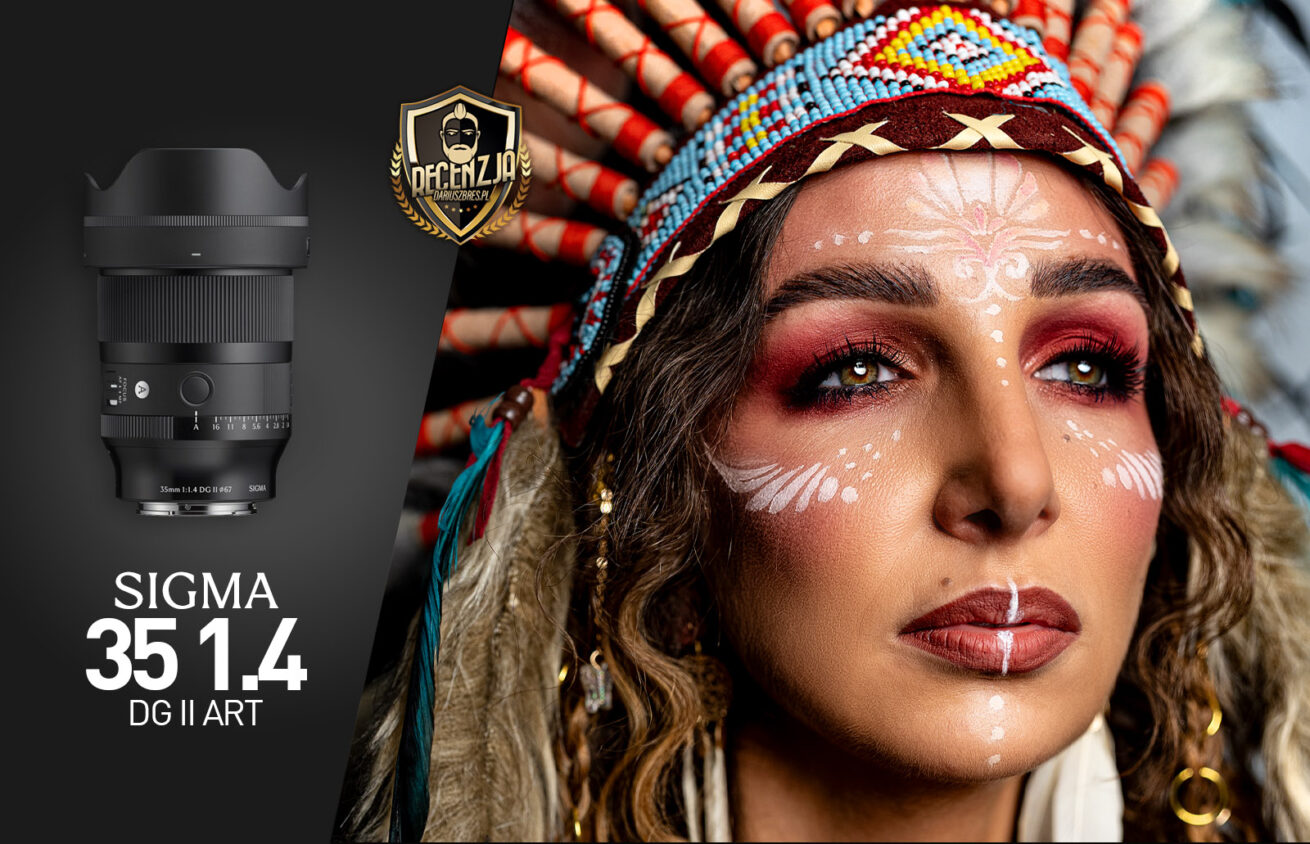
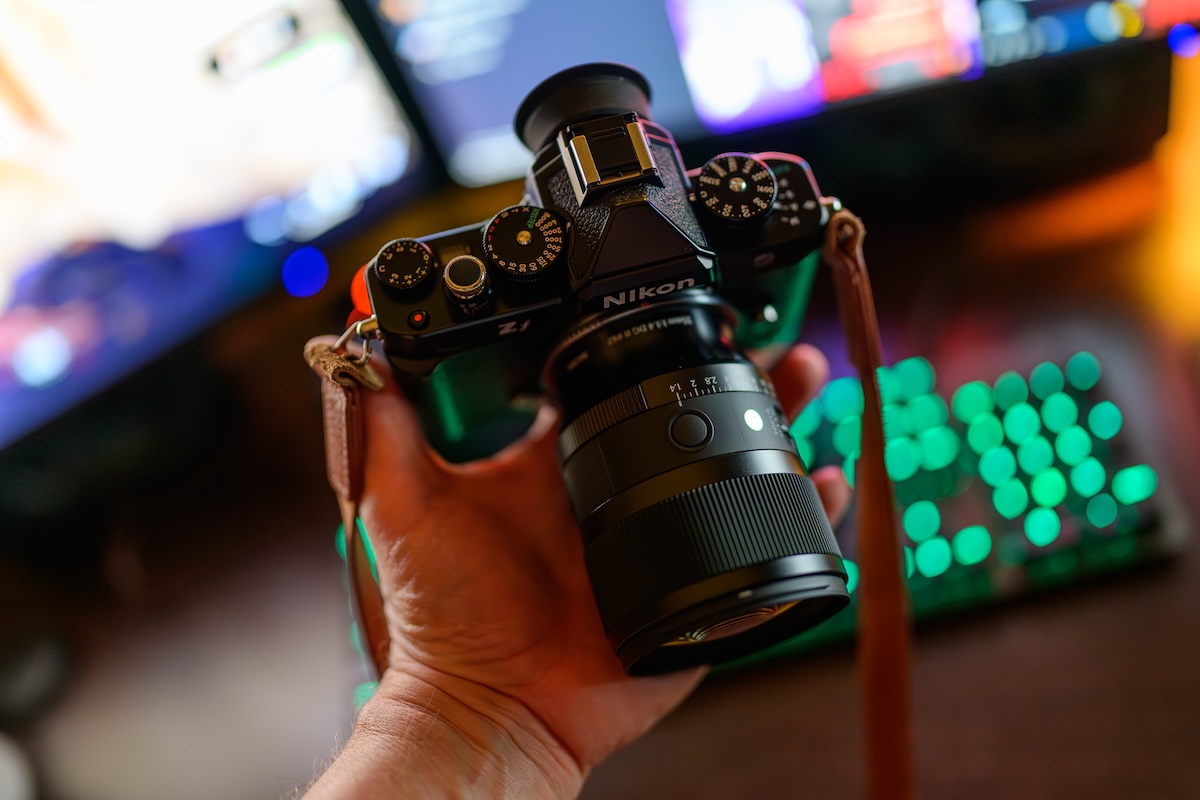
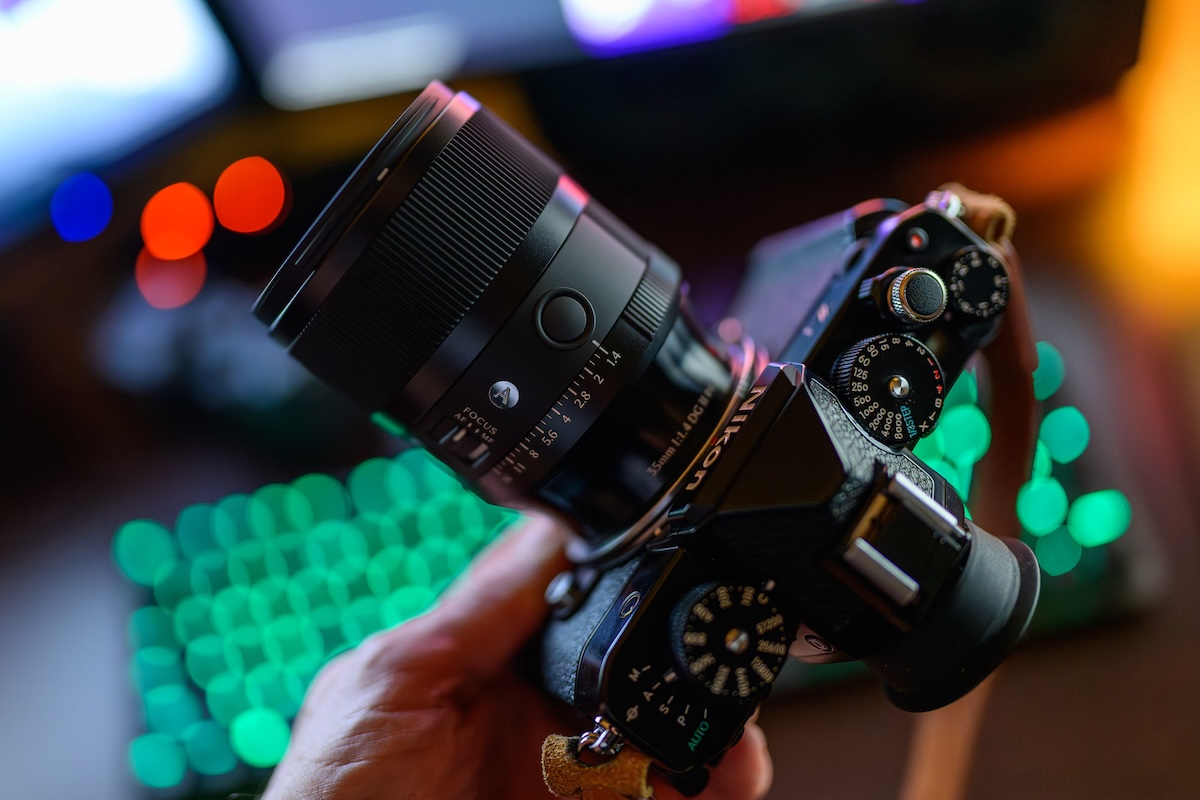
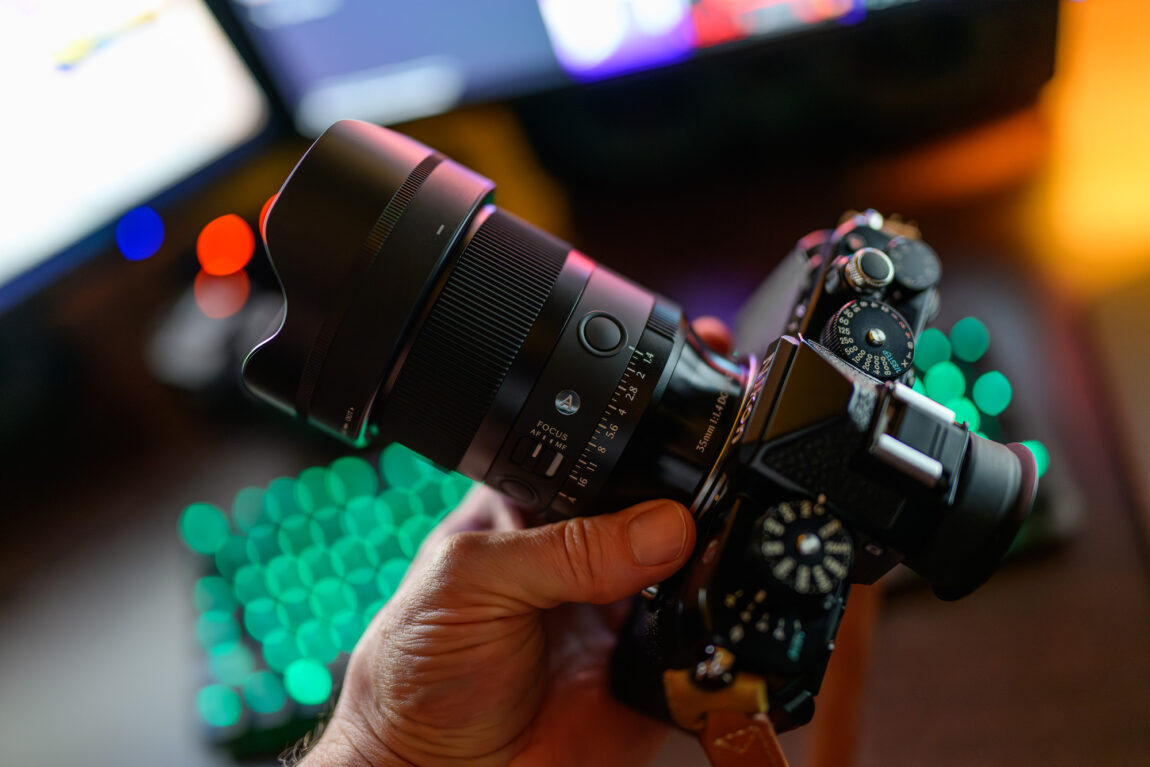
This Sigma 35mm f/1.4 DG II Art lens ($1,059) reviewed on the Nikon Zf & Z9 cameras with a Megadap Pro+ adapter is by Dariusz Breś (Instagram | Facebook | Flickr | Previous posts):
I’ve had too many 35mm lenses to count: big and small, heavy and light, light and dark… No wonder, it’s the standard focal length in the world of prime lenses. Today I’ll be reviewing just such a standard: the second installment of the 35 Art line, the Sigma 35mm f/1.4 DG II Art lens.
Construction

The Sigma 35 1.4 DG II Art is a very small lens – light and compact. It fits perfectly in your pocket. It weighs just 525 g. Compared to the previous 2021 model, the length has been reduced by 14% and the weight by 20%. That’s a good result, considering the five-year difference.
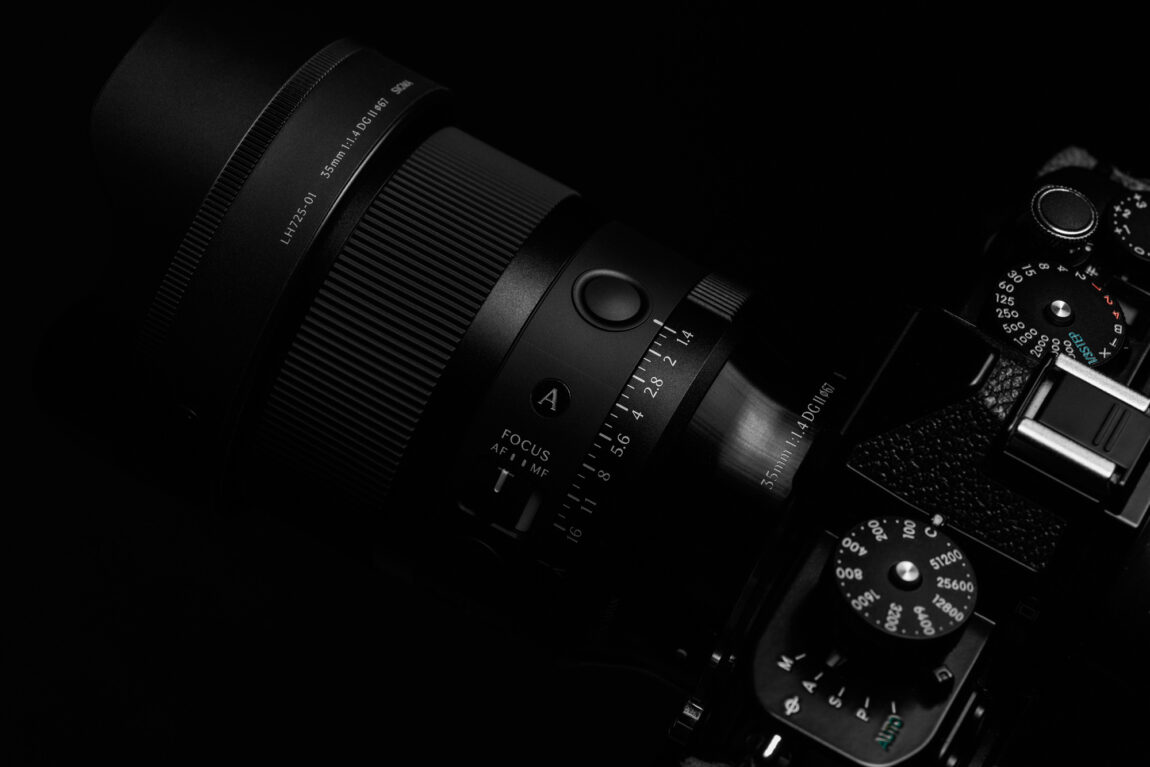
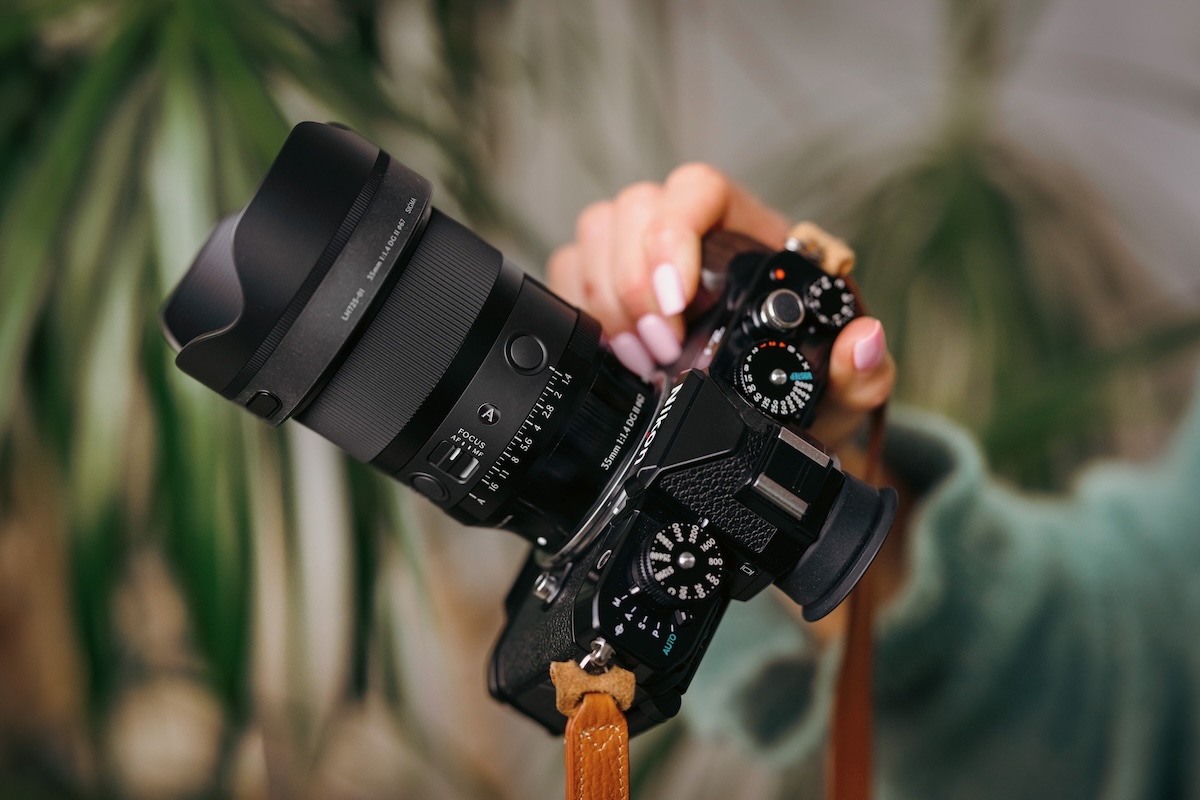
This little guy has a solid build: a large manual focus ring covered in ribbed rubber. A second ring controls the aperture; there’s also an aperture lock switch and a switch for stepless or smooth operation. There’s also an AF/M mode switch and two function buttons to which you can assign whatever you want.
Image, Bokeh, Focus

The new 35mm’s rendering combines modern sharpness with an almost painterly quality of blur. The lens generates a very distinct three-dimensional effect; the subject literally “pops” from the background, which, despite its considerable softness, retains a unique edge (giving that sought-after ‘soap-bubble’ bokeh). Of course, to capture such a frame, you need a photographer who thinks: ‘I have to get as close as possible and shoot against the light.
Importantly, the push for smaller dimensions hasn’t come at the expense of bokeh balls. They’re clean, clear, and free of the distracting ‘onion ring’ effect. Onion rings are typically caused by imperfections in the polishing of aspherical elements. What do they actually look like? Picture a circle with a dot in the center and concentric rings inside, much like a cut onion – a rather nasty effect. Fortunately, I didn’t notice any of that here. The image remains vibrant, with excellent microcontrast.
There’s no such thing as a sterile, boring image here; the Sigma can transform an ordinary background into a vivid, cinematic tale. Most lenses paint a picture that’s painfully accurate, but the Sigma 35mm f/1.4 DG II Art steps into the frame like a pro and cleans house. This isn’t some soft, mushy blur for good boys – this bokeh has bite, with distinctive fringing and texture that adds drama to the shot. It’s not called ‘Art’ for nothing, ladies and gentlemen.
As for sharpness, in short: this Sigma is a beast. There’s no such thing as ‘soapy’ wide open. Put it on the body, set it to 1.4, and you get an image so sharp you could cut pickles for a salad. Seriously, every detail, every texture – spot on, down to the smallest nuance.
Contrasts are pure, edges perfectly defined, and there’s zero aberration. The Japanese engineers have squeezed every last drop out of these lenses. The new Sigma’s sharpness literally shines from every corner.
The true artistry of this new glass is evident in the nighttime photos: those starbursts on the streetlights are proof of perfectly corrected optics. The flares are symmetrical, razor-sharp, without any mess or diffuse ‘halo’ around the light source – even though the streetlights hit the lens squarely, which is quite a feat for such a compact lens.
And I’ll also share a secret for achieving perfectly circular bokeh across the entire frame, like the Plena. Just stop down your lens… amazing, right? That was ironic. Remember that you can control the look and plasticity of your image with your lenses, because I have a feeling some people forget that.
It’s worth noting that with Sony, stopping down is often forced by the physical limitations of the small bayonet mount, which simply cuts off light in the corners – hence the cat’s eye effect. Well, we can’t physically overcome that unless we switch to a new bayonet mount the size of the Nikon Z, hehe.
Autofocus

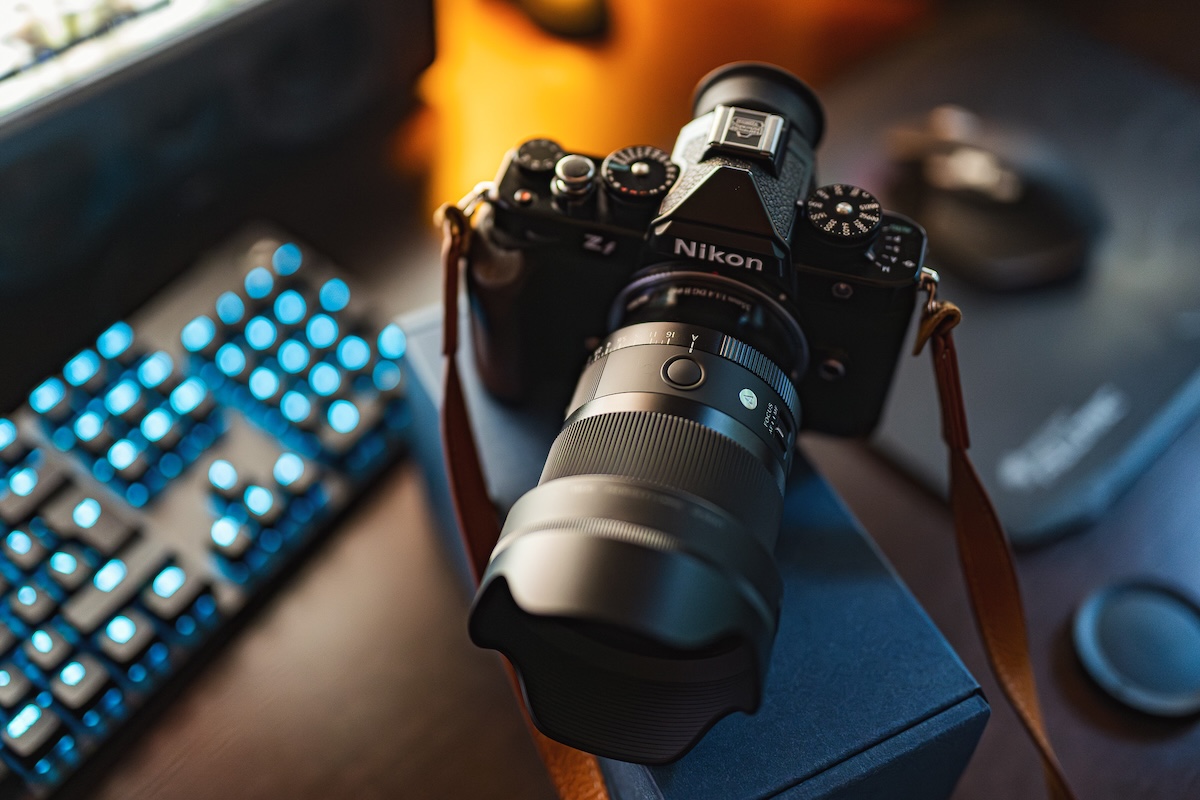
I’ve used the Sigma on a Sony A7V, a Nikon Zf, and a Nikon Z9 – on the Nikons, of course, via a Megadap Pro+ adapter. It feels like the fastest 35mm I’ve ever held; I’d even say it’s aggressive, like a hungry pit bull on a short leash—it snaps to focus in a split second and doesn’t let go of the target by a millimeter. On my Nikon Zf, via the adapter, it works faster than my native Nikkor 35 1.2 S.
Ugh, some might say: heresy! Impossible! Nooooo, it’s possible. The answer is simple: the Sigma 35 1.4 DG II Art has two linear motors (front and rear), while the Nikon still uses stepper motors, which are much weaker and slower.
Because this Sigma is so incredibly fast, everything works smoothly. You can feel the power immediately after turning the camera on and acquiring initial focus—there’s no irritating second-guessing. The elements move with such smoothness that you feel like they’re reading your mind. Eye detection, object tracking, and everything else are seamless.
Use

I spent quite a bit of time with the Sigma 35 1.4 DG II Art, from winter to spring. I shot with it in rain and snow. Zero stutters. Well, almost… because my Sony A7V died in the snow, and I had to pull the battery—it probably didn’t like the weather. By the way, that’s not the glass’s fault but the camera body’s.
Very pleasant to use. Small and lightweight, it makes for incredibly fun photography when attached to a Sony A7V or Nikon Zf.
This isn’t one of those bricks that, after an hour hanging around your neck, makes you think of a visit to the physiotherapist. Here we have a setup that fits into a tiny bag and is practically unnoticeable on your shoulder or in your hand.
This lightness changes the way you approach photography – you’ll find yourself lifting the camera to your eye more frequently, searching for unusual angles because the equipment doesn’t tire you out. The Sigma 35 1.4 DG II Art proves that professional optics don’t have to weigh as much as a gym dumbbell.
It’s a good companion for long hours of wandering around the city or for dynamic reportage where mobility is paramount. Personally, I always take my favorite Nikon Zf on trips or family events. I used to shoot with the I-Series because it’s small, lightweight, and fits the Zf’s style. Currently, this 35mm is replacing the I-Series for me because, above all, it’s faster, while being similar in size and weight.
I’ve started using the aperture ring on my lens a lot. I normally use the command dial on the camera body, but since the Nikon Zf is built around tactile manual dials, it feels like a missed opportunity not to use the lens ring. I have to say, changing the aperture this way is actually faster than turning the camera dial. It is also far more satisfying and simply fits the Zf’s vintage aesthetic perfectly.
I really liked it, and it’s a similar size and weight to the 85 1.4 Art, so you can conquer the world 🙂 See what the difference is between the 1.2 and the 1.4. Now go to town with those 1.2 bricks, man, come on.
For whom?

Perhaps it’s easier to say who this lens isn’t for: those who use zooms and don’t want to switch to primes. Everyone else will be delighted with the new Sigma. Small, light, and strong-minded, it will find a home with 90% of photographers of all stripes. Reportage, street photography, fast-paced wedding action, or simple trips and “worksite visits.”
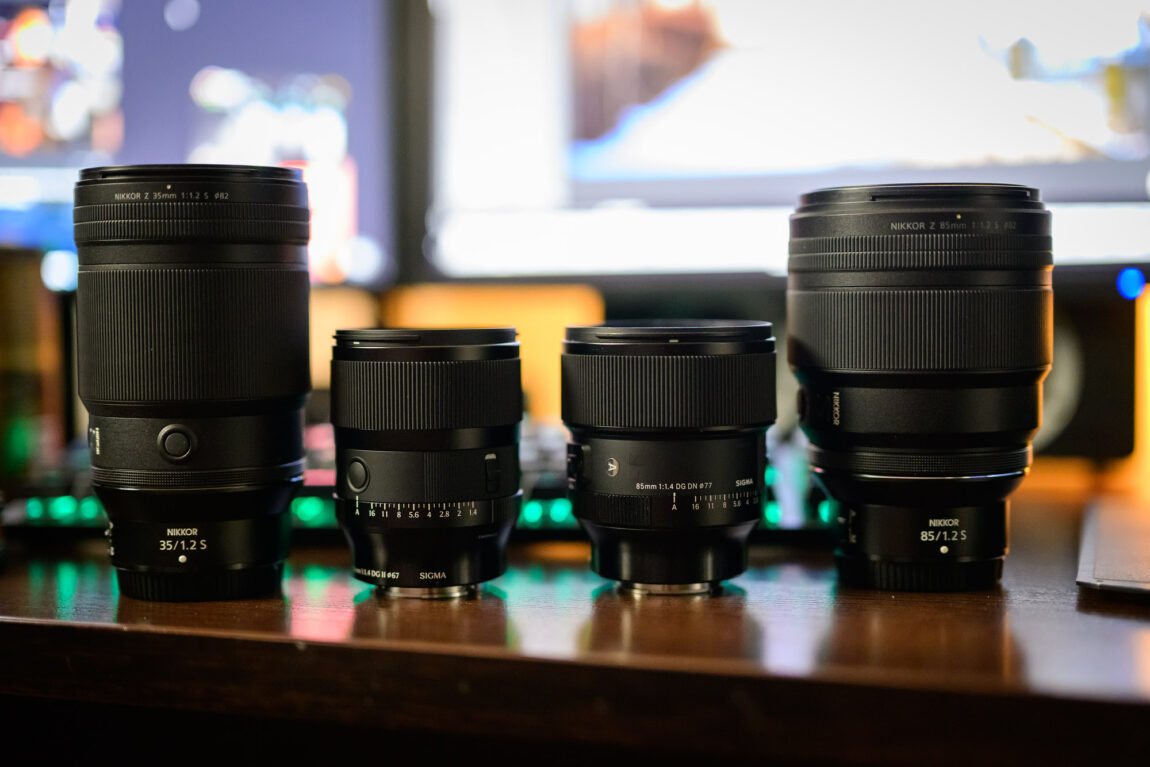
Personally, I prefer 1.2 for professional work (35 1.2, 50 1.2, 85 1.2), but for God’s sake, you don’t always need such brightness, especially at the cost of kilograms and dimensions.
Even though I have the 35 1.2, I’ll still buy the 35 1.4 II for the reasons I’ve already mentioned. It’s the perfect little lens for my Zf for everyday shooting. In fact, I recently took it to a major event instead of the 1.2 because of limited space in my bag. 😉 Yes, I know I have a Nikon, but I also have Megadaps – I’m not worried about speed or accuracy. This setup is faster than native Z lenses with stepper motors.
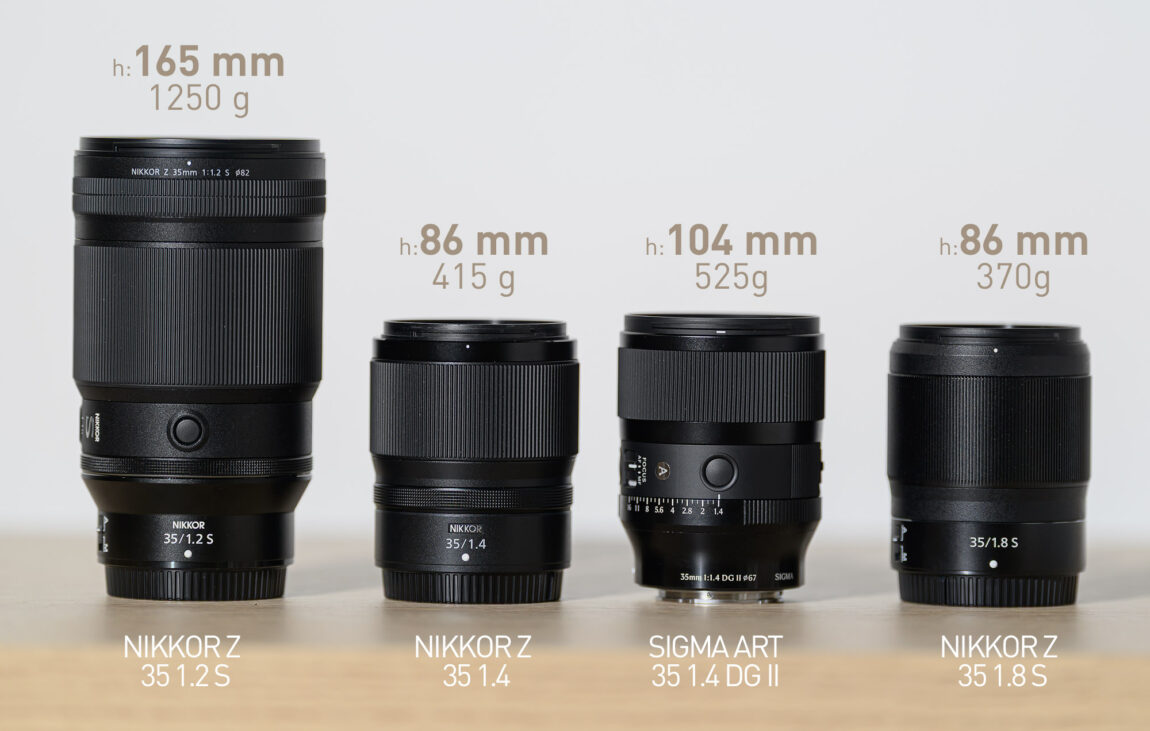
Wouldn’t a Nikkor Z 35 1.4 or 1.8 S be better? Not for me. Firstly, both are optically slow. Secondly, they look hideous. Thirdly, and most importantly, they’re simply optically inferior.
It’s worth noting that the Sigma 35 1.4 DG II Art has a very short minimum focusing distance, allowing you to capture fine details such as wedding rings.
Summary

Yes, yes, yes. This is that rare moment when engineers give you everything at once and don’t make you choose between build quality and image quality. The reduction in weight and size hasn’t compromised the optics – quite the opposite.
Chromatic aberration? Forget it, the edges here are as clean as a baby’s conscience. Sharpness? Sky-high even wide open. Add to that the picturesque rendering and magic in out-of-focus areas. Sigma has proven that it’s possible to make a lens smaller and lighter while also making it optically superior to its predecessors.
And when we add a rugged and well-thought-out design with a full set of switches and two HLA motors that hit the mark before you even think about the shot, we have the perfect instrument. This lens restores the pure joy of photography and allows you to forget about hardware limitations.
If you’ve been looking for the Holy Grail of 35s, this is it – no compromises, just pure perfection in a compact package.
I’m all for it. The move toward slimming down the optics without sacrificing quality is absolutely sound. Now, let’s get a 300 2.8 or a 120-300 2.8, please. Thank you.
Pros:
- small and light
- a picturesque picture
- sharpness
- lightning-fast AF – two linear motors
- sealed housing
- hydro and oleophobic coatings
- construction, made in Japan
- 3-year Polish distributor warranty with the possibility of extension to 5 years
Cons:
- only available for Sony and L mount
- limitations of the Sony mount

If you have an interesting idea for a guest post, contact me here. The full review of the lens can be found here. The pictures are available on Flickr:

Previous guest posts by Dariusz Breś:
Using the new Sigma 200mm f/2 DG OS Sports lens on Nikon cameras with the Megadap Pro+ adapter
Sigma 300-600mm f/4 DG OS Sports lens for Sony E-mount tested on the Nikon Z9 camera
The new Sigma 500mm f/5.6 DG DN OS Sports lens tested on the Nikon Z9 camera
Plena vs. Art (Nikkor Z 135mm f/1.8 S Plena vs. Sigma 135mm f/1.8 DG HSM Art)