Guest post: Nikkor 19mm f/2.8 Macro lens review

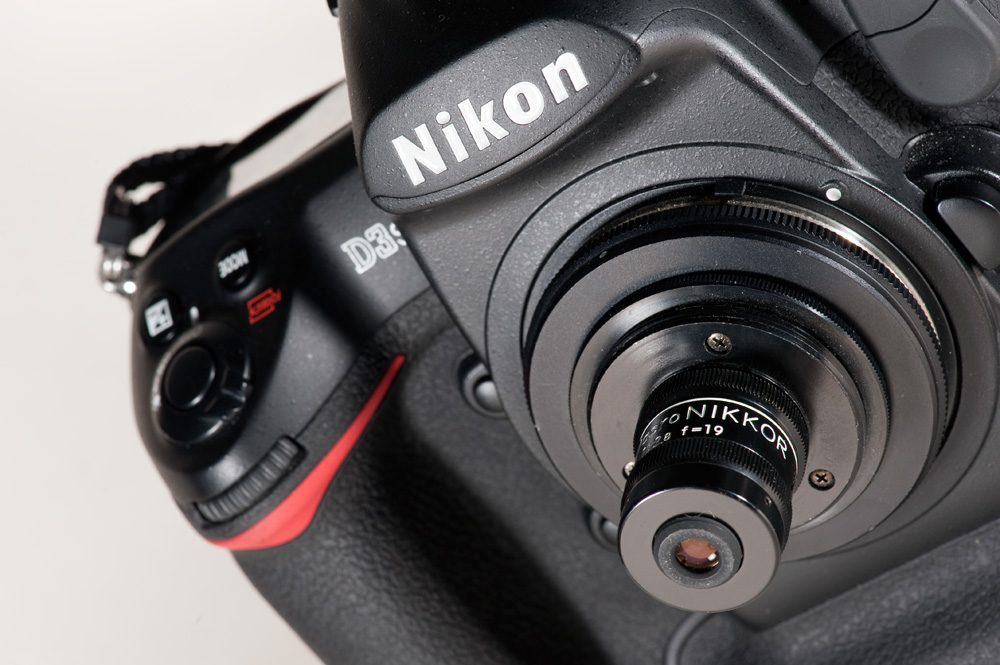
Nikkor 19mm f2.8 Macro on d3s Guest post: Nikkor 19mm f/2.8 Macro lens review

Today's guest post is from Fabrizio Belardetti (www.fabriziobelardetti.com) who will review the rare Nikkor 19mm f/2.8 Macro lens (you can click on all images for larger view):

Macro-Nikkors comprises four lenses made for the Nikon Multiphot: 19mm, 35mm, 60mm, 120mm. Each lens is optimised for a restricted range of magnifications and together they cover the entire range from 1:1 up to 40:1. The optics are designed to yield top results wide-open and stopping down only serves to increase depth of field (and diffraction effects). Within their specified magnification range the lenses will cover up to 4x5" format with ease.

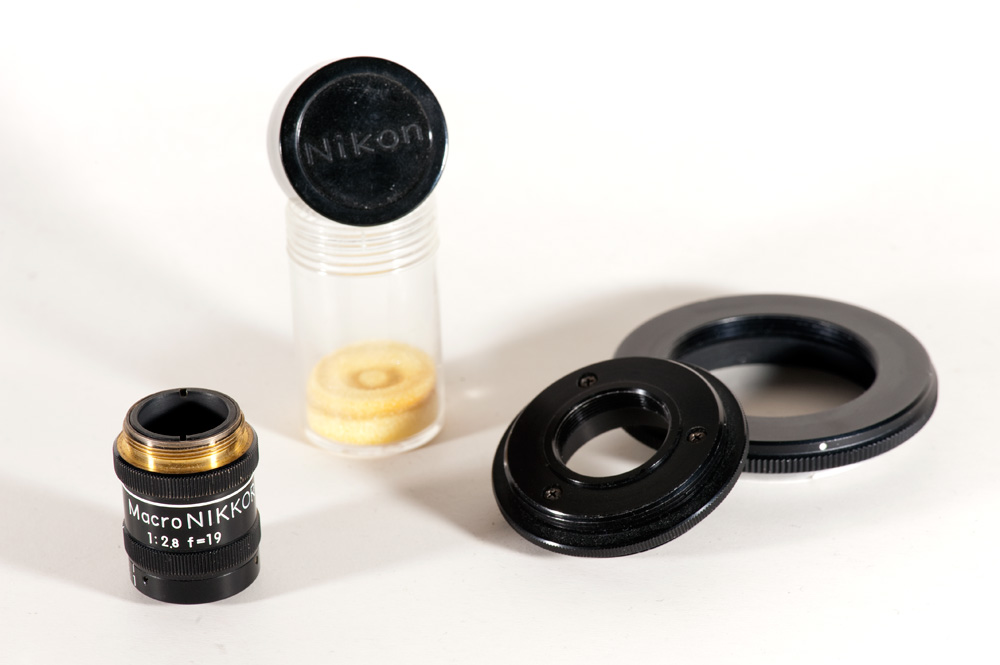
The 19 mm Nikkor comes in RMS microscope screw mount and you will need an adapters to convert RMS to Leica thread and then to Nikon mount. The 19 mm f/2.8 Macro-Nikkor has working optimum at 20x and should be used indoor only, as the focusing distance is about 20mm. It is designed to be mounted on a bellow, and it's range is from 15x to 40x at the maximum extension.

Macro-Nikkors are hard to find today and really expensive (my gem cost me over 1500 €). This lens was made in Japan almost 40 years ago. I usually mount this on a PB-6 with PB 6E, sometimes with PK rings too!

Here is the lens with the original case and Nikon RMS to Leica and Leica to F mount adapters:
Nikkor 19mm f2.8 Macro lens adapters Guest post: Nikkor 19mm f/2.8 Macro lens review

Here's the back of the lens, with optimal magnification engraving (20x):

Nikkor 19mm f2.8 Macro lens Guest post: Nikkor 19mm f/2.8 Macro lens review

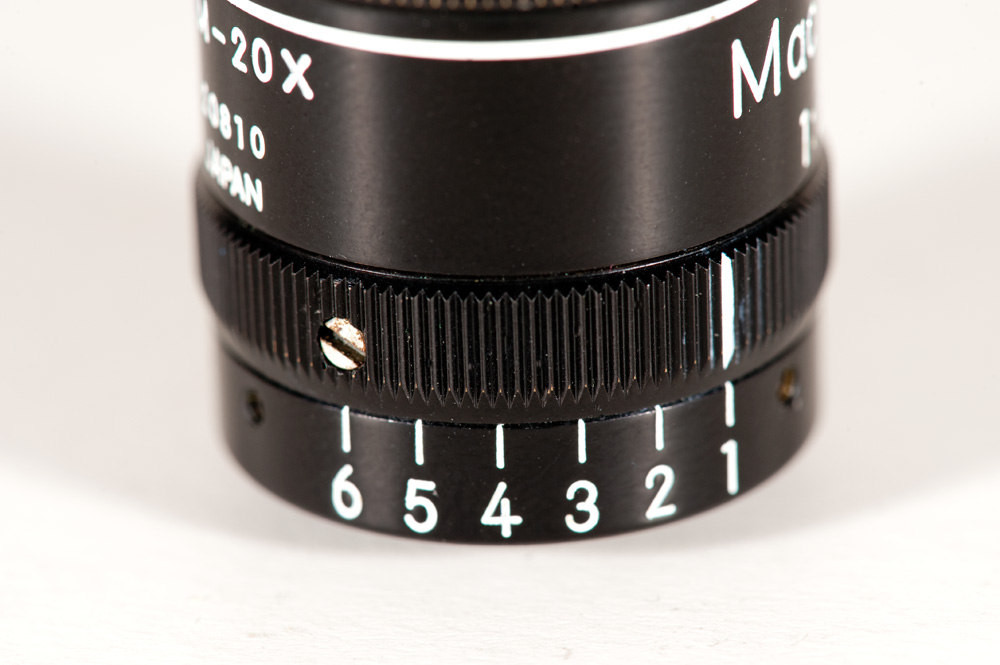
On the side of the lens there is an aperture ring, starting from f/1 to f/6:
Nikkor 19mm f2.8 Macro lens aperture marks Guest post: Nikkor 19mm f/2.8 Macro lens review

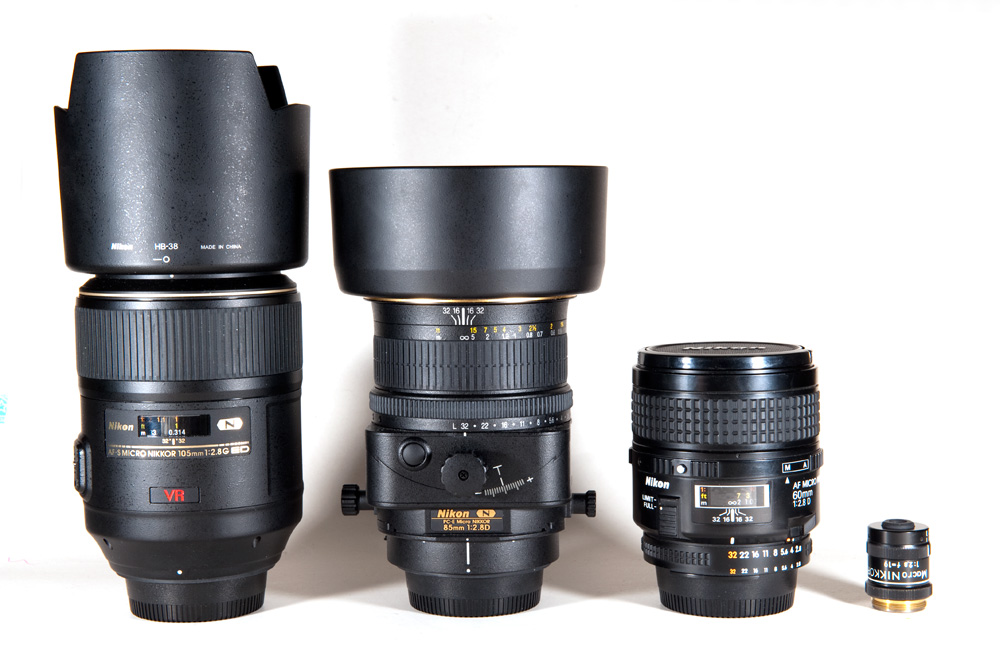
Size comparison with Nikkor Micro lenses:
Nikkor 19mm f2.8 Macro lens size comparison Guest post: Nikkor 19mm f/2.8 Macro lens review

Next is aperture comparison, starting from f1 to f6, with the lens mounted only with adapters, no bellows:
Nikkor 19mm f2.8 Macro lens f1 Guest post: Nikkor 19mm f/2.8 Macro lens review

Nikkor 19mm f/2.8 Macro lens at f/1

Nikkor 19mm f2.8 Macro lens f2 Guest post: Nikkor 19mm f/2.8 Macro lens review

Nikkor 19mm f/2.8 Macro lens at f/2

Nikkor 19mm f2.8 Macro lens f3 Guest post: Nikkor 19mm f/2.8 Macro lens review

Nikkor 19mm f/2.8 Macro lens at f/3

Nikkor 19mm f2.8 Macro lens f4 Guest post: Nikkor 19mm f/2.8 Macro lens review

Nikkor 19mm f/2.8 Macro lens at f/4

Nikkor 19mm f2.8 Macro lens f5 Guest post: Nikkor 19mm f/2.8 Macro lens review

Nikkor 19mm f/2.8 Macro lens at f/5

Nikkor 19mm f2.8 Macro lens f6 Guest post: Nikkor 19mm f/2.8 Macro lens review

Nikkor 19mm f/2.8 Macro lens at f/6

and here's the 100% crop from each of the above pictures:
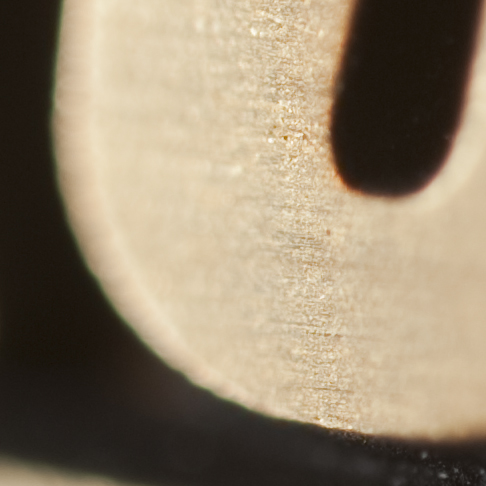
Nikkor 19mm f2.8 Macro lens f1 crop Guest post: Nikkor 19mm f/2.8 Macro lens review

Nikkor 19mm f/2.8 Macro lens at f/1 (100% crop)
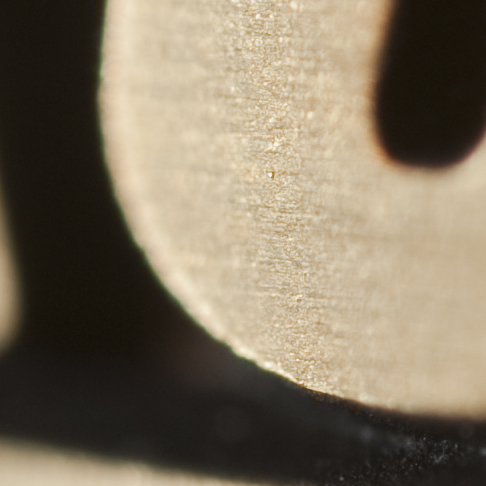
Nikkor 19mm f2.8 Macro lens f2 crop Guest post: Nikkor 19mm f/2.8 Macro lens review

Nikkor 19mm f/2.8 Macro lens at f/2 (100% crop)
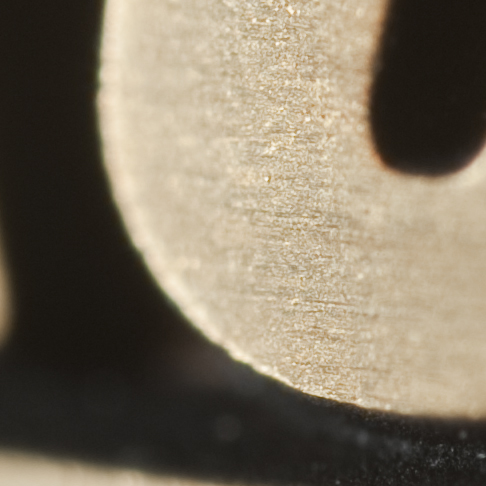
Nikkor 19mm f2.8 Macro lens f3 crop Guest post: Nikkor 19mm f/2.8 Macro lens review

Nikkor 19mm f/2.8 Macro lens at f/3 (100% crop)

Nikkor 19mm f2.8 Macro lens f4 crop Guest post: Nikkor 19mm f/2.8 Macro lens review

Nikkor 19mm f/2.8 Macro lens at f/4 (100% crop)

Nikkor 19mm f2.8 Macro lens f5 crop Guest post: Nikkor 19mm f/2.8 Macro lens review

Nikkor 19mm f/2.8 Macro lens at f/5 (100% crop)
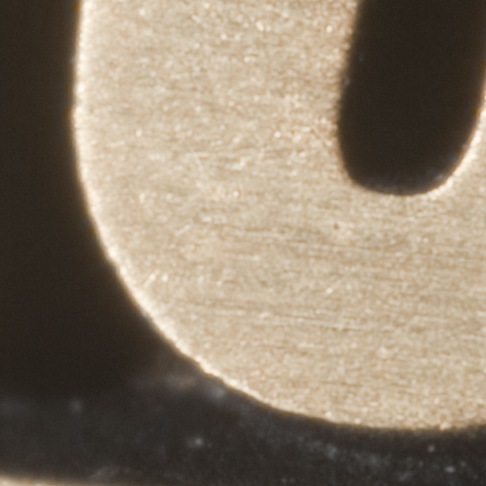
Nikkor 19mm f2.8 Macro lens f6 crop Guest post: Nikkor 19mm f/2.8 Macro lens review

Nikkor 19mm f/2.8 Macro lens at f/6 (100% crop)

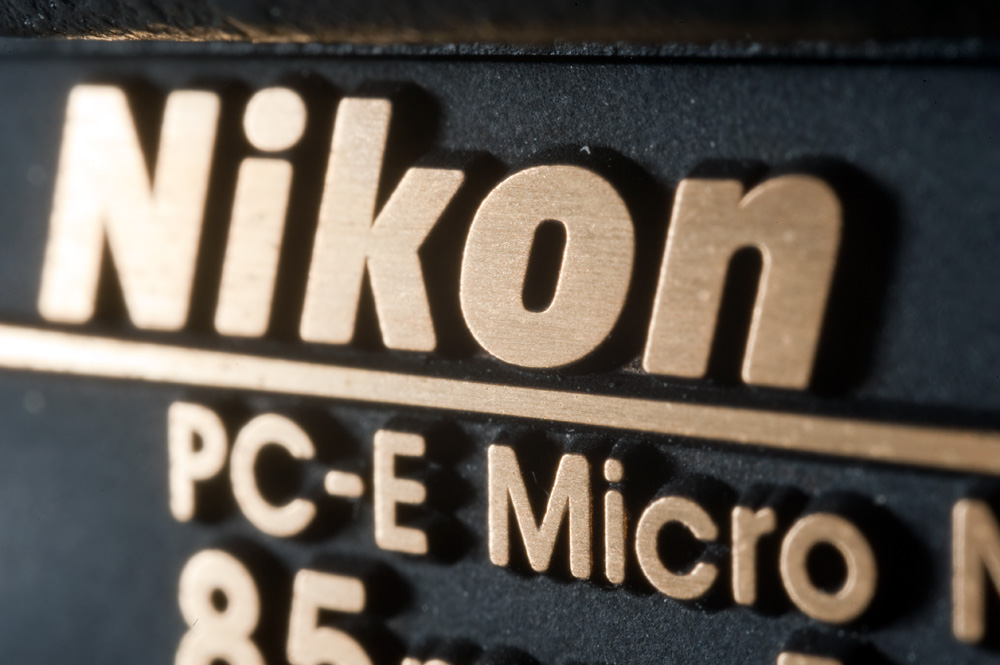
From f/1 to f/3 sharpness is outstanding. Diffraction is evident from f/5. Vignetting is little at f/1, almost gone at f/2 and absent at f/3.

This lens has no distortion, because was meant to reproduce reality as "real" as possible.

For magnification comparison you can see what the Nikkor 105mm VR Micro lens does at 1:1:
nikkor 105mm VR Micro test at 1to1 Guest post: Nikkor 19mm f/2.8 Macro lens review

Thanks to Fabrizio Belardetti for the great review. There is not much additional information available online for this lens. I was only able to find a brief description on naturfotograf and savazzi. As mentioned already, this lens is hard to get even on eBay - I found one for $1,380.00.

Update: I posted some additional sample and setup images here.

If you want to write a guest post for NikonRumors, you can contact me here with your topic suggestions. I have already received over 200 emails and I am slowly going through them (so far I have responded to half of them).

Related posts:

  1. Guest post: Nikkor 19mm f/2.8 Macro lens review (part 2)
  2. Guest post: sharpness comparison between 16 Nikon lenses
  3. Guest post: Shooting products with Nikon tilt lenses
  4. Guest post: PocketWizard review
  5. Nikon AF-S Micro Nikkor 40mm f/2.8G DX lens review by Cary Jordan
This entry was posted in Nikon Lenses, [NR] Reviews and tagged . Bookmark the permalink. Both comments and trackbacks are currently closed.

44 Comments

  1. mshi
    Posted December 14, 2010 at 9:15 pm | Permalink

    outstanding!

  2. Tim
    Posted December 14, 2010 at 9:17 pm | Permalink

    Another great guest post! Admin, this was an excellent idea – keep them coming!

    • Discontinued
      Posted December 15, 2010 at 7:51 am | Permalink

      True.

  3. Funduro
    Posted December 14, 2010 at 9:18 pm | Permalink

    Whoa that’s a unique lens.

    • Xscream
      Posted December 15, 2010 at 3:06 am | Permalink

      I could really use this lens for my research! Now how to get my supervisor so far as to buy this?

      • Chris Lilley
        Posted December 15, 2010 at 2:53 pm | Permalink

        Unless your research is in antiques collecting, you can get the same magnification for much less money using a modern microscope lens mounted on bellows or on a 200mm lens (depending on whether its a finite or infinite objective).

  4. Joseph
    Posted December 14, 2010 at 9:21 pm | Permalink

    wow, awesome!!

    I’m kinda disappointed there isn’t more info and example pictures. I’m assuming this lens is mostly for flat or mostly flat objects??

  5. JorPet
    Posted December 14, 2010 at 9:48 pm | Permalink

    Another amazing guest post! Very interesting lens and pictures.

  6. Theo
    Posted December 14, 2010 at 9:56 pm | Permalink

    Thanks for the Guest Post once again! :)

    Interesting to see some real-life pictures.

  7. Mock Kenwell
    Posted December 14, 2010 at 9:58 pm | Permalink

    Wow. You have to be supremely secure in your manhood to attach this lens to your DSLR.

    • aetas
      Posted December 14, 2010 at 10:37 pm | Permalink

      I can already hear the questions: Do you attach your lens to that thing? or Is that to protect your camera with the lens off.

  8. Posted December 14, 2010 at 11:24 pm | Permalink

    Nice post on an interesting optic I didn’t even know existed…
    …but this had me confused from the get-go.

    I spent the whole post wondering:
    1. Okay, what the heck is this for?
    2. Nikon calls this Macro, but their macros they call Micro… so does this take really large things and make them small?
    3. I can’t wait to see examples of what this puppy does.

    Well, Only point 2 was really answered. From what I gather it’s just an EXTREME macro with an EXTREME shallow depth of field? And i guess 3 was sorta answered… would have liked to see more.

    …Still don’t know what it’s for really… and I can tell this was written by someone who’s English isn’t extremely fluent. The structure of the writing was a bit… thrown together.

    • Posted December 14, 2010 at 11:29 pm | Permalink

      Okay, Bjørn Rørslett’s description answered my questions. This is a true Macro lens with 20x extreme magnification designed for lab use, but with adapters (I got this part) they can be used on SLRs.

    • Mock Kenwell
      Posted December 14, 2010 at 11:57 pm | Permalink

      Hmm. I thought the English was quite good, actually. There is certainly the bare minimum of information though, that’s for sure. Tell us more! If you want to see what this puppy can do, check out Fabrizio’s Web site and click the Macro tab. That lens gets crazy close. Looks like loads of fun.

    • Posted December 15, 2010 at 6:57 am | Permalink

      @Sean Molin (and others who are confused about Nikon’s Macro/Micro)

      Macro=Greater than 1:1 (i.e. Greater than Life Size) Magnifications

      Micro=Up to 1:1 (i.e. Up to Life Size, but not to exceed) Magnifications

      Thus all Micro Nikkors are 1:1 or less.

  9. preston
    Posted December 15, 2010 at 12:06 am | Permalink

    Thanks for the interesting post.

  10. Posted December 15, 2010 at 12:30 am | Permalink

    cool post and pix! thanks!

    i’d like to see some outdoor shots or ‘normal’ shooting with this :D

    • Posted December 15, 2010 at 9:20 am | Permalink

      I’ve added some insects shots in macro section on my website, and posted to admin some setup pics.

      • Posted December 15, 2010 at 11:54 am | Permalink

        thanks, I created another post with the images you sent me

  11. CP
    Posted December 15, 2010 at 12:35 am | Permalink

    How can a f2.8 lens shoot at f1? Something is amiss

    • Xscream
      Posted December 15, 2010 at 3:04 am | Permalink

      That had me wondering as well…

      • Posted December 15, 2010 at 9:19 am | Permalink

        Numbers on the barrel are just indexes for Multiphot system, it’s not an f/1.

        • Jason
          Posted December 16, 2010 at 3:22 am | Permalink

          Can you elaborate a little more?

  12. n a
    Posted December 15, 2010 at 1:43 am | Permalink

    say hello to my little friend

  13. Posted December 15, 2010 at 2:50 am | Permalink

    wow ..thanks admin for posting this .Shall be forwarding this to my friends :)

    what a lens :)

  14. Posted December 15, 2010 at 5:00 am | Permalink

    facebooked it! that’s a lot of fun for a tiny lens!

  15. Posted December 15, 2010 at 5:02 am | Permalink

    and i dont know how i missed it, but it can cover 4″x5″ ? at that size and aperture? that is a real miracle!

  16. david leong
    Posted December 15, 2010 at 9:20 am | Permalink

    Outstanding……. another lense i am sure many like me are UNAWARE off…. wonder what else is out there !

  17. SZRimaging
    Posted December 15, 2010 at 10:53 am | Permalink

    Hey, these guest posts have been awesome so far! Congrats to you, admin, on getting these going. And thanks to the guest posters as well for fun, interesting things to read.

  18. george
    Posted December 15, 2010 at 10:53 am | Permalink

    for all the digital newcomers….

    http://homepage2.nifty.com/akiyanroom/redbook-e/index.html
    nikon used to be a kikcing ass company, they didnt made jokes like now !!!

  19. Vlad
    Posted December 15, 2010 at 11:23 am | Permalink

    I am just pointing out the obvious here, but it does look like a very small, stubbly penis on the thick D3s body.

    • 200
      Posted December 15, 2010 at 11:35 am | Permalink

      Nice post…. I was just about to post a stubby penis comment too. You have to be very secure with yourself to use that lens in public. lol

  20. Kingyo
    Posted December 15, 2010 at 12:46 pm | Permalink

    this is very cool, I like seeing these quirky unexpected Nikon setups :)

  21. Chris Lilley
    Posted December 15, 2010 at 2:44 pm | Permalink

    The aperture ring is not, as stated in the review, marked from f/1 to f/6. It is marked from 1 to 6, where 1 corresponds to wide open (f/2.8) and thus, 2 to 6 correspond to f/4 to f/16.

    Also, even wide open, at the rated 20x the effective aperture would be (20 +1)*2.8 = f/58.8 which would be fine on the original multiphot but is severely diffraction limited on todays small sensors (full frame and dx).

    An interesting relic for collectors, but an impractically slow lens for the rated magnification on modern sensors.

  22. big eater
    Posted December 15, 2010 at 3:58 pm | Permalink

    I’m waiting till the VRII version comes out. Anyone know when it’s scheduled for release?

  23. Johan
    Posted December 15, 2010 at 4:04 pm | Permalink

    Here’s the device designed to use those lenses: http://www.microscopyu.com/museum/multiphot.html

    Looks like it’s made for a very different conjugate ratio than what you get when mounted directly to the DSLR – is there another lens inside the adapters you use? magnifications is very useful to “zoom in” to the area you’re interested in.

  24. Narna
    Posted December 15, 2010 at 9:36 pm | Permalink

    Another intersting and informative guest article. Thanks :)

  25. Posted December 16, 2010 at 2:15 pm | Permalink

    Wow, I have two of these, a 19 and the 35 mm and i’ve had them kicking around for a while not knowing with to do with them except that they looked cool. I know that to do with them now, sell them!

    • Posted December 16, 2010 at 6:09 pm | Permalink

      And I bought one! Thank you, looking forward to it :)

  26. Robertv
    Posted December 18, 2010 at 7:12 am | Permalink

    Firefox report for this page:
    Content Encoding Error
    The page you are trying to view cannot be shown because it uses an invalid or unsupported form of compression.
    * Please contact the web site owners to inform them of this problem.

  27. carlgo
    Posted December 18, 2010 at 2:32 pm | Permalink

    Awesome article. Appreciate the hard work that went into the presentation.

  28. This lens has no...
    Posted December 21, 2010 at 5:05 pm | Permalink

    “This lens has no distortion, because was meant to reproduce reality as “real” as possible.”

    ROFL… yup… it’s also because it was made in a factory down a street called Real St. :-D