Guest post: Shooting products with Nikon tilt lenses

tilt shift Guest post: Shooting products with Nikon tilt lenses

Hello, I’m Henk van Mierlo from www.noregt.com. I’d like to share with you why I use Nikon tilt lenses for product shoots. The most well known tilt lens is the PC-E Micro Nikkor, but there are also some less known and more affordable options. I’ll tell you in detail the (dis)advantages of these.

Why use tilt lenses?

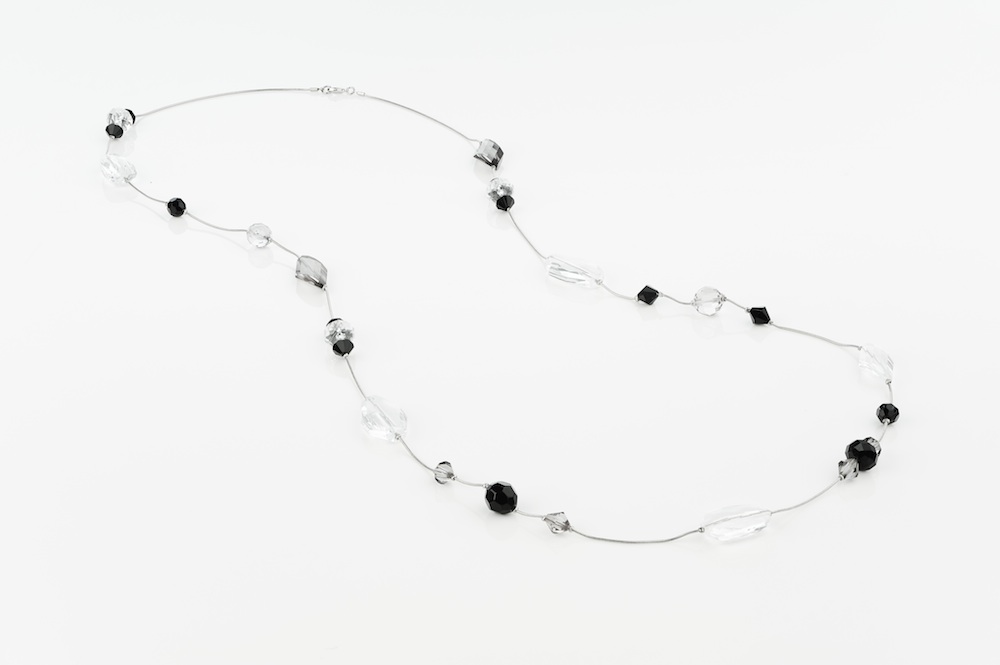
I regularly shoot jewelry for clients. Necklaces can sometimes look very thin when shot from above. So I tend to shoot these images from a lower angle, which also looks a bit more dynamic (click on images for larger view).
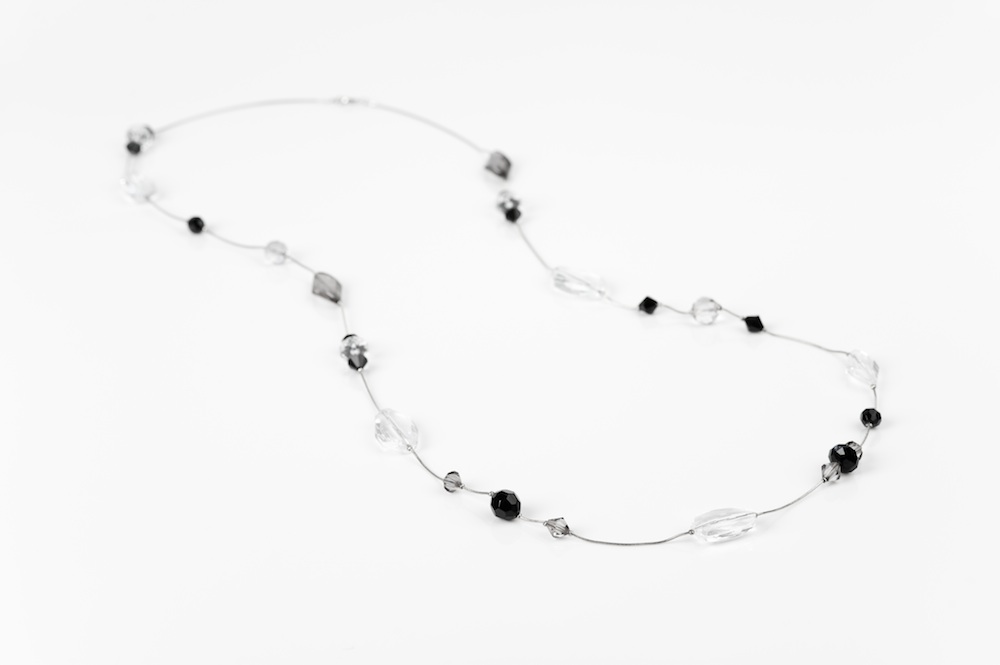
tilt shift nikon 09 105mm Guest post: Shooting products with Nikon tilt lenses

AF Micro Nikkor 105 mm 1:2.8D at f /8.0

At this small size you might not notice it directly, but at aperture 8 the back of the necklace is blurred due to DOF. I quickly experienced that 90% of my clients want EVERYTHING sharp. The most logical thing to do would be to close the aperture as much as possible. However, above F /8 ‘diffraction’ starts kicking in, causing the image to loose sharpness overall.

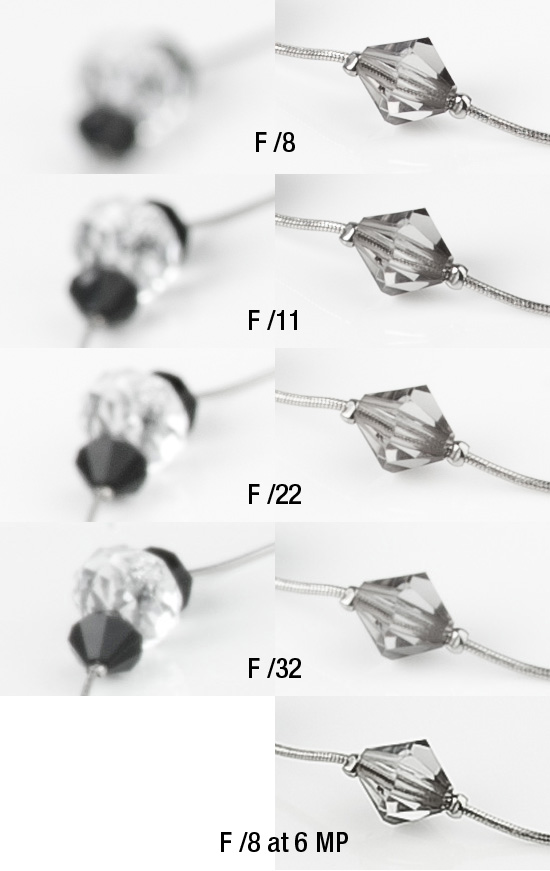
Below is a 100% view of the necklace. Left the rear piece, right the front:
aperture comp Guest post: Shooting products with Nikon tilt lenses

Firstly, the rear piece never gets really sharp. Secondly, the front clearly loses sharpness with increasing aperture. No problem if you print at 10x15, but for serious enlargements, this is an issue. I’ve met serious photographers using pro cameras and taking images at aperture 32, so “everything will be as sharp as possible”. As you can see in the image above, at aperture 32 you could just as easy shoot at 6 MP, making a 24 MP sensor useless!

Using a tilt lens
tilt shift nikon 07 Guest post: Shooting products with Nikon tilt lenses

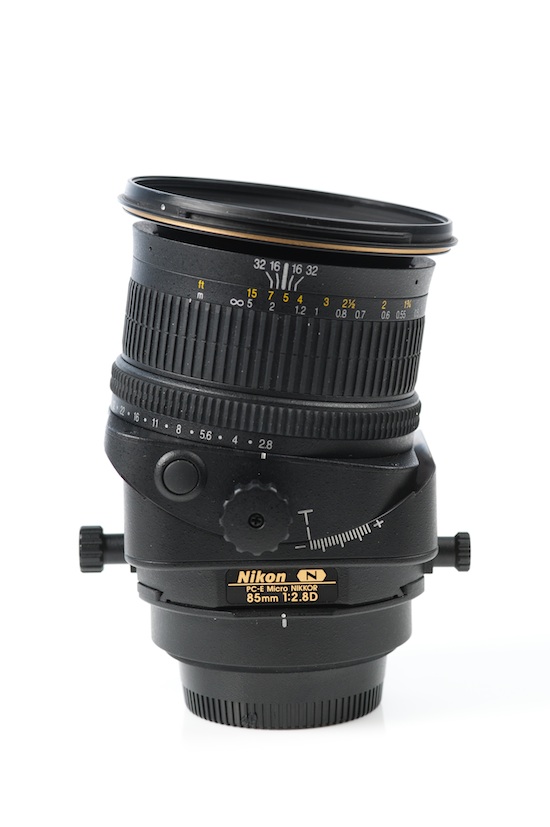
With the PC-E Micro Nikkor tilt lens you can rotate the ‘plane of focus’ (the Scheimpflug principle). In short, you need to tilt the lens towards the table where the necklace is. If you rotate it halfway the plane of focus will be horizontal, so everything will be sharp, even at aperture 8!
tilt shift nikon 16 PC E Guest post: Shooting products with Nikon tilt lenses

The only limitation of this lens is the maximum tilt angle of 8,5 degrees. This prohibits you from taking images at a really sharp angle. The image above is the max.

Cheapskate tilt lenses
tilt shift nikon 05 Guest post: Shooting products with Nikon tilt lenses

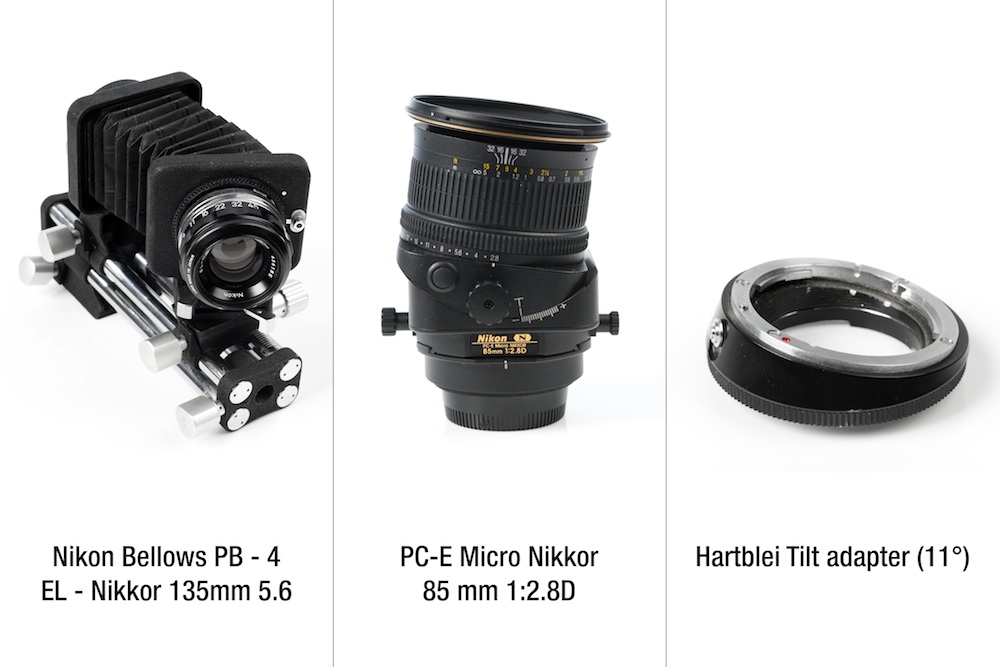
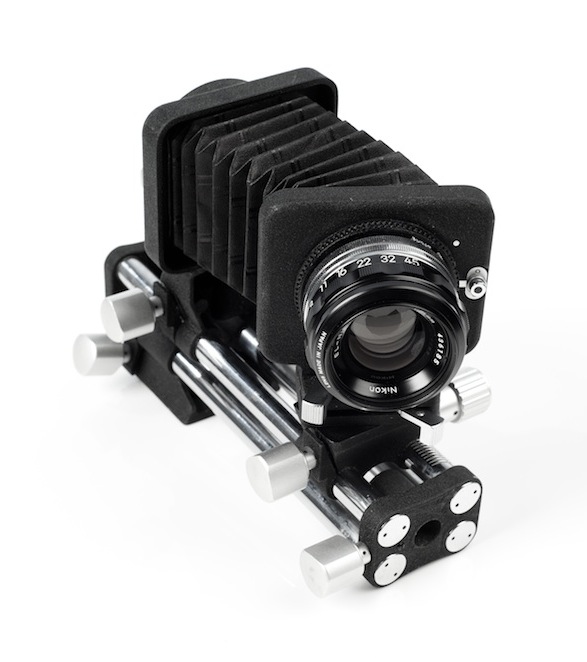
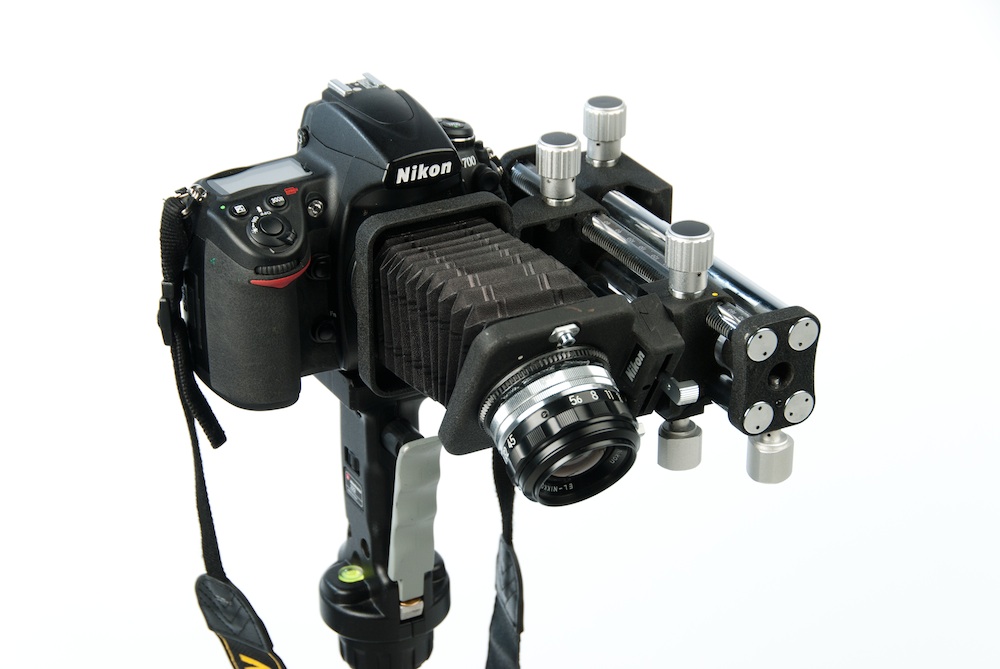
This is the second hand Nikon Bellows PB – 4 I bought through Ebay. It’s not made anymore and that’s a pity. As far as I know it’s the only bellows with a rotatable front. The lens is a second hand enlarger lens, the EL Nikkor 135 mm 5.6. You can get this complete set for 150-250 dollars.

When you put a regular 50mm lens on the bellows, it functions as a macro lens. But if you put an enlargement lens on it, it’s usable at infinity! I used a Nikkor lens, but you could use other brands as well (I also use an excellent Rodagon). It’s easy to find these lenses since a lot of people want to get rid of their darkroom.

With the 135 mm lens you can focus up to infinity, with the 50 mm you can’t. For product photography a 100 mm would be ideal.

Attaching the enlarger lens

Enlarger lenses use a thread, so you need a converter. You can buy these, but you can just as easy make one yourself from a body cap.

nikkor adapter noregt 2954 Guest post: Shooting products with Nikon tilt lenses

I cut a hole with a drill, but had to use some tape because it did not fit tightly enough.

Placing it on your camera

Normal placement for macro photography:
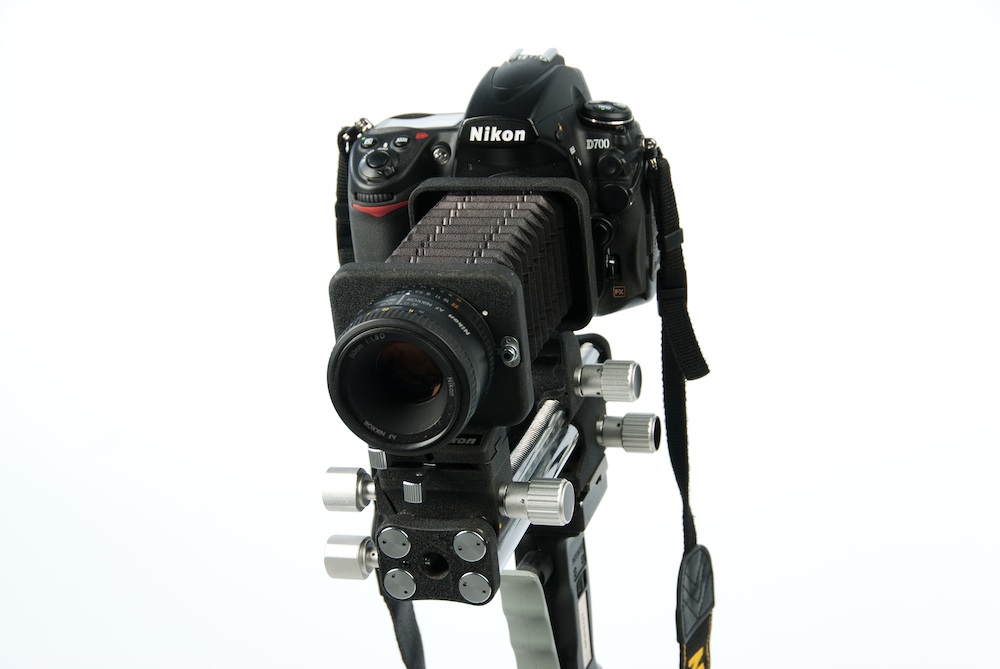
tilt shift nikon 02 Guest post: Shooting products with Nikon tilt lenses

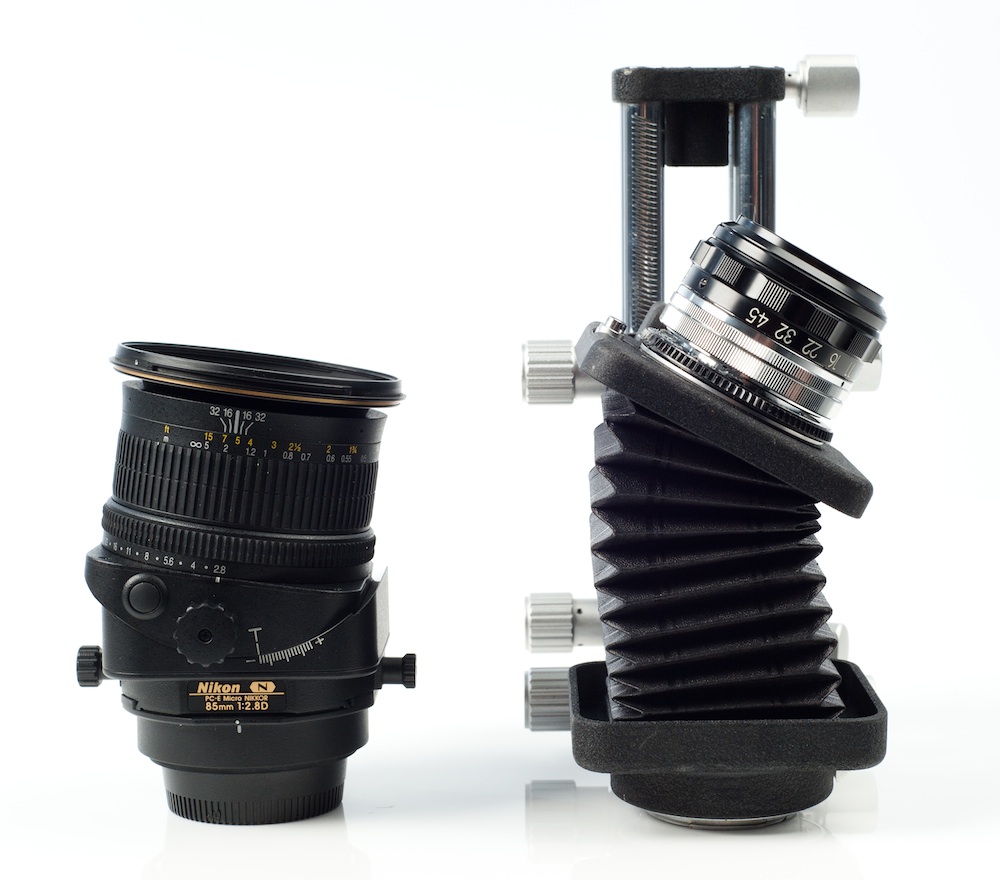
The front plate can only be tilted from left to right, so if you want to tilt it to a horizontal plane, you need to rotate the complete bellows:
tilt shift nikon 03 Guest post: Shooting products with Nikon tilt lenses

Taking images

You do need some patience to work with this setup. It took me a minute to find the right angle with the PC-E lens, with the bellow it took me ten minutes and a lot of zooming in live view to check if the angle was correct. That’s mainly because there is no fine tuning possible with the bellows. Also, it’s completely manual (of course). No measurements whatsoever.

Results with Bellows PB-4

Not only is this setup about 85% cheaper, the front can be rotated a lot further the the PC-E lens:
tilt shift nikon 06 Guest post: Shooting products with Nikon tilt lenses

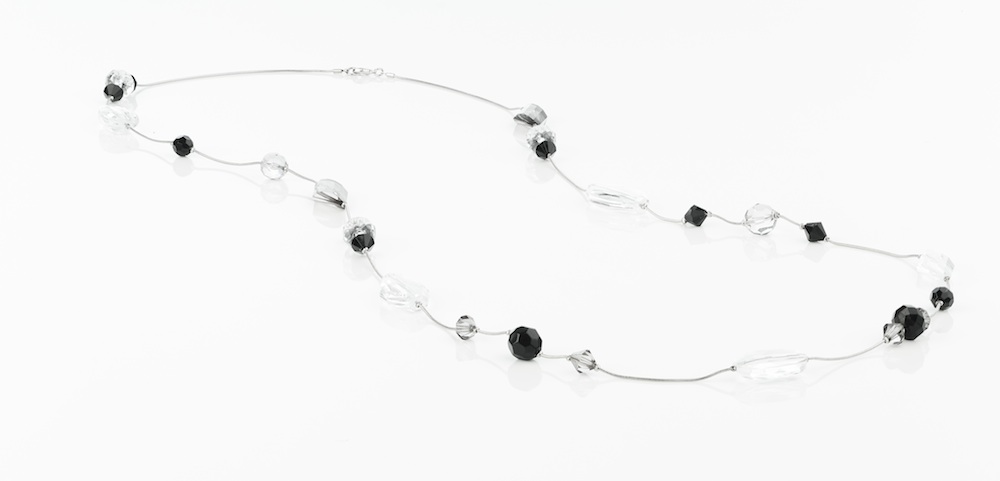
This allows you to make super low angle shots at aperture 8, and still have everything in focus:
tilt shift nikon 17 Bellows PB 4 Guest post: Shooting products with Nikon tilt lenses

Sharpness

tilt comp Guest post: Shooting products with Nikon tilt lenses

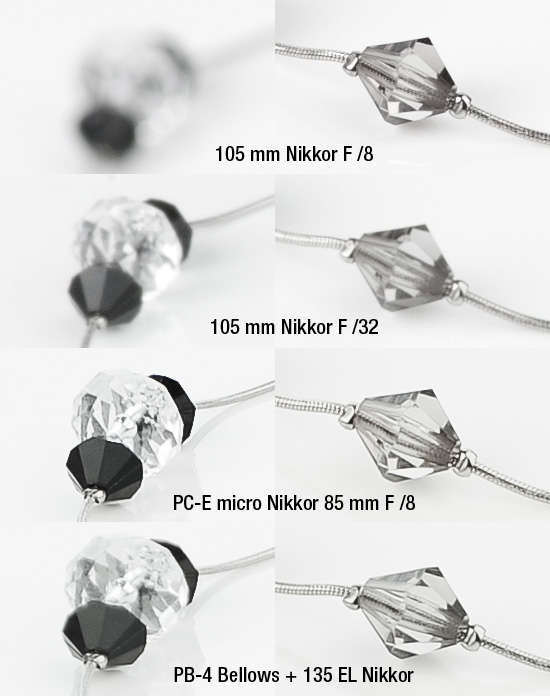
Clearly, The PC-E Nikkor lens produces absolutely sharp images. The PB-4 comes very close, but gets a bit fuzzy in the rear end of the necklace. I guess that’s because the enlarger lens was not designed to be super sharp in the corners as well. Maybe other lenses, designed for technical cameras, can perform better there. I have one, but it’s too big to fit on the Bellows.

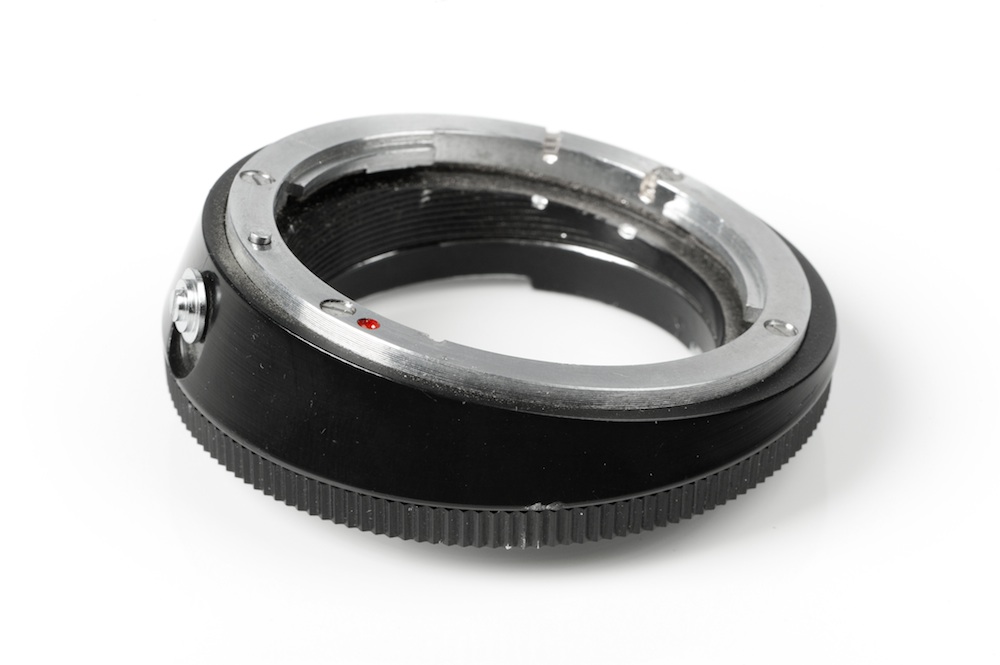
The Hartblei tilt adapter
tilt shift nikon 08 Guest post: Shooting products with Nikon tilt lenses

I bought this adapter directly from www.hartblei.com. In short, I think it’s useless.

On the site it says: “macro, doesn't allow to focus on infinity”. Indeed, when you place a 50 mm lens on it, you can’t get much further then about 30 cm. This makes it only useful for small object like rings. But then you’re also stuck with a fixed angle. And when you attach an AF lens on it, it doesn’t really fit well. It’s also very hard to get it loose again. So there is a real danger you damage your lens or camera. Older MF lenses fit better.

Conclusion

I’m quite happy with both the PC-E lens and the PCB-4 bellows and use them both regularly, If I’m in a hurry and want to get excellent results the PC-E lens works best. The worst limitation is the limited tilt angle of 8,5 degrees.

When I have time and want a more creative shot I prefer to use the bellows PB-4. It produces excellent results too, but you need to keep an eye on the sharpness at the end of the image frame, especially as the angle gets sharper. I suppose the main reason for limiting the tilt angle with the newer lenses is precisely this loss of sharpness.

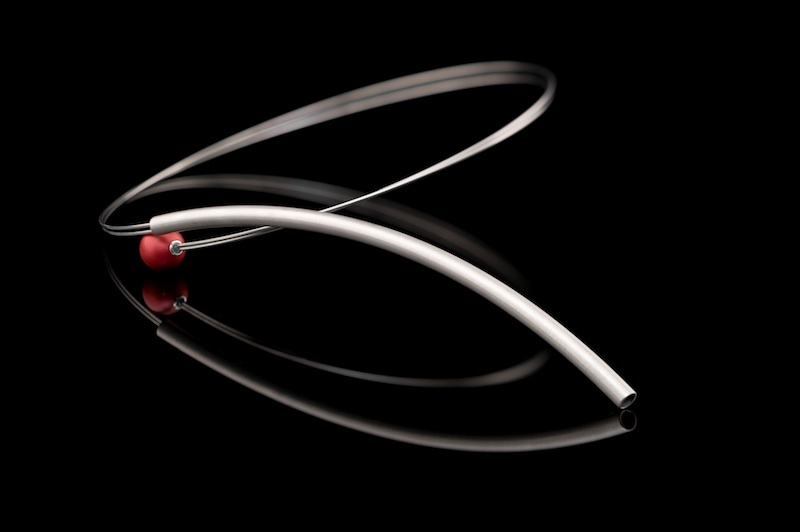
You don’t necessarily need to use these lenses only to get everything in focus. You can also manipulate the focus plane to get creative results. The PB-4 bellows has the best possibilities for such usage as in the image below:
bl stepbystep2009 DSC 1131 Guest post: Shooting products with Nikon tilt lenses

In this image the focus plane follows the tube, so everything that matters is sharp while the round wire is blurred. It’s almost impossible to get a high quality shot such as this one in Photoshop.

Henk van Mierlo is a photographer and designer based in Holland. He also runs a Dutch photography school at www.fotografielessen.nl. You can see his work at www.noregt.com.

If you want to be a guest blogger on [NR], please contact me with your post suggestion.

Related posts:

  1. Guest post: sharpness comparison between 16 Nikon lenses
  2. Guest post: Nikkor 19mm f/2.8 Macro lens review
  3. Another upcoming lens with Nikon mount: Samyang 24mm f/3.5 tilt-shift
  4. Guest post: Nikkor 19mm f/2.8 Macro lens review (part 2)
  5. Guest post: Time-lapse Landscape Astrophotography
This entry was posted in Nikon Lenses and tagged . Bookmark the permalink. Both comments and trackbacks are currently closed.

133 Comments

  1. Roger
    Posted November 27, 2010 at 9:40 pm | Permalink

    Nicely spotted by the author – 85mm doesnt have enough tilt.

  2. Posted November 27, 2010 at 9:57 pm | Permalink

    Great post, very informative. I have been wondering how tilt shift lenses work. :)

  3. Rob
    Posted November 27, 2010 at 10:31 pm | Permalink

    Just brought back memories to what I learnt. Still have my bellows for the Nikon. Always used a 5×4 view camera for this type of serious work. This was a good honest report. Thanks

  4. Posted November 27, 2010 at 10:53 pm | Permalink

    Excellent reading and information. I am interested in the PB-4 now.

  5. jk
    Posted November 27, 2010 at 11:17 pm | Permalink

    Thanks for taking the time.. you seem like a friendly guy :)

    I agree the adapters are very tough to get off (putting it on is not as easy as a real lens either)…. you need skinny strong fingers to remove it and it just doesn’t feel it is treating your cameras mount nicely.

  6. S
    Posted November 27, 2010 at 11:48 pm | Permalink

    What an interesting and informative post! Thanks for sharing. :)

  7. Posted November 28, 2010 at 11:06 am | Permalink

    Thanks for this lesson. Besides the gear description, it was interesting learning about product photography in a different way.

  8. Posted November 28, 2010 at 12:46 pm | Permalink

    Long time lurker. Nice article. One point worth making is that with the latest PC-E lens you can use the green dot in the viewfinder as a focus confirmation. It’s really accurate, especially the more central points and helpful to those of us with, ahem, challenged eyesight. Also that particular lens is tack, tack sharp. I use one with my food photography all the time.

  9. mickey
    Posted November 28, 2010 at 1:30 pm | Permalink

    I’ve been waiting for a cheap, decent PB4 on ebay for ages, now you’ve done a strobist and the prices for the old kit will skyrocket, like the sb24′s did after strobist launched.

    goddamit!

  10. aetas
    Posted November 28, 2010 at 4:28 pm | Permalink

    Its nice to see that everyone treated our new guest poster well. I was wondering if we were going to have the few (you know who you are) attacking the post a little to harshly.

    • Dweeb
      Posted November 28, 2010 at 4:47 pm | Permalink

      No, public humiliation and torture is reserved for Nikon Kogaku. Maybe some day they’ll listen to their customers and open a complaints department. Ah, but I digress OT …

    • Henk
      Posted November 28, 2010 at 5:51 pm | Permalink

      Well I was just thinking that all the readers form NikonRumors are just very friendly people! :-)

    • Posted November 28, 2010 at 9:35 pm | Permalink

      you are right, I haven’t seen so many positive comments in a while, maybe I should just hire Henk to write all future articles :)

  11. GlobalGuy
    Posted November 28, 2010 at 5:09 pm | Permalink

    This site should probably be organized differently if Tutorials will be a regular feature. A list of Tutorials and a List of Product Reviews (formal) will be helpful.

    • Posted November 28, 2010 at 9:39 pm | Permalink

      @ GlobalGuy – if you look at the different categories on the right, I already have a separate “guest posts” and “hands-on” sections, I also have a “reviews” tab on top for links to other websites and reviews.

  12. Narna
    Posted November 28, 2010 at 6:21 pm | Permalink

    Wow!

    While I knew what tilt/shift lens were for I never realised just how well they worked. Your image of the ‘tube’ is quite stunning.

    Thank you for taking the time and sharing your techniques with this excellent and informative article.

  13. Foster
    Posted November 28, 2010 at 6:56 pm | Permalink

    That is why I shoot 4×5! :)

  14. Posted November 28, 2010 at 11:07 pm | Permalink

    Thanks for the Great article!

    I got to learn a lot of new things today!

    also very inspiring and informative…. yet easy to understand! (for someone new to photography, as is my case.)
    Hope we can see more of these awesome articles in the future!

    Thanks Henk and NR.
    as well as others who shared additional information on the comments!
    is nice to see soo many positive comments!

  15. VJ
    Posted November 29, 2010 at 8:45 am | Permalink

    Very informative! I always wondered about uses for tilt lenses, and all I could find was for artistic effect. Thanks!

  16. Posted November 29, 2010 at 12:29 pm | Permalink

    Congrats to the author: authoritative, informative, competent, useful. Bravo!

  17. Johnny Grace
    Posted November 29, 2010 at 8:27 pm | Permalink

    Nice to see a guest post here interspersed with the rumours, I find it refreshing and as long as rumours is just peppered with nice ones like this it is a great addition to your content. Nice post for the many who may not have done tilt shift work, it would pique their interest i think, and it was nicely written with that goal in mind. Take care, and thanks for a great blog, Johnny

  18. Posted November 29, 2010 at 11:05 pm | Permalink

    Great post – thanks very much!

  19. Posted November 29, 2010 at 11:42 pm | Permalink

    Fantastic article! Kudos for Henk for the great info and NR for trying something a little different. More so, it’s great to see a tilt-shift lens being used the right way, instead of all the trendy wedding photography that overuses the tilt-shift for effect.

  20. Peter
    Posted November 30, 2010 at 12:46 am | Permalink

    Great article. Useful information and well explained. Now the price of Nikon Bellows on ebay is going to rise :-)

  21. Posted December 1, 2010 at 12:51 pm | Permalink

    45mm and 85mm, which one is better in jellery photography?

  22. Jim
    Posted December 6, 2010 at 9:38 am | Permalink

    Great post. Very interesting to not only learn these kind of tips, but the reason that they are necessary as well as the logic behind them.