Nikon Fabre Photo EX portable stereoscopic microscope review

I usually don't do reviews, but when I do... I make sure it is something interesting and fun.

nikon fabre ex microscope side view Nikon Fabre Photo EX portable stereoscopic microscope review

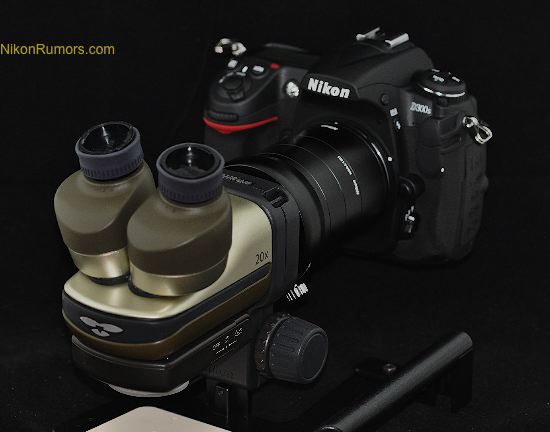
nikon fabre ex microscope withd300s Nikon Fabre Photo EX portable stereoscopic microscope review

The Nikon Fabre Photo EX microscope was released back in February 2009 but unfortunately only for the Japanese market. If you are in Japan you can buy it from Amazon for less than US$1000 (including the DSLR adapter) but since Amazon Japan doesn't ship to other countries (excepts books and CDs), I had to get mine from the JapanTrendShop.com (they will ship everywhere). In the US you can still get the older version which doesn't have the option to attach it to a DSLR.

Full review after the jump:

First, I should mention that in my opinion this is not a "PRO" level product, but this doesn't mean you cannot have fun with it. Why do I think so? The microscope is made out of plastic (the frame/stand is made out of aluminum) and there is some potential for vibration which could be a big draw back in photomicrography. The DSLR attachment piece on the other site is 100% metal (also aluminum), with a metal F mount:
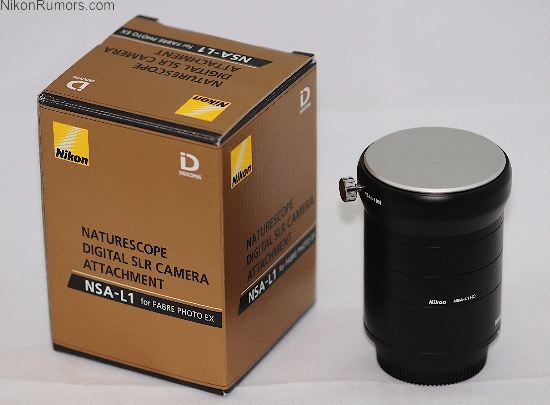
Nikon NSA L1 Nikon Fabre Photo EX portable stereoscopic microscope review

Here is the original Nikon product diagram:
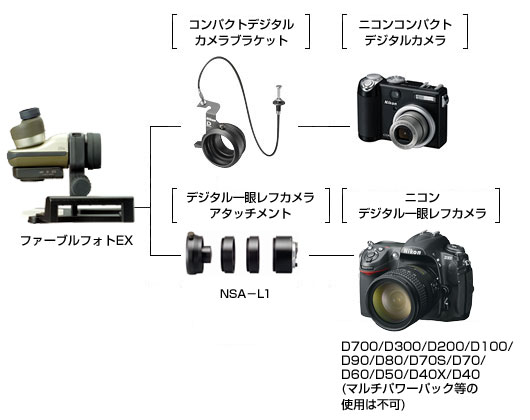
pic 004 Nikon Fabre Photo EX portable stereoscopic microscope review

The worst part is that the DSLR attachment uses a screw to attach to the microscope and this doesn't really work very well - the camera with the attachment can easily rotate around the ring, unless the screw is really tight:
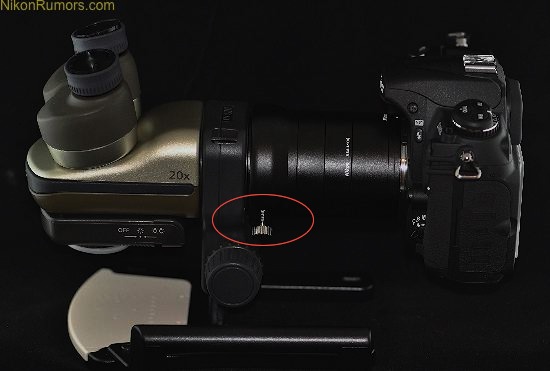
nikon fabre ex with attachment Nikon Fabre Photo EX portable stereoscopic microscope review

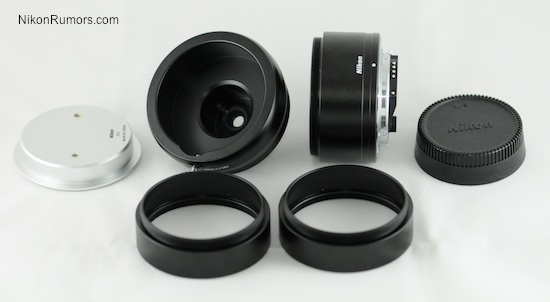
The DSLR attachment breaks down into three different pieces and allows you different levels of magnifications: x45, x56 and x66 for a DX format camera (x29, x37, x43 on a FX camera). Note that through the eyepiece the magnification is fixed to x20. Here are two pictures of the  extension tubes:

nikon fabre ex extension rings Nikon Fabre Photo EX portable stereoscopic microscope review

nikon fabre ex extension rings 2 Nikon Fabre Photo EX portable stereoscopic microscope review

Taking pictures through a microscope is a whole different game since your object cannot be bigger than 1.1cm (less than 1/2 inch). You have to really use your imagination in order to find things to shoot.

The whole package comes with a nice bag and straps that can be attached directly to the microscope (yes, you can carry it like a camera, on your shoulder if you dare):
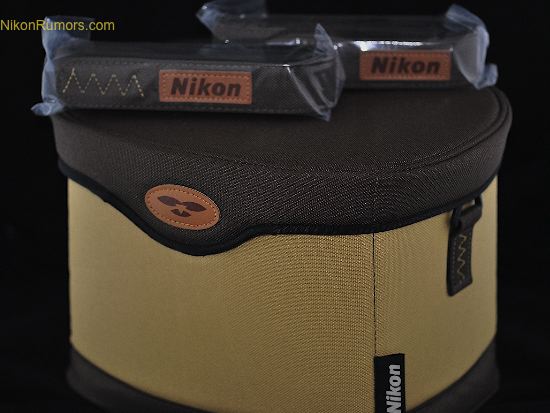
nikon fabre ex bag Nikon Fabre Photo EX portable stereoscopic microscope review

... and what kind of review will that be without showing the box:
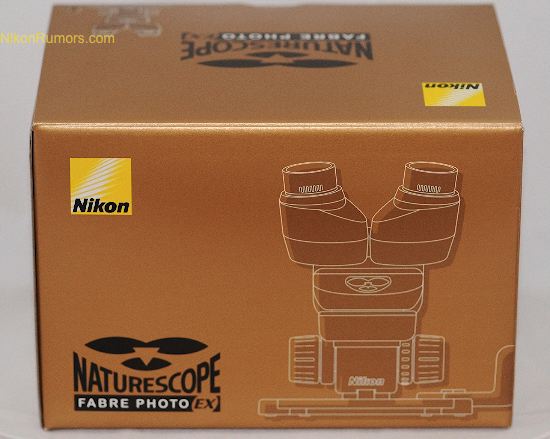
nikon fabre ex box Nikon Fabre Photo EX portable stereoscopic microscope review

The Nikon Fabre-EX microscope uses one AA battery that powers two LEDs used to light up the object (one or both LEDs can be turned on with a selector):
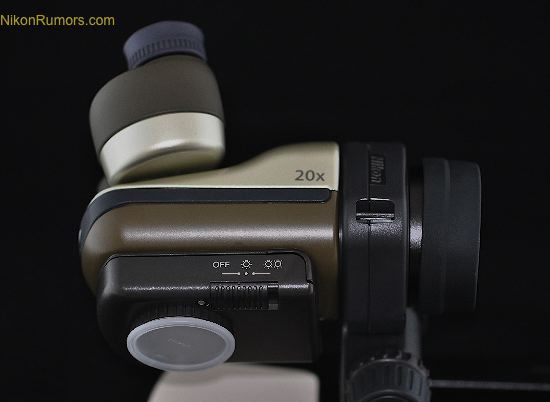
nikon fabre ex led Nikon Fabre Photo EX portable stereoscopic microscope review

The LEDs are helpful, but they will create a reflection on the object if it has a shiny surface, like for example in this picture of a needle (x66 magnification):
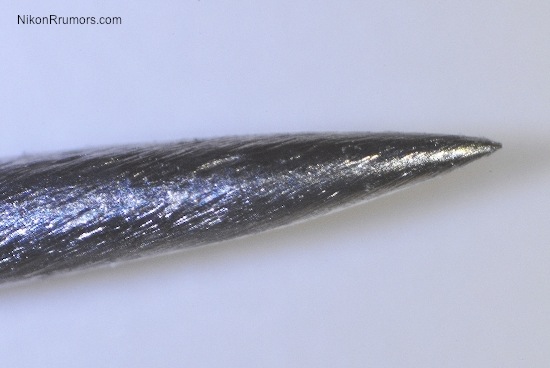
needle1 Nikon Fabre Photo EX portable stereoscopic microscope review

In order to change the batteries, you just twist the bottom plate:
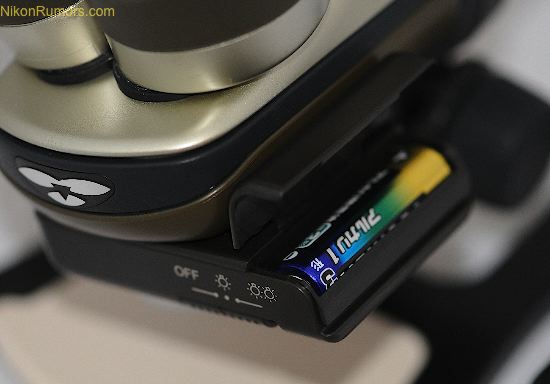
nikon fabre ex battery Nikon Fabre Photo EX portable stereoscopic microscope review

The eyepieces are adjustable/expandable (juts like a binocular) and have a diopter adjustment control:
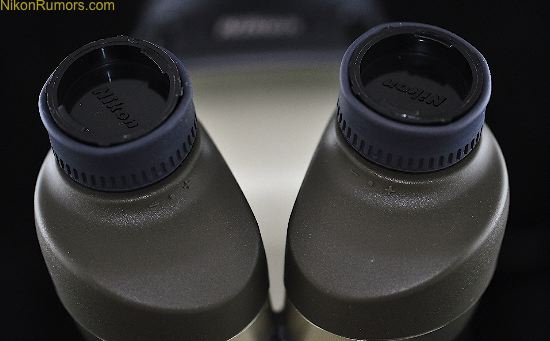
nikon fabre ex eyepiece Nikon Fabre Photo EX portable stereoscopic microscope review

The Nikon NSA-L1 DSLR attachment comes with a fix aperture of f/13. The camera autofocus cannot be used while taking pictures, instead you have to change the distance between the object and the microscope lens by using the focus ring. The second wheel is used to tighten the focus ring (torque adjustment). I wish they used it for fine focus instead:
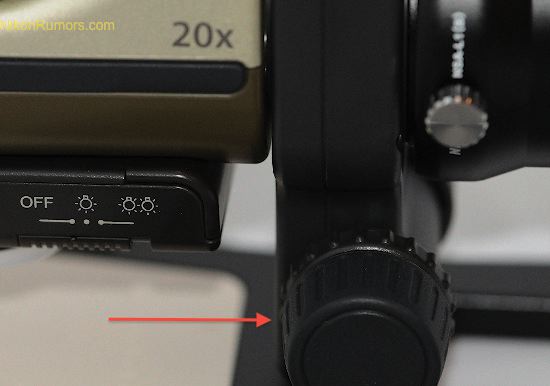
nikon fabre ex focus ring Nikon Fabre Photo EX portable stereoscopic microscope review

You can look through the eyepieces and take pictures at the same time, but in order to focus correctly, you should use live view (zoomed in) or tether you camera to a bigger screen since the magnification through the camera (x45, x56 and x66 for a DX) doesn't match the magnification from the eyepiece (x20). The DOF is really shallow and if you are not shooting a flat object, parts of the image will be out of focus (no bugs were harm during the shooting and I have the video to prove it):
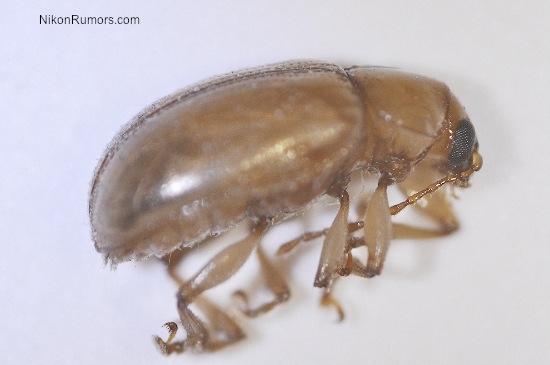
bug1 Nikon Fabre Photo EX portable stereoscopic microscope review

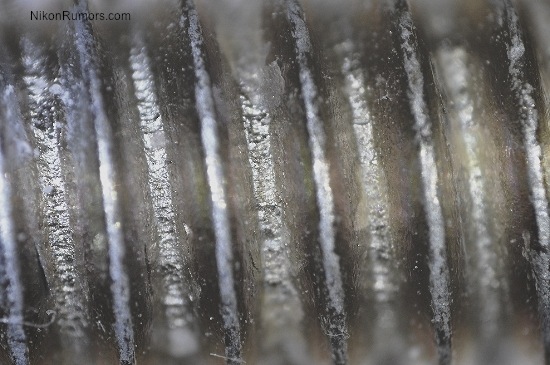
Here is another picture of a screw:

screw close up Nikon Fabre Photo EX portable stereoscopic microscope review

Flat objects are easier to focus on (coins):

penny Nikon Fabre Photo EX portable stereoscopic microscope review

coins Nikon Fabre Photo EX portable stereoscopic microscope review

Did I mention that this is the longest post ever on NikonRumors.com?

Here is an example of the different magnifications on a DX camera - achieved by adding/removing the tubes from the NSA-L1 DSLR attachment. The first picture is at x45 and the second one is at x66 (dollar bill):
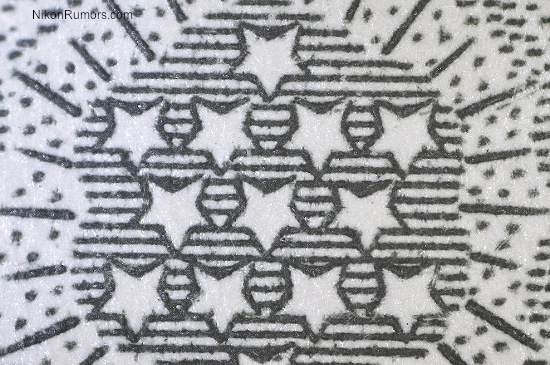
dollar bill 11 Nikon Fabre Photo EX portable stereoscopic microscope review

dollar bill 21 Nikon Fabre Photo EX portable stereoscopic microscope review

Cable release is a must in order to reduce vibrations. I also experimented using external flash, but did not get good results maybe because my two SB-900 were too big and there is no easy way to point them to the object. The manual suggests using the Nikon SB-R200 remote speedlight which is much smaller and will fit better in the limited space between the object and the lens. The best solution would probably be some kind of a ring flash like this Sigma Flash Macro Ring EM-140 DG but you have to find a way to attach it around the lens.

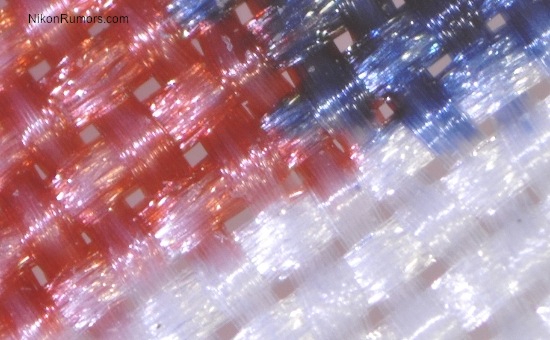
Picture of an America flag and a 100% crop:
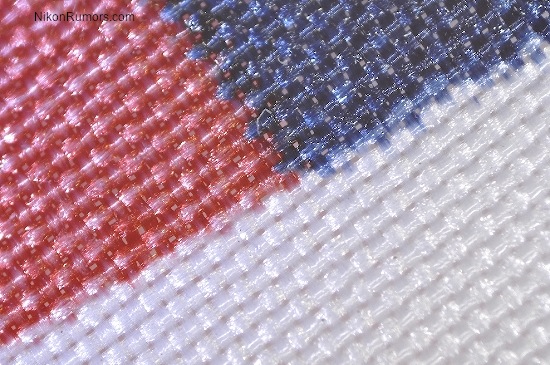
us flag1 Nikon Fabre Photo EX portable stereoscopic microscope review

us flag 100 crop Nikon Fabre Photo EX portable stereoscopic microscope review

The base plate is reversible - flat on one site and with a small container on the other site which can be used for shooting in liquid (have not tried it yet). The microscope has also a convenient metal handle:
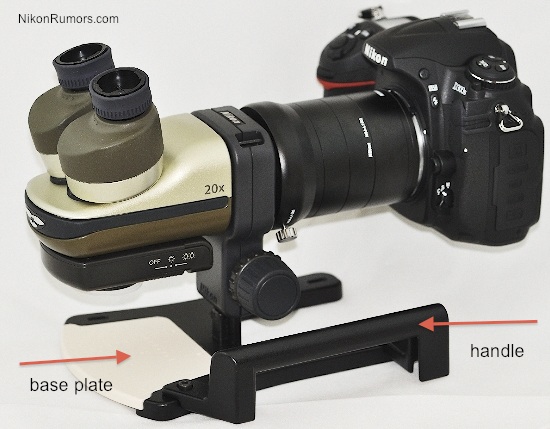
nikon fabre ex base handle Nikon Fabre Photo EX portable stereoscopic microscope review

This is how the plate looks on the reversed side:
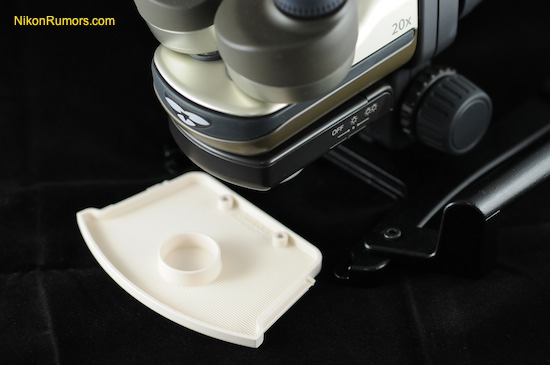
nikon fabre ex reversable plate Nikon Fabre Photo EX portable stereoscopic microscope review

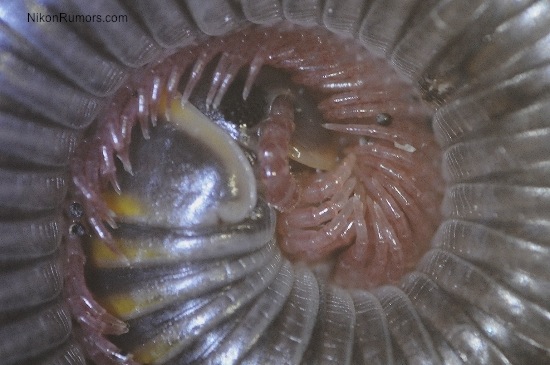
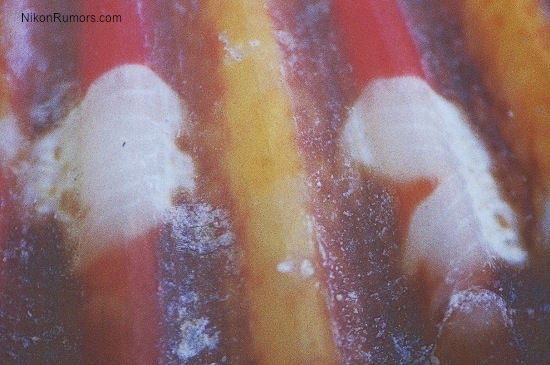
My other model - a millipede (both LEDs were on - you can see the reflection):

millipede sleeping Nikon Fabre Photo EX portable stereoscopic microscope review

Oh, but wait, I now have a video in my DSLR and I think I just created a new word - videomicrography (also a proof that my "models" were not harmed). Note the movement/vibration of the frame as I am constantly changing the focus distance:

And some more photos - seashell:

seashell close up Nikon Fabre Photo EX portable stereoscopic microscope review

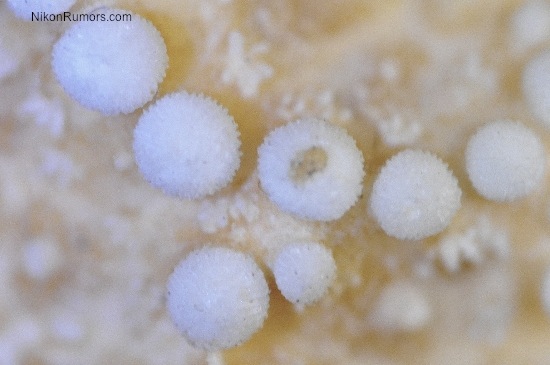
Starfish:

starfish close up Nikon Fabre Photo EX portable stereoscopic microscope review

NikonRumors logo - picture taken from the browser of my iPhone:

nr logo Nikon Fabre Photo EX portable stereoscopic microscope review

This is my finger sweating @ x66 magnification (yes, those are sweat pores and no, this is not my middle finger):

finger sweating Nikon Fabre Photo EX portable stereoscopic microscope review

Stone:

stone close up Nikon Fabre Photo EX portable stereoscopic microscope review

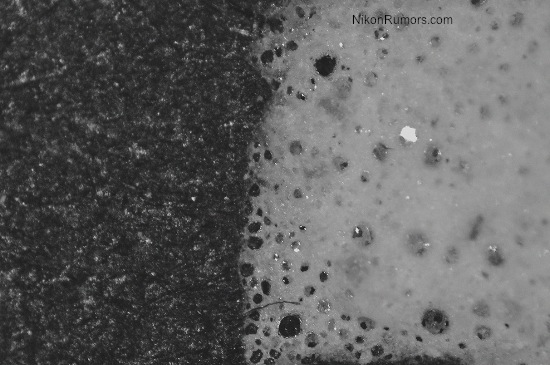
Soap:

soap close up Nikon Fabre Photo EX portable stereoscopic microscope review

The bottom line

Is the Nikon Fabre Photo EX portable stereoscopic microscope fun? Absolutely! Is it worth buying? If you can think of 20 different objects you can shoot through a microscope in the next 2 minutes - YES, buy it! You can even try your luck in the Nikon Small World competition that is currently ongoing, even though I think most of the submissions there are done with a much more sophisticated equipment.

Disclosure: I did pay for the reviewed microscope using my own funds and I did not receive any financial benefit from Nikon for writing up this review. Some links on NikonRumors may be part of an affiliate program, a sponsor or an advertiser (I have to disclose all this for every online review according to the latest FTC guidelines).


Related posts:

  1. Finally: Nikon Fabre Photo EX microscope available for purchase
  2. Nikon Fabre Photo EX microscope may not be available in the US
  3. More new Nikon products
  4. Photo Imaging Expo 2009
This entry was posted in [NR] Reviews and tagged . Bookmark the permalink. Both comments and trackbacks are currently closed.

36 Comments

  1. NikoDoby
    Posted October 5, 2009 at 3:23 am | Permalink

    Super Neat ! Why can’t my Nikon cameras come with a carry case like that?
    Oh and I double dog dare you to post a picture of you with the telescope hanging around your neck! You can blur your face out or something :) Come on do it !

    • Posted October 6, 2009 at 2:50 pm | Permalink

      I will post a picture of me wearing it .. on the forum, probably this weekend

  2. Verg
    Posted October 5, 2009 at 3:27 am | Permalink

    This is a great thing to see it in action, I was pessimistic till I read this, this would be very very fun.

  3. Posted October 5, 2009 at 3:43 am | Permalink

    i think the price is right. Hopefully we will see it in Europe soon too.
    It will be used carefully most of the time, so in this case i am more for better price then durability.
    NRAdmin: what are type of winding is on the rings, do you think some further extension would be possible?

    • Posted October 5, 2009 at 3:29 pm | Permalink

      I will take a close up of the rings tonight and will upload the pics to the post above

      • jsa
        Posted October 5, 2009 at 7:55 pm | Permalink

        Why not add extension by PK-13/12/11a between camera and scope F mount ?

        What is the outcome of doing that and how far can you go before running out of adjustment for focus ?

        Cheers
        John

        • jsa
          Posted October 5, 2009 at 7:58 pm | Permalink

          Or Kenko maco extensions if the contacts are needed ?

          Cheers
          John

        • Posted October 6, 2009 at 12:25 am | Permalink

          i have some telescopic rings (like bellows but from metal) with 52mm thread, would be nice if i can use those without additional 2cm needed for another fmount pair

          • Posted October 6, 2009 at 2:49 pm | Permalink

            I upload 3 more pictures – 2 of the extension tubes and one of the base plate (reverse side)

  4. Human
    Posted October 5, 2009 at 3:46 am | Permalink

    Looks like you had some fun. Nice work.

  5. Nico
    Posted October 5, 2009 at 3:53 am | Permalink

    Thanks NR! Very interesting review. For an occasional exercice, it’s a great success. And you promise to do a post, it’s done. Videos are incredible.Another many thanks.

  6. Steph
    Posted October 5, 2009 at 4:02 am | Permalink

    The Nikon Diagram doesn’t mention the D3 as a compatible camera (while it mentions the D700). Is there a specific issue with it?

    • NikoDoby
      Posted October 5, 2009 at 4:48 am | Permalink

      I’d say it’s probably because of weight. A D3 would tip the entire thing over.

  7. Posted October 5, 2009 at 6:43 am | Permalink

    In a pinch, you could use the self timer (5 or 10-second delay) instead of a remote.

  8. funny
    Posted October 5, 2009 at 7:18 am | Permalink

    great stuff.

  9. broadbean
    Posted October 5, 2009 at 8:00 am | Permalink

    This is really cool, thanks!

  10. Posted October 5, 2009 at 8:12 am | Permalink

    It’s very cool… Want to sell it?

    • Posted October 5, 2009 at 3:27 pm | Permalink

      not yet because I am having fun with it, but I will let you know if I change my mind :)

  11. GlobalGuy
    Posted October 5, 2009 at 1:29 pm | Permalink

    How small can you go? Almost cellular?

    I would like to see you photograph a plant, if so. You remember biology class, right? Microscopes that light from the bottom can be used to shine through thin leaves — and the leaf’s cells and sometimes the stuff inside the cells can be seen.

    • Posted October 5, 2009 at 3:25 pm | Permalink

      Actually I think this would be possible, but it needs some work – as I said the white plate is removable and can be replaced with some kind of a light source, that way the light will come from under the object and not from the LEDs above – just like in biology class….

  12. Zoetmb
    Posted October 5, 2009 at 2:53 pm | Permalink

    Well..I was going to eat lunch, but after watching that bug porno video, I think I’ll pass.

    How much did you have to pay the models for the shoot?

  13. Posted October 5, 2009 at 3:37 pm | Permalink

    I am thinking next to review a Nikon EDG Fieldscopes – they now come with a DSLR attachment:

    http://nikonrumors.com/2009/08/20/nikon-introduces-new-fieldscope-dslr-camera-attachment-fsa-l2.aspx

    Here are the two EDG models released few months ago:

    http://nikonrumors.com/2009/03/17/new-nikon-edg-fieldscopes-with-dslr-compatability.aspx

    Those should be fun: focal length 500 – 1,750mm (DX format: 750 – 2,625mm),
    Aperture f/5.9 – 21… what do you guys think?

    • iamlucky13
      Posted October 5, 2009 at 7:20 pm | Permalink

      If you have the opportunity and resources, I would look forward to reading your fieldscope review..

      I think from your review I have a much better idea, not just of how this new microscope works, but what sort of work it is intended for. It will definitely be one to consider if I ever get around to buying myself a microscope for hobby work.

    • Posted October 6, 2009 at 12:29 am | Permalink

      i would sure be interested. expecialy if the review would be coupled with good examples (from solid tripod) and practical use (monopod with good technique), image quality detailed etc. and, mainly, FX+DX.

    • another anonymous
      Posted October 6, 2009 at 7:04 am | Permalink

      ;) go on

  14. Posted October 5, 2009 at 7:52 pm | Permalink

    Interesting that Nikon can make a metal extension tube for this thing that obviously has a connector block on it but they don’t seem capable of making a basic modern extension tube we can use with our Nikkors. I have the Kenko ones but they are very cheaply made plastic. I also have the older PN- series but they are connector block challenged…

    • Chris Lilley
      Posted October 7, 2009 at 4:24 am | Permalink

      I noticed that as well.

      I have heard it’s because with IF lens designs (as opposed to unit focusing), they don’t work well with extension so Nikon does not want to encourage it. Or maybe Nikon just see it as too small a market. But surely its a larger market than people who will buy this toy microscope at a thousand bucks :)

  15. wooac
    Posted October 5, 2009 at 9:55 pm | Permalink

    Any way to improve the depth of field? Is it better with a P&S?

    • Posted October 6, 2009 at 12:31 am | Permalink

      sure it is, but you need quality or fov. imo it is better use lower magnification and crop (also way to inrease DOF) then to use some P&S.

    • Anon
      Posted October 10, 2009 at 10:21 am | Permalink

      The easy way is to take a bunch of photos with different parts in focus and stack them. Provides excellent results, and I’m sure you can see examples online somewhere.

  16. Gary
    Posted October 6, 2009 at 1:46 am | Permalink

    How do you like your D300s?

    • Posted October 6, 2009 at 2:48 pm | Permalink

      for me (as a blogger) it’s perfect – before I used to have a D300 and the D90 (I need the video part), now one camera replaces those two…

  17. Void
    Posted October 6, 2009 at 12:11 pm | Permalink

    Anybody know if you can use this adapter to hook into a standard C-mount microscope? We are thinking of mounting one on for our lab, but I can’t find any adapters for DSLR to microscope (though there seem to be a lot for microscope to Nikkor, which is not very helpful).
    Actually, the GF1 would probably be better, since no mirror flap vibration, but even lower probability of finding an adapter.

    • Gordon Ridley
      Posted October 9, 2009 at 11:50 am | Permalink

      You could use a C-mount to Nikon adapter (e.g. the Nikon F->C adapter tube – still available through Amazon, price £216!). Bower also make them, price £34. The adapter has a female Nikon F mount at one end, which will allow a Nikkor lens (or FSA-1 adapter) to fit it, and a male C-mount at the other, which will connect to a cine/video camera of the right type. Hope this helps.

  18. Kertious
    Posted October 6, 2009 at 2:58 pm | Permalink

    It seems like the amount of chromatic aberration makes these nearly useless if you were using these images for prints larger that 8×10

  19. Chris Lilley
    Posted October 7, 2009 at 4:29 am | Permalink

    @NRAdmin – really great review, thanks for doing this, especially at your own expense and for a product where good info is hard to come by.

    It does seem that it’s an expensive toy and not a real microscope. The lack of stability, the lack of fine focus control, the optical quality, and the the lack of microscope slide holder/micromanipulator show that it’s not really aimed at serious use.

    On the other hand it might be useful for (primary and perhaps secondary) schools, for example.