New Nikon AF-S DX Micro NIKKOR 40mm f/2.8G lens announced

 New Nikon AF S DX Micro NIKKOR 40mm f/2.8G lens announced

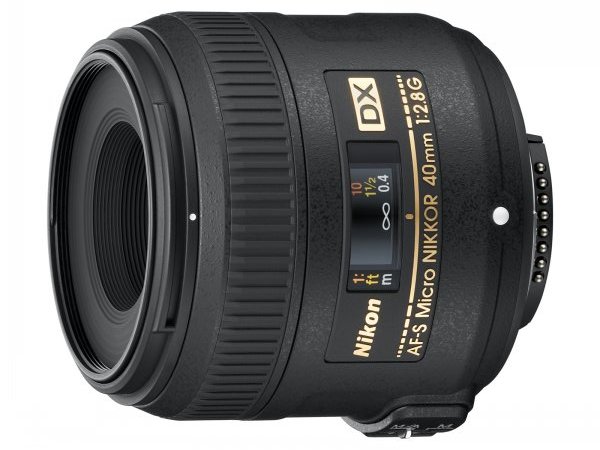
Nikon announced a new AF-S DX Micro NIKKOR 40mm f/2.8G lens. The estimated selling price is $279.95 (pre-orders at Amazon and Adorama). The lens will be available for sale in August. Some sample images are available here.

Specifications:

Focal length
40mm
Maximum aperture
f/2.8
Minimum aperture
f/22
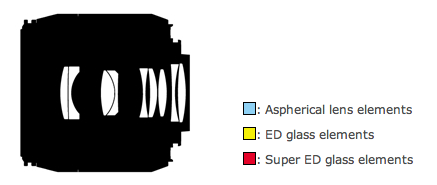
Lens construction
9 elements in 7 groups
Angle of view
38°50’
Minimum focus distance
0.163 m/0.53 ft (from focal plane)
Maximum reproduction ratio
1x
No. of diaphragm blades
7 (rounded)
Filter-attachment size
52 mm
Diameter x length
(extension from lens mount)
Approximately 68.5 x 64.5 mm/2.7 x 2.5 in.
Weight
Approximately 235 g/8.3 oz
Supplied accessories
52 mm Snap-on Front Lens Cap LC-52, Rear Lens Cap LF-4, Bayonet Hood HB-61, Flexible Lens Pouch CL-0915

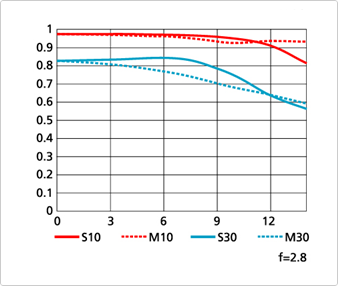
MTF chart:

Nikon AF S DX Micro NIKKOR 40mm f2.8G lens mtf chart New Nikon AF S DX Micro NIKKOR 40mm f/2.8G lens announced

Lens construction:

Nikon AF S DX Micro NIKKOR 40mm f2.8G lens construction New Nikon AF S DX Micro NIKKOR 40mm f/2.8G lens announced
Full press release:

MELVILLE, N.Y. (July 12, 2011) – Nikon Inc. today introduced the new lightweight and versatile AF-S DX Micro NIKKOR 40mm f/2.8G lens to provide Nikon DX-format shooters macro capabilities at an affordable price point. Ideal for intimate details or general portraiture, the new AF-S DX Micro NIKKOR 40mm f/2.8G lens has a minimum focusing distance of just 0.53 feet (6.4 inches) to allow users to capture extreme close-up photographs and High Definition (HD) video with a life-size 1:1 reproduction ratio.

“This new NIKKOR lens is an ideal accessory lens for those who are ready to explore a totally new perspective, whether it’s extreme close-up detail or general still images and movies with flattering out of focus elements,” said Lisa Osorio, general manager of marketing at Nikon Inc. The new Micro NIKKOR lens delivers new and added versatility to the Nikon DX-format digital SLR system and provides DX-format shooters with compact optics that deliver excellent color reproduction and stunning sharpness.”

Weighing in at approximately nine ounces, the extremely compact and lightweight lens is an ideal “next” lens to complement any DX-format shooter’s growing D-SLR kit. The natural focal length (60mm, FX equivalent) and large f/2.8 aperture are ideal for a wide variety of applications, whether capturing close-up details in flowers and insects or shooting flattering portraiture with a pleasing bokeh.

For fast and whisper quiet autofocus operation, the new Nikon 40mm Micro lens also features Nikon’s exclusive Silent Wave Motor technology, which allows photographers to get even closer without disturbing a subject. For complete control, the AF-S DX Micro NIKKOR 40mm offers users both manual-priority autofocus (M/A) and manual focus (M) modes to quickly and easily switch focus modes on the fly. To help ensure amazing lens performance at close distances, this new lens employs Nikon’s Close-Range Correction System. With this system, the lens elements are configured in a "floating” design wherein each lens group moves independently to help achieve critical focus. Additionally, Nikon’s Super Integrated Coatings are applied to help reduce instances of lens flare and ghosting. The seven blade diaphragm also helps to create a more natural out of focus component.

The versatile and compact nature of the AF-S DX Micro NIKKOR 40mm f/2.8G lens combined with its affordability make it a great travel companion for any DX-format D-SLR, including the new Nikon D5100 and popular D3100.

Price and Availability
The versatile AF-S DX Micro NIKKOR 40mm f/2.8G will be available in August for an estimated selling price* of $279.95. For more information, please visit www.nikonusa.com.


Related posts:

  1. Nikkor AF-S 105mm f/2.8G ED IF VR Micro lens now made in China
  2. Nikon announced the Nikkor AF-S 50mm f/1.8G lens
  3. Announced: Micro Four Thirds adapter for the F mount
  4. Nikon Japan announced the release date of the Nikkor AF-S 50mm f/1.8G lens
  5. Nikon D3s and AF-S DX Micro NIKKOR 85mm f/3.5G ED VR official announcements and press releases
This entry was posted in Nikon Lenses. Bookmark the permalink. Both comments and trackbacks are currently closed.

321 Comments

  1. Posted July 12, 2011 at 9:45 am | Permalink

    Who cares? And who would want a 40mm macro lens anyway, the working distance is really not long enough, I can’t imaging a scenario where I would prefer this lens to the current 85 and 105mm micros.. Come on Nikon, where are those 12mm and 16mm f/1.8 DX primes that serious photographers using DX bodies are crying out for?

    • Richard
      Posted July 12, 2011 at 10:05 am | Permalink

      Precisely!!!

      I do not understand why Nikon have devoted resources to this product, much less the prioritization of placing it ahead of other products for which there is greater demand.

      • Narna
        Posted July 12, 2011 at 7:56 pm | Permalink

        Nikon obviously feel they need a cheap macro to sell to enthusiasts (or at least have on offer) to compete with the cheap sony/canon equivalents. I agree, this will raise thier profile amongst thier low end DSLR buyers and is a good addition to the lineup.

        Besides any new Nikon lenses are always welcome, I might even get one myself!

    • chris
      Posted July 12, 2011 at 10:56 am | Permalink

      HAHA. how bloody ignorant.

      • LGO
        Posted July 12, 2011 at 11:15 am | Permalink

        Guys, there is no need for verbal insults here.

        @ Darth

        I have FX but I prefer to use DX for macro due to its FOV and greater DOF.

        @ Richard

        Good question as to where the other “mainstream” DX primes are. I was expecting Nikon to release a 16mm to 18mm prime as well though it will likely not open as wide as f/1.8. I am also expecting Nikon to release a 23mm DX lens and an upgraded and more capable version of the Nikkor 17-55mm f/2.8. It may be just a matter of time over the next few weeks when Nikon announces its other DX-specific lenses. Perhaps Nikon wants to draw out our attention over a longer period of time. :-)

        It’s interesting to note that this is the 2nd time that Nikon has sprung a surprise on the lens. If Nikon is this good in keeping its secrets, then it is likely that we will not be getting much advance info on Nikon’s other products, specially the replacements for the D3s, D300s, and D700.

        • Darth
          Posted July 12, 2011 at 11:22 am | Permalink

          Yes, I agree with you LGO. There are smart people out there, thankfully, who do not jump up screeming “that’s not what I needed, why did they release it?”. Get real.

        • Posted July 12, 2011 at 3:40 pm | Permalink

          @ LGO – If there are no rumors, what shall we discuss and flame about?

        • C_QQ_C
          Posted July 13, 2011 at 8:20 am | Permalink

          >>Nikon to release a 23mm DX lens <<

          Now that would be a real surprise ! :P

      • Simon Chung
        Posted July 12, 2011 at 11:53 am | Permalink

        100% agree. This is a little known secret amongst DX shooters (like myself).

      • kyoshinikon
        Posted July 12, 2011 at 1:48 pm | Permalink

        On a sidenote I am a PROFESSIONAL wide shooter who uses Dx (as I can’t afford fx yet) My main shooters are a 10.5mm, 14-24mm f2.8, 17-35mm f2.8, and 18-70mm f3.5-4.5.

        Sure they aren’t any near as wide as they are on fx (21mm on my 14-24mm !) but they do the job and can do what I need them to until I wrangle up enough to get a D3s (I don’t want a D700 for several reasons)

        • Richard
          Posted July 13, 2011 at 2:10 pm | Permalink

          @kyoshinikon

          That is interesting. I had not thought of being a specialist in “wide shooting”. What sort of subject matter do you shoot?

          Cheers

    • Pseudonikonian
      Posted July 12, 2011 at 11:28 am | Permalink

      Haha … Serious photographers and DX. That really made me laugh!!

      • The invisible man.
        Posted July 12, 2011 at 11:58 am | Permalink

        FROM Thom Hogan’s WEBSITE about that new lens :

        Nikon today surprised everyone with a lens announcement, this time the 40mm f/2.8G Micro-Nikkor AF-S DX. This new macro lens is essentially a DX version of the 60mm Micro-Nikkor, and features both flat field (CRC) and 1:1 magnification. Price is US$279.

        The question, of course, is why? Of all the things we don’t currently have in DX lens sets, a full set of macro lenses is nearly last on the list (we now have the 40mm and 85mm, which are approximately the 60mm and 105mm equivalents, though not in equivalent aperture). Yet we’re still missing any wide angle DX prime, several significant DX zooms, a mid-range f/2.8 with stabilization and truly sized to DX, and even a truly fast DX normal lens. As far as I’m concerned Nikon has completely lost the script in DX lenses.

        • Anthony
          Posted July 12, 2011 at 12:13 pm | Permalink

          No truly fast DX normal lens? What would you call the 35mm f/1.8?

          • STJ
            Posted July 12, 2011 at 12:31 pm | Permalink

            slow?

          • Posted July 12, 2011 at 12:52 pm | Permalink

            My “truly fast” comment was made with the concept of equivalence clearly in mind. Nikon is playing DX as a non-equivalent line for the most part. Technically, a 40mm Micro-Nikkor should be f/2 to be fully equivalent. A 35mm “normal” lens really needs to be f/1 to be fully equivalent, but it would be nice to have f/1.4. Yes, I know you can buy the expensive FX 35mm f/1.4, but it’s not the same thing.

            • twoomy
              Posted July 12, 2011 at 1:53 pm | Permalink

              I’m not going to lose much sleep over the equivalence; a few primes in the 1.4 and 1.8 range would be fine by me. Rarely do I use any macro lens (on DX or FX) at 2.8, so 2.0 would mean more size and useless cost.

            • gt
              Posted July 12, 2011 at 2:23 pm | Permalink

              I’m on your page. I think Nikon is dropping the ball. I do think a 35mm F1.4 DX should be on the market ($400 to $500 price range). The wide angle prime is long overdue. The zoom situation is just abysmal.

              DX is a perfectly good format, but they just don’t want to provide us with appropriate lenses!

              Moreover, a 40mm F2.8 micro DX? Seriously? Real macro shooters won’t touch this thing — the only possible market I can foresee using it is absolute newbies — who are making ill-informed buying decisions

            • Jabs
              Posted July 12, 2011 at 3:54 pm | Permalink

              Fully equivalent to WHAT?
              Show how you got your profound theses from Inspector Gadget?

            • gt
              Posted July 12, 2011 at 4:26 pm | Permalink

              Fully equivalent to a full frame normal lens.

              A 35mm F1.4 on DX is equivalent in focal length and depth of field to a 50mm F1.8 FX.

              Jabs, don’t be rude just because the conversation is about something you aren’t fully informed about

            • gt
              Posted July 12, 2011 at 4:28 pm | Permalink

              *I’m sorry let me rephrase — more accurately

              A 35mm F1.4 DX is equivalent in field of view and depth of field to a 50mm F2 FX

              I want to be precise in my choice of words

            • El Aura
              Posted July 12, 2011 at 5:44 pm | Permalink

              Full equivalence on crop sensors is not likely to be a smart thing to attempt. Look at the price difference between Canon’s f/1.2 and f/1.8 lenses, the difference in price can about pay you the surcharge FF bodies require, and this is with one lens, add a second lens and FF becomes cheaper.

              What we can demand on smaller sensors is a matching of f-stops, we know that we make compromises in regard to DOF and low-light capabilities.

            • mike
              Posted July 12, 2011 at 8:21 pm | Permalink

              That’s fine, but equivalent lenses are about the same size, so you wouldn’t save (much) weight or money that way. It would be a nice option for someone that only shoots DX (like myself), but if I really wanted lenses equivalent to FX f/1.4 primes and f/2.8 zooms, I wouldn’t be shooting DX. I think it’s fair for manufacturers to cut out the fastest lenses on their smaller platforms.

              I still want some of those other things, though, like a 14/2 (or 2.8) wide-angle prime, and a 50-150 f/2.8 VR. I’m not a big fan of Sigma.

            • Jabs
              Posted July 12, 2011 at 9:51 pm | Permalink

              @gt – yeah BALONEY is hard to understand and I am just a leetle ole Engineer with a 4.0 Average In Mathematics and Sciences – ok, I am ‘clueless ‘- satisfied.
              NO ONE can answer that preposterous claim is why I asked – do you see any more answers coming?
              Duh!
              You can fool some of the people some of the time BUT not all the people – got it!
              lol
              The answer = you multiply the focal length and NOT the F-stop!

            • gt
              Posted July 13, 2011 at 12:39 am | Permalink

              @Jabs,

              You seriously have no idea what you’re talking about. please stop. Please google “depth of field” and “full frame vs. crop sensor”

            • Jabs
              Posted July 13, 2011 at 1:15 am | Permalink

              @gt – OK, I will

            • Jabs
              Posted July 13, 2011 at 1:44 am | Permalink

              @gt – I ‘googled ‘it and still see this as nonsense or people trying to complicate an argument without FACTS.

              Fact – FX = 35mm or 24×36 mm
              Fact – DX = 1.5 DIVIDED by that and not multiplied
              Fact – F-stop DOES NOT change from FX to DX, focal length changes IF the lens was perhaps originally made for FX and now is mounted on a DX body.
              Where is the equivalence? What equivalence is being described?

              Basic Science
              IF I magnify an IMAGE from a smaller sensor and they have a smaller pixel pitch, then WHAT is the resulting output WHEN I put a lens on it?
              I want you all to tell us here WHAT this equivalence IS and how you get there in REAL terms and not guesses or hyperbole!

              Facts – DX has a smaller pixel pitch for a given megapixel size, so the inherent magnification to GET any focal length is going to be greater than a FX sensor, as that is bigger, hence LESS magnification for an equivalent focal length.

              NOW, explain that in this equivalence CLAIM!
              Explain also IF the F-stop changes or NOT and why?

              People are perhaps lost in trying to explain depth of field as an APPARENT difference because of sensor size going from FX to DX – BUT then it is foolish to now try and make this a fact WHEN you have not measured it nor show ANY Scientific proof nor real measurements of your claim to back it up- Convince me!

              Sorry not some uneducated idiot here!

            • Posted July 13, 2011 at 7:34 am | Permalink

              @twoomy: I don’t lose a lot of sleep over exact equivalence, either. However, you don’t want to go too far and get multiple stops away from what you can do with a larger sensor camera. If we have f/1.4 primes on FX, an equivalent f/2 prime on DX already puts us two stops off in DOF control. Any more than that and we’re just in a very different, constrained league.

              @jabs: grade point averages mean nothing, and your Google skills aren’t at the 4.0 level. Try googling “photographic equivalence.” What you’ll find is that we’re talking about whether we can take the same EXACT image from the same spot with different formats. DOF comes into play, and that’s where smaller sensors start to raise serious issues. This issue was also true of film, it just wasn’t talked about as much (no Internet to google ;~).

            • Jabs
              Posted July 13, 2011 at 10:48 am | Permalink

              @Thom and others here.
              Sorry but I already understand the concept of the depth of field changing because of the increase/decrease in focal length from FX to DX or DX to FX and it is YOUR explanation that is awful and trite – hence you are making a mountain out of a molehill = idiot.
              4.0 Average means = Intelligent and not easily snowed or fooled as I understand the technical details plus the baloney added. Explaining the obvious in irrational or glib terms means that you are now a ‘snake oil salesman’ selling to morons or gullible people.
              Have a nice day!
              There is NO such real term as photographic equivalence = pseudo-Science or Internet speak to sound like you are some authority on things – clear enough?

              I have been in photography for over 30 years plus good at it and followed you in the Magazines, so not filled with hatred of you or anyone, but my BS meter goes off here all the time.

            • Jabs
              Posted July 13, 2011 at 11:04 am | Permalink

              EARTH to everyone here – the F-stop of a lens does NOT change from DX to FX or from DX back to FX – it is the focal length that changes and hence you have that as the NEW depth of field based upon the focal length difference and NOT the F-stop which did not change.

              Hence, photographic equivalence is what?
              Point of view might be a better term BUT since the F-stop does not change, then where is this so-called equivalence? If one variable changed (focal length via magnification), then how come you now have two results – focal length and F-stop. Are we all ‘buttheads’ or being duped?
              Your call.

            • LedFox
              Posted July 15, 2011 at 5:53 am | Permalink

              @Jabs

              > “focal length changes IF the lens was perhaps originally made for FX and now is mounted on a DX body”

              No. The physical focal length of the lens never changes.

              > “Where is the equivalence? What equivalence is being described?”

              The one that actually changes between formats.

              > “Explain also IF the F-stop changes or NOT and why?”

              The ‘equivalent aperture’ changes.

              As sensor size increases, DoF decreases for a given aperture (when filling the frame with subject of same size & distance).

              This is due to larger sensors requiring one to get closer to subject or to zoom-in in order to fill the frame with that subject.

              And since proximity & zooming = shallow DOF:

              This means one needs progressively larger apertures on DX in order to maintain the same DoF as on FX.

              Hence why the equivalent aperture changes.

              > “it is foolish to now try and make this a fact WHEN you have not measured it nor show ANY Scientific proof nor real measurements of your claim”

              A 50mm f/1.8 on a DX sensor has the equivalent DoF of a 76mm f/2.7 on FX.

              The above is derived from real measurements using real formulas which you can find on the web if you know where to look.

              > “the F-stop of a lens does NOT change from DX to FX or from DX back to FX – it is the focal length that changes”

              Again, the focal length of a lens never changes.

        • Posted July 12, 2011 at 2:40 pm | Permalink

          I was really surprised.

          I was waiting for dedicated DX primes like: 16mm f/2.8, 24mm f/1.8, 28mm f/1.8, 85mm f/1.8, 135mm f/2, 200mm f/2.8, 300mm f/4, 500mm f/5.6 all with AF-S and VR.

          For zoom lens I am waiting for 16-70 DX f/3.5-4.5, 35-135 DX f/2.8 or 50-150 DX f/2.8, even 50-135 DX f/2.8 would be ok.

          • Fotouser
            Posted July 12, 2011 at 3:14 pm | Permalink

            Wow ! That is a really big wish list. All pro lenses in DX format? I am sure that Nikon would want you to move to FX pronto.

            By the way, there is a 16-85mm DX VR already available. For the rest, buy the 70-200 f2.8 VR.

            • Posted July 12, 2011 at 7:09 pm | Permalink

              Well, I am very content with the 10-24 f/3.5-4.5 DX.

              Do you consider the 10-24 expensive pro gear?

              I don’t even imagine replacing DX body + 10-24 with FF body + 14-24, mainly because of the size and weight, especially when I travel.

              The 16-85mm DX VR seems to be a nice lens but I don’t like the duo-cam zoom system. The 70-200 f/2.8 is simply to heavy to carry around all day long.

          • Jabs
            Posted July 12, 2011 at 3:46 pm | Permalink

            AND who is gonna buy all those expensive lenses to mount on a cheaper body? ADD up the lens totals and then price them versus the most expensive DX body for a clue! Nikon might be going FX with DX compatibility in their lenses and thus they already have some of the glass that you wish for PLUS now, video features and capabilities in their newer lenses – sounds like a PLAN to me anyway!

            • Posted July 12, 2011 at 7:18 pm | Permalink

              The DX 200mm f/2.8 AF-S VR, should be not much more expensive than the D7000.

              If you’ll buy a 600mm f/4, you will mount it on a “cheaper” D3S/D3X body, or even on a really cheaper D300S body, right?

          • Recent Convert
            Posted July 12, 2011 at 7:26 pm | Permalink

            Your desired 200mm f/2.8 will have the same size front element as the 70-200 f/2.8. Weight-wise, that brings it into the same class.

            • Posted July 12, 2011 at 8:01 pm | Permalink
            • mike
              Posted July 12, 2011 at 8:33 pm | Permalink

              180mm f/2.8D has neither an AF-S motor nor VR. Apples to oranges. Besides, (aside from macros) any prime much longer than 60mm isn’t going to benefit much from a DX specification.

            • Jabs
              Posted July 12, 2011 at 9:59 pm | Permalink

              The 180 mm F2.8 ED-IF AF has a 72 mm filter thread, if I remember right
              200 mm F3.5 ED-IF AF had a 62mm filter thread
              200 mm F2.8 might have 72 or 77 and what’s the point of a 200 F2.8 over a 180 F2.8 which is a legendary lens of the past. Maybe they update the 180mm F2.8 and add VR, but I don’t know. Nikon has a 200mm F4.0 ED-IF Macro but never another 200 mm prime that I know of besides the 200 mm F2.0 ED-IF and now ED-IF-AF-VR2.

            • Recent Convert
              Posted July 12, 2011 at 10:32 pm | Permalink

              Well, a 200mm/2.8 will have a front element of D=200/2.8=71.5mm. Therefore, the next available filter size is 77mm. That’s exactly the filter size of the 70-200mm. With a 180mm lens, you can just sneak in to put on a 72mm fiter thread. But you want a 200mm lens. It will be 11% longer, 11% thicker, and therfore 33% heavier than the 180. That makes for over 1000g. Add AFS and VR and the weight will come in at about 1200g. That’s mighty close to the 1500 of the 70-200. Besides: how much weight do you believe can be saved by going DX (rather than FX) at that focal length? I believe that absolutely nothing could be saved. That’s why there are no long DX lenses.

            • Posted July 13, 2011 at 7:38 am | Permalink

              Canon 200mm f/2.8 has 72mm filter and weights 765g.
              It’s true, it is not VR/IS.

          • JamesC
            Posted July 12, 2011 at 10:16 pm | Permalink

            Man, I would be all over a 24mm DX prime, even at 2.8! The 35/1.8 is just that little bit too long for casual party shots in a cramped room, and what’s our other option if we want to go wider? Expensive FX lenses or crappy 18-x kit lenses.

          • Where's my...
            Posted July 13, 2011 at 6:12 pm | Permalink

            Maybe what you are looking for is a second hand 18-70 DX Nikkor since you already have th 10-24 for wide angle, should be sub $200 and with really nice optics.

          • Where's my...
            Posted July 13, 2011 at 6:13 pm | Permalink

            Maybe what you are looking for is a second hand 18-70 DX Nikkor since you already have the 10-24 for wide angle, should be sub $200 and with really nice optics.

        • PHB
          Posted July 13, 2011 at 9:20 am | Permalink

          There is a case for a DX sensor but not for a complete DX lens range.

          For starters, the cost reduction of DX over FX pretty much goes away above 50mm. When people get the 40mm DX I bet they will find that it pretty much covers the FX frame like the 35mm does.

          I agree that it would be nice to see some wide DX primes, but wide angle is where DX is always going to be weakest. It has the DX sensor size but the FX mirror sweep to contend with.

          If I buy a lens it is either going to have to be very cheap (35 f/1.8), a specialist lens (10.5 fisheye) or FX. Unless you already have a stable of full professional lenses, the DX format is the place to be right now.

          But come the F5 generation we can expect that 24MP FX bodies will be selling at about $1000. So an FX body will also be a decent DX body.

          That gives the pro-DX format a four year time horizon. There might be a pro-DX body in the F5 generation but it will likely be a specialist body for birders and others wanting long reach.

          So this just seems like the wrong time to be going into a full DX lineup.

          If it was me planning the F5 generation I would make one pro body chasis that could take different sensors as a dealer upgrade. That has not made much sense to date because sensor development is the most expensive part of camera development.

          But its not that difficult to modify a sensor by leaving out some production steps. So a mask set for a 24MP color sensor can be used to create a 24MP IR and 24MP monochrome just by leaving out filters. They could also do te 12MP from the D3s and whatever the max on the DX line turns out to be. Add in the base 24MP sensor and thats five sensors right there.

          • mike
            Posted July 14, 2011 at 2:56 pm | Permalink

            At close focus there are some benefits to DX even at longer focal lengths. That is why Nikon has an 85mm DX macro, and Canon and Tamron have their 60mm DX macros. Working distance is much better on those than their FX counterparts, and they do vignette on FX frames at certain distances.

      • ERik
        Posted July 13, 2011 at 1:43 am | Permalink

        If you would be a “serious” Photograpaher you would understand why.
        Both formats have their prois & cons…

    • Derek
      Posted July 20, 2011 at 12:05 pm | Permalink

      It would be perfect for photographing snakes that are 4-6′ long. I use a 105mm on the small snakes. When using a 105mm on a large snake I have to move back far enough that the flash does not provide enough light and far enough back where the snake can make a getaway. With the 40mm I will be able to get closer to keep tabs on the animal and get plenty of light on the subject. I am looking forward to getting the 40mm micro!

  2. Posted July 12, 2011 at 9:48 am | Permalink

    This is a must have lenses for shooting jewels. The DOF is “larger” and produce sharper images (more DOF) in the same f/stop of the 60mm and 105mm VR. I have both, and i shoot jewels (take a look in my web site), and this is a very pleasure focal lenght for that job.

    The best lenses for that job are the expensive and limited TS-E, so, this is a great complement for Nikon DX Set.

    Still waiting the new bodys, soon?

    Cheers!

    • Posted July 12, 2011 at 12:58 pm | Permalink

      Not really …; the best lenses for that job are the PC-Es …
      ;)

      • Posted July 12, 2011 at 1:54 pm | Permalink

        +1 Dolph.

        Utterly pointless (is someone at Nikon having a bit of a laugh or what) . Not a fan of these short macros , they block light seeing how close you have to be to your subject.

        As Thom Hogan says , where’s the AF-S 16mm f/2.8G Nikkor? Much more necessary.

        • dynamitephotos
          Posted July 13, 2011 at 2:45 am | Permalink

          You’re asking for a 16mm f2.8 lens? go get a tokina 11-16 2.8, It is a fantastic lens

          • Greg Lamb
            Posted July 14, 2011 at 5:53 pm | Permalink

            I agree. Tokina 11-16 2.8 and 35mm 1.8 along with the “cheap” but sharp 18-105 and I have stopped shopping for wide.

      • D700guy
        Posted July 12, 2011 at 2:46 pm | Permalink

        +2

    • Posted July 13, 2011 at 5:06 pm | Permalink

      The DOF is “larger”

      It isn’t. If you look at it mathematically, you are right: a longer lens will give you less DOF. However, switching to a longer lens will also give you another image (you’ll see less of your subject).
      If you step back with your longer lens until you’ve got the exact same framing of your subject (i.e. the same magnification ratio), you’ll find that you’ve got the exact same amount of DOF.

      The only thing that changes with your longer lens, is the amount of background you’ll see in your image (you’ll see less of the background which is therefore less detailed). This is has nothing to do with DOF, plus it is often an advantage in macro shots as you get a softer and less distracting background.
      (perspective also changes because you move further away)

  3. Posted July 12, 2011 at 9:53 am | Permalink

    The 85 DX Macro is junk. If this is better, it is a good option for DX shooters. The fact that it was released now and not with an upcoming camera announcement leaves me optimistic Nikon has a couple FX lenses to be release this summer. Perhaps they didn’t want to muddy the water with too much at one time.

    • gt
      Posted July 12, 2011 at 2:25 pm | Permalink

      the 85mm DX is highly reviewed by every single lens review site. It’s automatically a better buy already because a) reviewers have found it nearly flawless and b) 5.5″ working distance (as opposed to the 2″ working distance of the 40mm)

      • Johan
        Posted July 13, 2011 at 9:37 am | Permalink

        I second that. 85 mm micro is great for DX. Good working distance and light enough to fit on a smaller tripod. And not least as sharp as my Sigma 150 mm which is just awesome. However I have a hard time seeing the point with this new 40 mm lens. 2″ working distance makes it impossible to use in many situations without shading or scaring away the subject. The 85 mm is very versatile that is the DX macro to get, then the 35 f1.8 is the natural choice of lens at this focal length.

        • Jabs
          Posted July 13, 2011 at 11:50 am | Permalink

          A 40mm DX Macro is for shooting things like coins, jewelry or such and not insects unless they are pinned to a display as in dead or on exhibition-lol

          • sloma_p
            Posted July 13, 2011 at 12:08 pm | Permalink

            And what exactly prevent you from shooting coins with 85DX ??

            There’s one issue I can think of, and it’s a DOF – 40 will have much more DoF, but then again if you’re serius enough to worry about having huge DoF in macro, go get one of the PC-E lenses, as they are much better at controllig it.

            • Posted July 13, 2011 at 5:09 pm | Permalink

              See my other remark on this page: DOF does not change when you keep your magnification factor constant (i.e.: if you take a shorter focal length, you’ll also have to move closer to your subject).

            • Jabs
              Posted July 13, 2011 at 10:24 pm | Permalink

              @sloma- NOTHING in response to your 85mm DX question.
              Here is the thrust of Macro
              You choose a focal length of your Macro lens that determines the reproduction ratio or SIZE of the final image in your frame that you want.
              You move in or out to compensate.

            • El Aura
              Posted July 14, 2011 at 10:33 am | Permalink

              “And what exactly prevent you from shooting coins with 85DX ??”
              Price, size, weight? Some people make compromises to save money (and weight and size).

  4. Posted July 12, 2011 at 10:03 am | Permalink

    And this after I bought a Nikkor Micro 60mm AFD lens for my D300 last week.

    It would been a light carry-around lens for portraits and macro instead of lugging around my Nikkor 85mm f1.8 and the macro.

  5. AnoNemo
    Posted July 12, 2011 at 10:06 am | Permalink

    I guess now we know the big Nikon surprise for this year … Nikon started to produce useless products. This lens is a prime example for that. What were they thinking?

    • ZinhaEq
      Posted July 12, 2011 at 11:15 am | Permalink

      +1

    • FM-2 fan
      Posted July 12, 2011 at 1:35 pm | Permalink

      some people can’t afford to purchase/carry all the lenses – that is why such lens is welcome. as soon as you actually need 2ft distance for a macro, the 40mm will not help at all – no doubt. But think of the people, who rather have such small lens and a tele-zoom – that is in terms of coverage already a lot for medium budgets

  6. LB
    Posted July 12, 2011 at 10:10 am | Permalink

    As a photographer who continues to learn by renting lenses from a local store, rather than buying because many of the options are just too expensive, a $280 nikkor branded macro lens is a welcome addition to the market. While it may only serve 10% of the photography I shoot, it is refreshing to see Nikon targeting beginners (and noobies) rather than solely on professionals.

    Yes, there is a need for professional-level products, however this is a for-profit corporation that cannot simply survive on professional photographers. There are professional photographers who have been using the same lenses for 2 decades. From a profit perspective, these are the worst customers you could possibly have. The noobies, like the 22-year old kid who has too much money, is the perfect customer who will buy anything new and “upgrade” their equipment every chance they get.

    True, there are many other lenses that we all desire, but given Nikon’s product roadmap and the information gathered here on NR, I think it is fair to say that Nikon is trying their best to meet everybody’s needs. Just as easily as some of you mock this lens or the supports of this lens, it is just as easy for me to laugh at everyone asking for a 30mm f/4.0 VR lens. My response to that is: get a monopod, tripod, or just hold your camera still with the existing 300mm f/4.0D lens.

    • dave
      Posted July 12, 2011 at 12:17 pm | Permalink

      While I appreciate that Nikon is trying to generate income, it would seem in their best interest to produce lenses that a large number of people will purchase. It seems as if the guys in the marketing department at Nikon have lost their grasp of the products they sell. I suspect someone had the bright idea that since the 60mm micro sold so well and is an FX lens that a 60mm equivalent would be a hit in the DX market, forgetting that the 60mm micro has already sold quite well in the DX market because it is a 90mm equivalent. Granted it’s nice to see a normal field-of-view macro, but it is hardly what the market has been clamoring for.

  7. Posted July 12, 2011 at 10:20 am | Permalink

    seriously ,why would I get this lens :o .I will rather spend a bit more and get 60mm instead .

    • Fotouser
      Posted July 12, 2011 at 3:22 pm | Permalink

      Yes. $280 vs $600 for the 60mm AFS !

  8. I.am.one
    Posted July 12, 2011 at 10:30 am | Permalink

    why wasn’t this product under the radar of the rumour?

    • Banned
      Posted July 12, 2011 at 12:52 pm | Permalink

      I think it’s a proof that rumors are based on speculation and not facts. There was no speculation about this lens because it’s a very odd lens. Therefore no rumors. On the other end there is a lot of speculation about obvious updates to existing lenses and that’s why we get rumors on those. It’s all a fanboy game really.

      • santela
        Posted July 12, 2011 at 2:47 pm | Permalink

        u said it man, it’s all a fanboy game really.

  9. Posted July 12, 2011 at 10:32 am | Permalink

    While this lens isn’t what most of the pro photogs want or need, I think it is a smart move on Nikon’s part. If it’s a money maker(which it will be), good for Nikon. This means more R&D for the pro gear most of us are waiting for.

    After looking at the sample shots, it looks like an amazing and cheap little lens. I might get one just to play with, since it’s so CHEAP!

    I’m sure the dedicated DX shooters will get their fast Ultra-Wide angle primes soon.

  10. D700guy
    Posted July 12, 2011 at 11:03 am | Permalink

    I for one am amazed at how quickly they came out with this and from out of no where too. I only wish other products had such a short fruition.

  11. Posted July 12, 2011 at 11:08 am | Permalink

    There is a set of images with the 40mm DX at
    http://www.nikon.co.in/productitem.php?pid=1428-ac6d207586

    The target market is absolutely clear.

    • Richard
      Posted July 12, 2011 at 12:17 pm | Permalink

      Of the five sample images I see only two that are macro type images. The other three could have been shot with quite a few other lens with equivalent results.

      • paf
        Posted July 12, 2011 at 2:13 pm | Permalink

        ….and even those 2 could be shot with the 35mm or 50mm.

        • Posted July 12, 2011 at 3:30 pm | Permalink

          Yes, definitely.

          But imagine the thrill of a first time buyer of a micro Nikkor and taking similar images. He will be married to Nikon for the rest of his DSLR days. Its definitely a lens launched with a long term strategy.

  12. Puny Mortal
    Posted July 12, 2011 at 11:16 am | Permalink

    I see this as a good portrait lens, as I find anything longer in APS-C to be more suitable for headshots. And look at the MTF chart – the price is excellent for that image quality!

    • Rahul
      Posted July 12, 2011 at 1:03 pm | Permalink

      If you want a good DX lens for portrait work then try 35mm f/1.8.

  13. Polle Hansen
    Posted July 12, 2011 at 11:19 am | Permalink

    Hmm, I think I’ll keep my 35mm f/1.8 … Unless I need to do ocassional macro work and can only carry one lens. It does have the same maximum reproduction ratio as all recent Micro-Nikkor lenses out there.

  14. spamdie
    Posted July 12, 2011 at 11:28 am | Permalink

    DX lenses must be a little easier to design for Nikon. And they still have a consumer market to push. If all they push out are expensive pro level lenses eventually Canon or some other brand will come out (COUGH Micro 4/3) and kick them in the nuts because all they did was concentrate on Pro level and priced equipment.

    • Anthony
      Posted July 12, 2011 at 12:29 pm | Permalink

      Curious — what you describe is pretty much what Canon has been doing for the last couple of years too. Not a lot of DX primes out there, and it’s been *years* since they came out with a non-L EF prime. In terms of headcount, most crop-frame users of both systems have Rebel-class bodies with one lens, the 18-55 kit that they don’t even know can come off. Serious crop-frame shooters might happily buy L-class DX/EF-s lenses, but are also content with or at least reconciled to buying full-frame lenses to get the desired quality, so why would either company expend the resources to develop, market, and manufacture a duplicate set of crop-frame glass? As it is, Nikon lens real-world availability is so pitiful that one wonders if there’s more than one human actually working the production line.

  15. Jabs
    Posted July 12, 2011 at 11:35 am | Permalink

    The How and Why of Micro-Nikkors or commonly called Macro Lenses.

    http://www.nikonusa.com/Learn-And-Explore/Nikon-Camera-Technology/gnhy8b3m/1/Macro-Lenses.html

  16. Jabs
    Posted July 12, 2011 at 11:47 am | Permalink

    A simple comment – Nikon seems to be matching lens focal lengths BOTH in its’ FX and DX lines with the same or equivalent F-stops lenses.
    40 mm X 1.5 crop factor = 60 mm

    • AnoNemo
      Posted July 12, 2011 at 12:14 pm | Permalink

      Jabs,
      I noticed the same, I am not an expert but do you think that maybe Nikon is just cutting costs? Maybe these lenses share more common parts than we think. From that point of view it is possible that they have minimal incremental costs to lets say switch from one lens to another on the assembly line. But then again, once they are produced they have to be marketed, shipped, and kept in stock. I think this is the real cost

      • Jabs
        Posted July 12, 2011 at 12:29 pm | Permalink

        @AnoNemo.
        Naw – perhaps just filling out the line as in duplication of effort for both FX and DX systems. Nikon seems to be taking a two pronged approach to its’ cameras. Don’t know about parts, as not the Manufacturer!

  17. enchantedphoto
    Posted July 12, 2011 at 11:52 am | Permalink

    The photo samples on the Nikon website are very unimpressive…this lens will not be in my collection…back to Sigma.

  18. Jabir
    Posted July 12, 2011 at 11:54 am | Permalink

    Another comment – It is apparent to me and others here that some posters here are combatants or ‘soldiers’ for another famous or infamous web site guru who seek to surreptitiously drive traffic from HERE to their own web site out of perhaps jealousy or envy of the success of this site and the lack of some ‘control freak’ NOT running this site. This is why I love and respect the Administrator here, as he DOES NOT seem to be on some ‘egomaniac bent’ as in trying to explain to or be the sole source of information as in Internet GURU to idiots or the gullible as some people need others to think for them as they don’t like to use their own God given brains for much. Lazy bums – LOL

    • hexx
      Posted July 12, 2011 at 6:45 pm | Permalink

      which one is it then? you wasted your time to write a lot but in the end failed to spit out what exactly is on your mind :)

      • Jabs
        Posted July 12, 2011 at 10:06 pm | Permalink

        @hexx – libel and slander is a crime in America, so read between the lines – lol

  19. B2
    Posted July 12, 2011 at 11:54 am | Permalink

    BTW Nikon – when you update this lens make it tilt/shift and ten it may be a nice product lens.

    • Jabs
      Posted July 12, 2011 at 12:51 pm | Permalink

      @B2 – they already have a lens like that but it costs over $2000 US dollars
      http://www.nikonusa.com/Nikon-Products/Product/Camera-Lenses/2174/PC-E-Micro-NIKKOR-45mm-f%252F2.8D-ED.html

      • B2
        Posted July 13, 2011 at 2:37 am | Permalink

        Yes but this is FX lens which afaik is barely usable on D300s and D7000 because of it’s size. I would like to have DX version i.e. smaller, lighter, cheaper.

        • sloma_p
          Posted July 13, 2011 at 1:26 pm | Permalink

          Haven’t tried it on a D7000, but works perfectly well on a D300.

          And don’t count on a DX version being much smaller – those lenses cover much greater area (in most cases enough to cover 6×6 Medium format frame or more), they will always be quite big and expensive ;)

          • B2
            Posted July 14, 2011 at 3:45 am | Permalink

            Ok, didn’t check it myself but I heard that control knobs hit the flash housing on D300 and they are basically inaccessible on D7000 so I would rather have something DX optimized. I know it wouldn’t be much smaller, lighter, cheaper but still..

  20. Buett
    Posted July 12, 2011 at 12:20 pm | Permalink

    This is why we don’t have a D800. Nikon waste time on R&D for crappy products.

  21. Shooter
    Posted July 12, 2011 at 12:22 pm | Permalink

    Darth is DEFINITELY a childlike D-Bag. What a dumb dummy. His posts shall be regarded as trash written by the sites biggest tool.

  22. Posted July 12, 2011 at 12:27 pm | Permalink

    skipping this one

  23. FM-2 fan
    Posted July 12, 2011 at 12:30 pm | Permalink

    it is a good fit for those who need a rather small, light-weight lens. For those, who can’t imagine using a DX camera – well test them to be surprised how much less you carry while obtaining quality results. two lens in one i.e. 35mm and a close up – just right for video and “standard” lens rather than the 35mm 1.8

  24. Jabs
    Posted July 12, 2011 at 12:55 pm | Permalink

    Don’t throw stones if you live in a glass house = you throw out stuff and what comes back ‘rocks’ YOU and then you complain – lol = idiot.
    There are consequences to your points as in DO NOT make them unless you are ready for the backlash = common sense or maturity.

  25. Jabs
    Posted July 12, 2011 at 1:28 pm | Permalink

    A simple test to see if you are an idiot – lol
    You are on this photo shoot with a dog (why? – don’t ask!) and your gear in the mountains and now stuck up there with no way down. You are hungry and have no food or a way to get any or even get down for a while plus no cell phone service or such.
    1. What would you do?
    2. We already know what the dog will do – lol
    The ones socially conscious will die first and quote animal cruelty or such.
    The ones too high and mighty will give their life before doing what is needed to survive.
    What would you do?

    • Posted July 12, 2011 at 3:30 pm | Permalink

      …what?

      • Jabs
        Posted July 12, 2011 at 4:00 pm | Permalink

        It’s a joke – lighten up will you.

        • gt
          Posted July 12, 2011 at 4:30 pm | Permalink

          sounds more like incoherent rambling

    • JED
      Posted July 12, 2011 at 5:31 pm | Permalink

      Well you have already failed the idiot test if you get stuck up a mountain without supplies…

      • Jabs
        Posted July 12, 2011 at 10:01 pm | Permalink

        LOL – you got it. People get stuck on the dog and details.

  26. kyoshinikon
    Posted July 12, 2011 at 1:37 pm | Permalink

    Im going to avoid the flame war and just say that this lens kinda falls in the same boat as the 16-35mm f/4. A useless upgrade aimed at noobs or mid amateurs and not a bestseller. I would never trade my 55mm macro at this point for this as Af is almost useless at this rand just like I wouldn’t give up my 17-35mm 2.8 for vr…

    Nikon Do yourselves a favor and read this site… You will be financially better off.

    (Where is that durn 28-200mm f2.8 you patented?)

    • gt
      Posted July 12, 2011 at 2:28 pm | Permalink

      Disagree about the 16-35mm F4. That’s not squarely aimed at n00bs.

      The F4 line up (16-35mm F4, 24-120mm F4, and (upcoming) 120-300mm F4 or 70-200mm F4) are smart decisions by Nikon. A general purpose zoom with a moderately fast fixed aperture is on many people’s want lists. These types of lenses are geared towards prosumers or even professionals who are not-on-assignment. It’s a great compromise between weight, versatility, and image quality

      • rearranged
        Posted July 13, 2011 at 8:37 am | Permalink

        I highly doubt that there is going to be a 120-300 f4 since the 70-200 2.8 II + tc 1.4 performs great. And by the way it would cost (and weigh) the same as the 70-200 2.8. For me a 120-300 f4 would be a pointless lens.

        • PAG
          Posted July 13, 2011 at 10:32 am | Permalink

          I shoot with the 300mm f/4 and often use the TC1.4 to give me a 420mm f/5.6. A buddy of mine instead shoots with the 70-200mm f/2.8 and can’t even reach 300mm unless he gets a more powerful TC, defeating the image quality benefits of the 70-200. He finds it very frustrating at times.

          A 120-300m f/4 that takes a TC1.4 nicely would be a great birding and sports lens.

  27. Posted July 12, 2011 at 5:19 pm | Permalink

    On paper I can see why some don’t think this is lens is nessecary. But the results!! I personally would have this over all the 35mm and 50mm lenses currently available for dx. That bokeh is so smooth and its so sharp!

    There has been a huge amount of talk from those who want to to defect to the FX system as its the “PRO” format and the iso is better, and the d800 will certainly be a massive seller when it arrives. The hype has not been as great for the d400 that I can tell and Nikon will want to make sure its not over looked when it released. With some seriously good DX lenses now available which cover nearly all the “PRO” requirements with a system that is much less expensive and lighter. I think that the timely introduction of the micro DXs is a great way of keeping DX users in their current systems and makes the d400 a guaranteed success. If its good enough at high ISO I wont bother with fx and the 40mm micro will be the first lens I get for it. My bet is that a wide fast prime will be released at the same time, plus some other zoom, I will stick with my 14 /2.8, plenty wide enough for me.

  28. Mac Rockwell
    Posted July 12, 2011 at 6:22 pm | Permalink

    Can someone pinch me? Am I dreaming? Is it April fool?

  29. Charlie Martin
    Posted July 12, 2011 at 8:44 pm | Permalink

    Nikon has made and excellent choice in this lense and one that I may get. I had the 60 2.8 and got rid of it due to its size. For everyone that snipes each other on this site, step back and take a long hard look in the mirror at yourself and see if this definition of idiot fits.. A foolish or stupid person.
    2. A person of profound mental retardation having a mental age below three years and generally being unable to learn connected speech or guard against common dangers. The term belongs to a classification system no longer in use and is now considered offensive.
    Also, everyone needs to proof read your posts before you click on post comment or hit enter. Grammar and spelling is terrible and sometimes difficult to understand.
    To quote the Rolling Stones “You can’t always get what your want.”

    • Jeremy
      Posted July 13, 2011 at 10:44 am | Permalink

      I don’t think the Rolling Stones ever said “what your want.” lol

      • Charlie Martin
        Posted July 13, 2011 at 1:51 pm | Permalink

        no they didn’t. Thanx for catching that. This is a prime example of not fully proof reading before posting.

  30. Sam
    Posted July 12, 2011 at 10:02 pm | Permalink

    It’s so obvious this lens is for people who have an interest in Macro photography and want to invest in a DSLR system only to find Nikon’s Micro lenses cost $600+. A cheap entry level Micro lens is great for amateur Macro photographers.

    And as for people on hear saying it’s pointless, waste etc. That’s because you don’t buy the entry level lenses. If you did, you’d welcome this.

    • Niels
      Posted July 15, 2011 at 8:15 am | Permalink

      Right. I’m interested in that lens because I would like to try macro a bit but don’t want to fork over $600+ for something that I may not do a lot.
      As I don’t want to catch insects, the short distance to the subject is not much of a problem for me.

  31. Posted July 12, 2011 at 11:50 pm | Permalink

    I will be all FX soon, but I like the idea of this lens. I find the 105mm Micro to be a bit difficult to hand hold when stopped down. The 40mm might be a really good idea for this reason. The images look nice when shooting wide open, though I would like to see them at a higher magnification. It looks both sharp and has good bokeh… something not so easy to achieve. I might even buy one, as I use a 45mm GN on my D200 anyway.

  32. bigeater
    Posted July 13, 2011 at 12:57 am | Permalink

    Are people this negative on the Canon Rumors site?

    • Posted July 13, 2011 at 2:25 pm | Permalink

      Best comment on this topic.

  33. Waldorff & Stattler
    Posted July 13, 2011 at 1:05 am | Permalink

    Frustrating to see that Nikon fails to make any wide-angle DX primes…Does anybody knows if this 40mm DX was anounced in the patents here on NR?

  34. Posted July 13, 2011 at 2:34 am | Permalink

    DX….damnit! I would love a wide angle that could focus ultra ultra close!

  35. C_QQ_C
    Posted July 13, 2011 at 4:59 am | Permalink

    This lens DOES make sense.. When Nikon started to sell the 55mm Micro ( F3.5 / F3.8. etc.) those lenses sold in huge number : A portrait/general purpose/ normal lens that can focus realy close if the need arises..
    Now this is just the 55mm Micro for DX …. a Flat field lens , with, if the MTF chards don’t lie, corner to corner sharpness, Fast, Small, Light/ convenient to carry around, and very affordable…
    So.. : I think it will sell , espacialy for the younger enthosiast who need a ‘normal’ lens but also like the versatility of being able to shoot a flower, or a friends eye or whatever close-up with the same lens…, I think its a FUN lens, and I might buy it for just those reasons, if it turns out to be any good ….

  36. Magnus
    Posted July 13, 2011 at 5:19 am | Permalink

    Funny to see all the negative comments on this lens. Surely, Nikon knows exactly what they’re doing here. We people that are reading this site do not care too much about lenses like this one, but when looking at it’s low price, it’s among the cheapest macros available that also features autofocus on Nikon’s entry level DX cameras. This lens is obviously targeted towards the owners of those cameras.

    I did think “WTF?” too when I saw the news about this lens, but after some thinking I’m absolutely sure this will be a top seller for Nikon, unlike the relatively expensive 85/3,5. That lens cost more than an entry-level DSLR, and it’s a lot of money for very many people out there. Perhaps insect photographers won’t bother about this lens, but people shooting flowers and other small things will love it.

    The only bad thing with this release is the timing. Macro lenses are used mostly in the summer, and when this is available in the stores, the summer is fading at least here in scandinavia. It should IMO have been released at the same time as the new AF-S 50/1,8 got official the first time. People buy macros in the spring mainly, I think.

    It would be interesting to see how this lens performs on FX too, as I recently switched to a D700. If it behaves like the Tamron 60/2, which image circle covers the FX sensor when focusing close, it could be useable on FX too, as a wide ange macro. There aren’t too many of those on the market today.

    • C_QQ_C
      Posted July 13, 2011 at 8:10 am | Permalink

      >>The only bad thing with this release is the timing. Macro lenses are used mostly in the summer, and when this is available in the stores, the summer is fading at least here in scandinavia. <<

      In Scandinavia :agree, but on the southern hemisphere the Macro season starts in September…..

    • Qwertyuiop
      Posted July 13, 2011 at 10:41 am | Permalink

      Surely, Nikon knows exactly what they’re doing here.

      Surely? Not really. That is mere hope, a matter of fanboy faith.

  37. Posted July 13, 2011 at 8:40 am | Permalink

    You could buy this, or for some really spectacular macro you can buy a reversing ring for just over $10 and use it with any fast prime with an aperture ring. If you don’t have one, you can pick up a second hand one for less than a $100 and you can even get a new 50mm 1.8 AFD for less than $150…

    • Jeremy
      Posted July 13, 2011 at 10:49 am | Permalink

      Can I see a sample with a 50mm 1.8 AFD?

  38. Jeremy
    Posted July 13, 2011 at 10:53 am | Permalink

    I wonder if Admin should remove the replies too. They seem a foolish waste of time disconnected from the discarded original. Just saying.

  39. miguelyn
    Posted July 13, 2011 at 11:16 am | Permalink

    ….still waiting for a “new” Nikon 85mm f/1.8G AF-S

  40. kc1000
    Posted July 13, 2011 at 11:35 pm | Permalink

    at first, i don’t know why anyone would want this lens…. BUT… on second thought, at 6 inch focus distance a 40mm dx lens is actually pretty decent. could be used for taking shots of flowers and/or food — it’s being sold at a relatively low price too!

  41. SNRatio
    Posted July 14, 2011 at 4:38 am | Permalink

    OK, then, some explanations for this release.
    First, someone having used the 60/2.6 AF-S on FX (I have), might tend to think a 40/2.8 DX, as kind of DX equivalent, isn’t such a bad idea. For macro shooting, they’re practically equivalent: Little need for shallow DOF then – rather the contrary..

    Second, in terms of lens combos, the 16-85 and the 60AF-S micro is a really great combination on DX. The 16-85 paired with the 40/2.8 will be great too, with somewhat different use situations – where the need for higher focal length on macro is nicely covered by the 85 micro. And, the 35/1.8 being a little wonder for its price, it’s very far from flawless. The 40/2.8 could be a real alternative for several uses.

    Third, IF a 24MP sensor based camera is upcoming, this could be the first lens to match that resolution. So, it might be a hint of the D400 coming as a kind of 12/24MP combo, using pixel binning a la the D1H to achieve very good high ISO, while providing excellent detail and high dynamic range @24MP ISO100-200.

    Fourth, I think the press release may give us one important hint: This lens may be the natural choice for video with contrast-detect AF and the new sensors. Nikon may well have found out that they simply need a new lens to fully exploit the mew capabilities.

    Side note: Anyone think it was an incidence that we _first_ got a high res (24MP) FX camera, and _then_ fast wide FX primes? The main reason why Nikon hasn’t released fast wide DX lenses yet, is that they need to be optimised for the actual sensor resolution they are to serve, and that is only stabilizing now. (Going beyond 24MP on DX inevitably loses on so many properties that it’s not that likely to be of much use, but with the readout noise at D7000 levels, 24MP@ISO100-200 may be quite OK.)

  42. Anonymous
    Posted July 14, 2011 at 1:43 pm | Permalink

    I don’t understand the fuss. This lens is clearly directed to the amateur who wants to shoot macro sometimes. For Christ’s sake, it is a sub $300 lens!. I don’t think the user the Nikon intended this lens for is going to split hair about the f-stops. I am sure Nikon did market research and knows how to prioritize for the sake of business and profits. Just go and make images with what you have, and I am sure you will come up with some good images.

  43. Posted July 15, 2011 at 6:09 am | Permalink

    I’ve bought the Tokina 35mm 2.8 as a 50mm equivalent before the Nikkor 35mm 1.8. By the way it’s an awesome lens. I would have think on this 40mm, if the choice would have been here.
    This 40mm seems to be tack sharp, the only real issue seem the focusing course from infinity to 0.4m in 5mm ! That’s damned short if you want to use in the non macro range. You will need to have faith in your AF.

    Note: yes 40mm is too short for macro, like 60mm and even 105mm. 180-200mm rule here. But if you don’t need a fast lens (for DOF or light), and prefer optical quality this one could be it. And generally contrast is better on macro lens (i.e. rendering a la Zeiss).

  44. Posted July 16, 2011 at 6:18 am | Permalink

    Along with the D7000 Nikon opened a new way of approaching to their customers : THE UNBEATABLE PRICE . They are coming once again with a similar offer for a lens worth at least twice as much. This is really nice!
    THANKS NIKON!

  45. Arnstein
    Posted July 19, 2011 at 8:15 am | Permalink

    I shoot with a D300s and love my old AiS 55/2.8 Micro, since it is small and lightweight. But I’d like to have AF. I love my old AF 50/1.4 for portraits, but its focal length could be shorter. I love my AF-S 35/1.8, but the bokeh is bad.

    I’d consider the Tokina 35/2.8 Macro, but it has no AF-S. Same problem with the old AF 60/2.8 D. The new AF-S 60/2.8 looks ugly with its front element exposed. The Tamron 60/2.0 could be the better choice, but with more AF noise.

    I mainly shoot with the 17-55/2.8 DX and love it, but if I shoot people, many are scared of its size.

    Furthermore, this lens would be a great addition to my AF 24/2.8 and AF 85/1.4, and maybe a Voigtländer Skopar 20mm in the future :)

  46. Scott
    Posted July 19, 2011 at 11:05 am | Permalink

    I actually find this lens interesting, 95% of my shooting is macro and I see a place for this lens. When I go after bugs I’m lugging a d700, 200mm f4 micro, flash bracket etc. a very heavy setup that I wouldn’t trade for anything at the moment. However it would be nice to have lower end prosumer body with this lens as a carry around setup for when I am out with the family. The 60mm is a bit long on a DX body and a 40mm would be a nice compromise, it would leave me with the ability to shoot macro but also snap a family picture. Also remember folks it’s the about 90% photographer and 10% equipment.