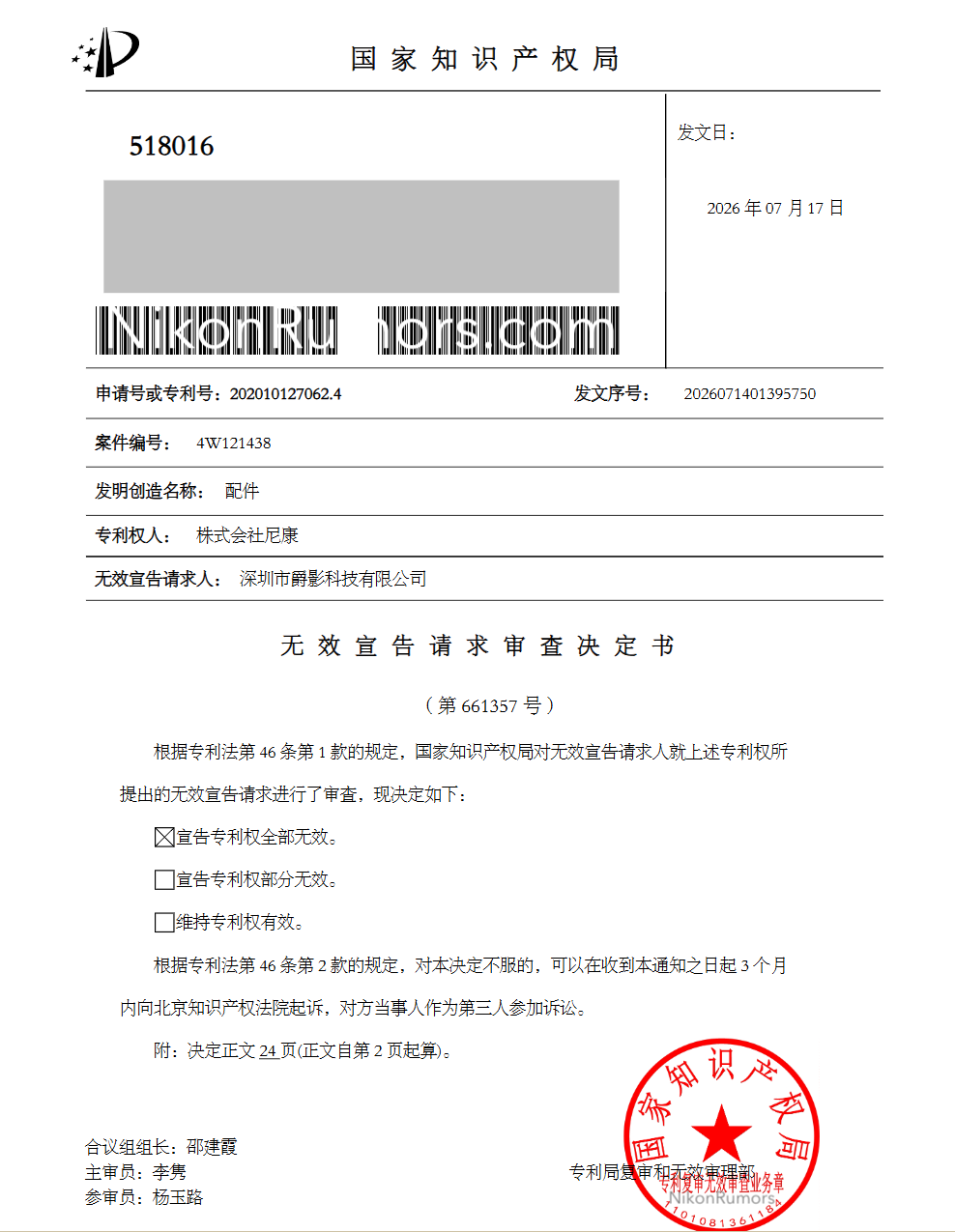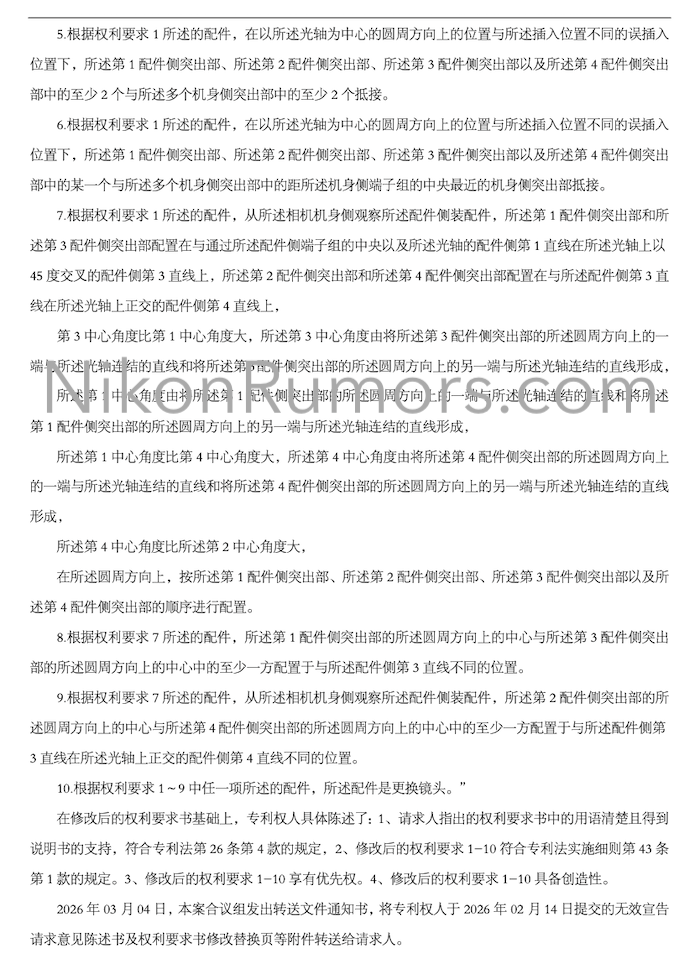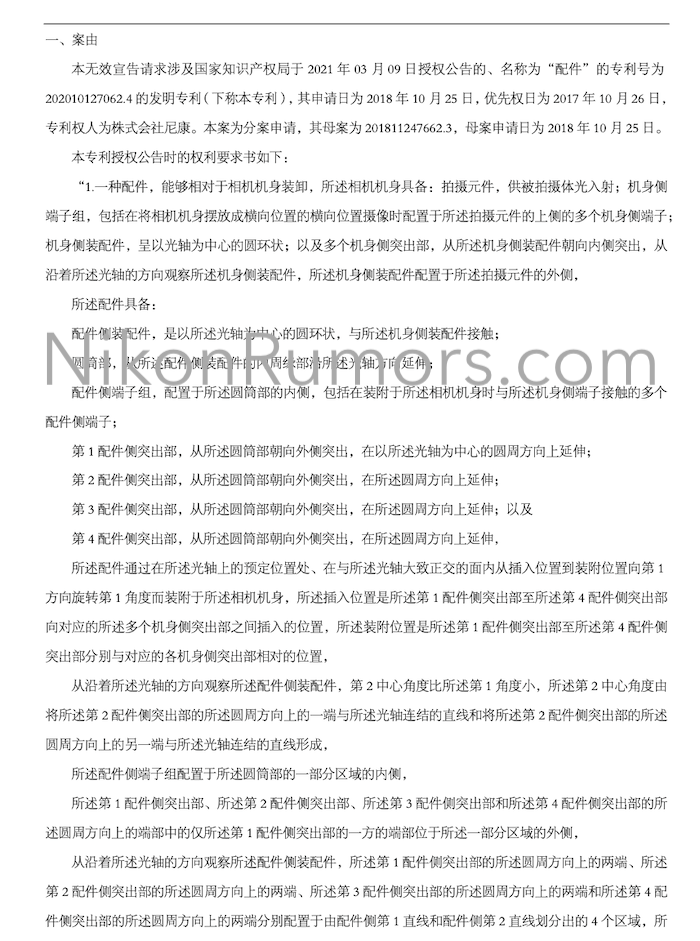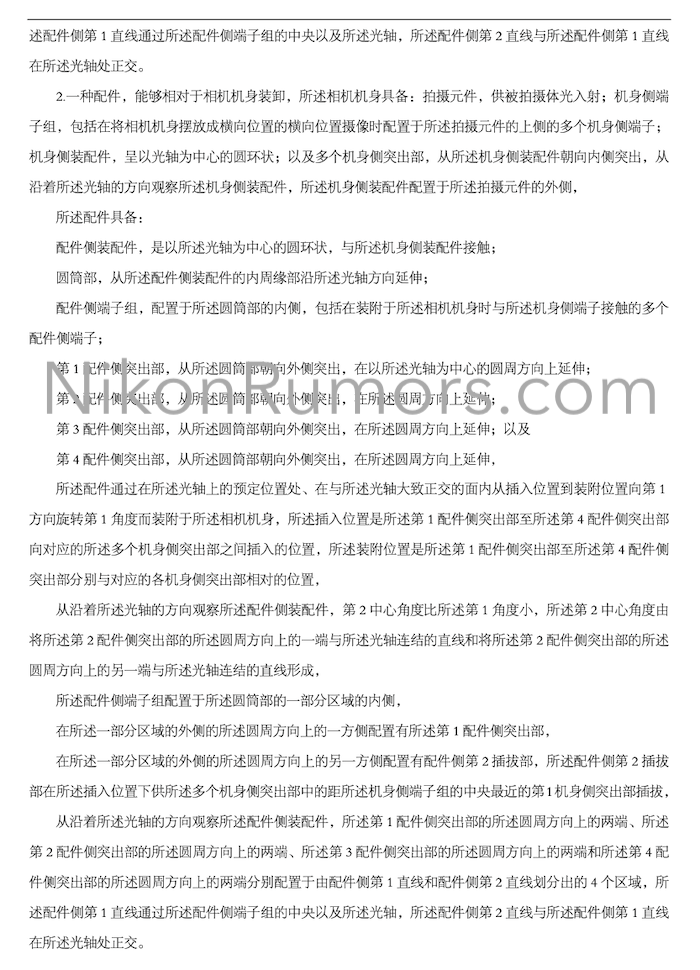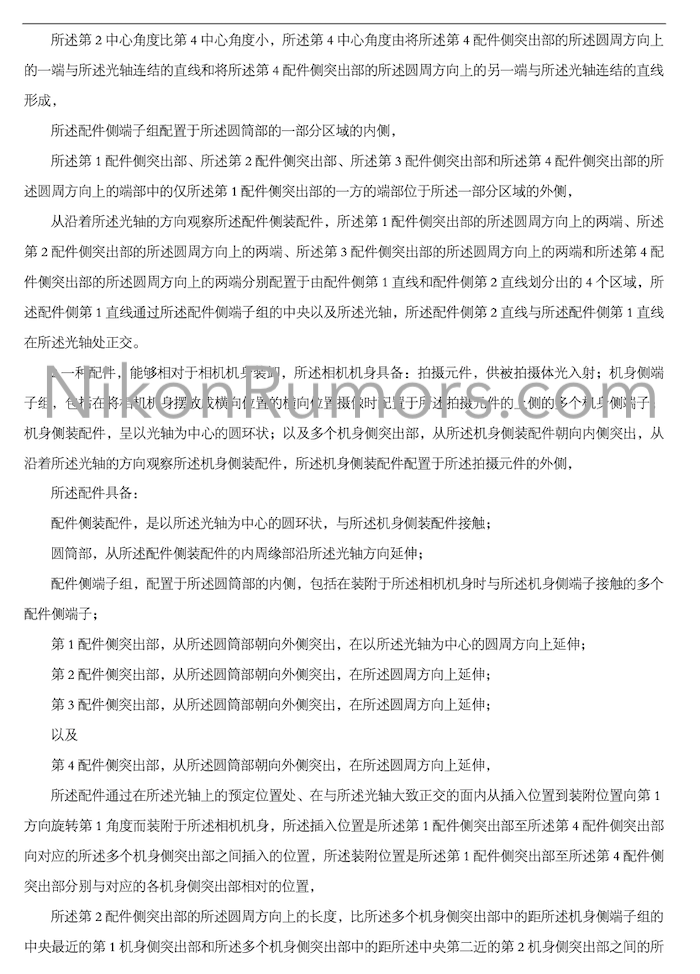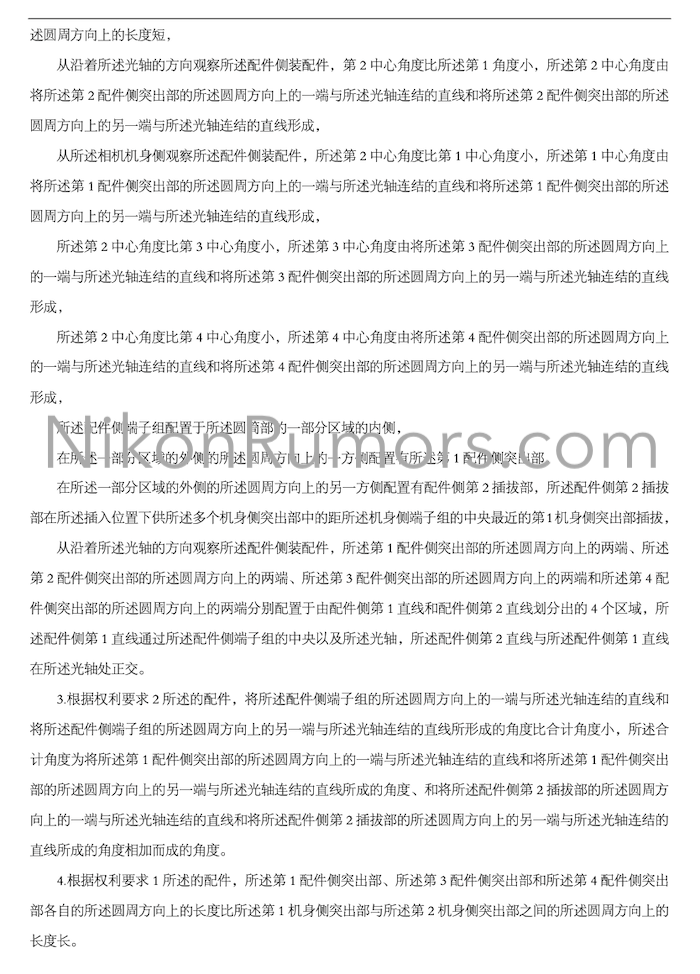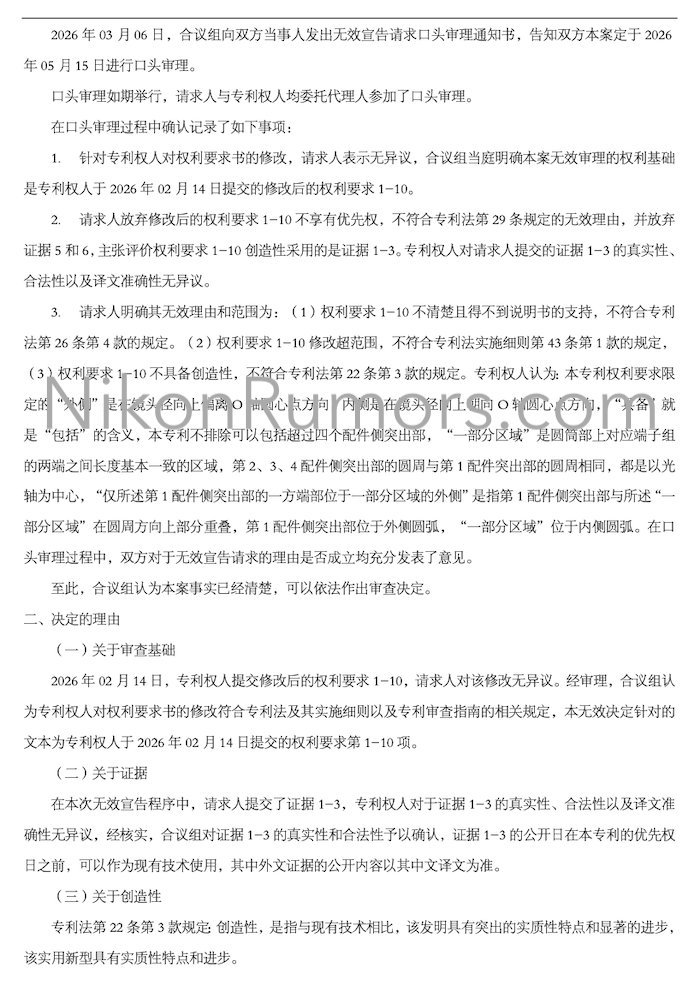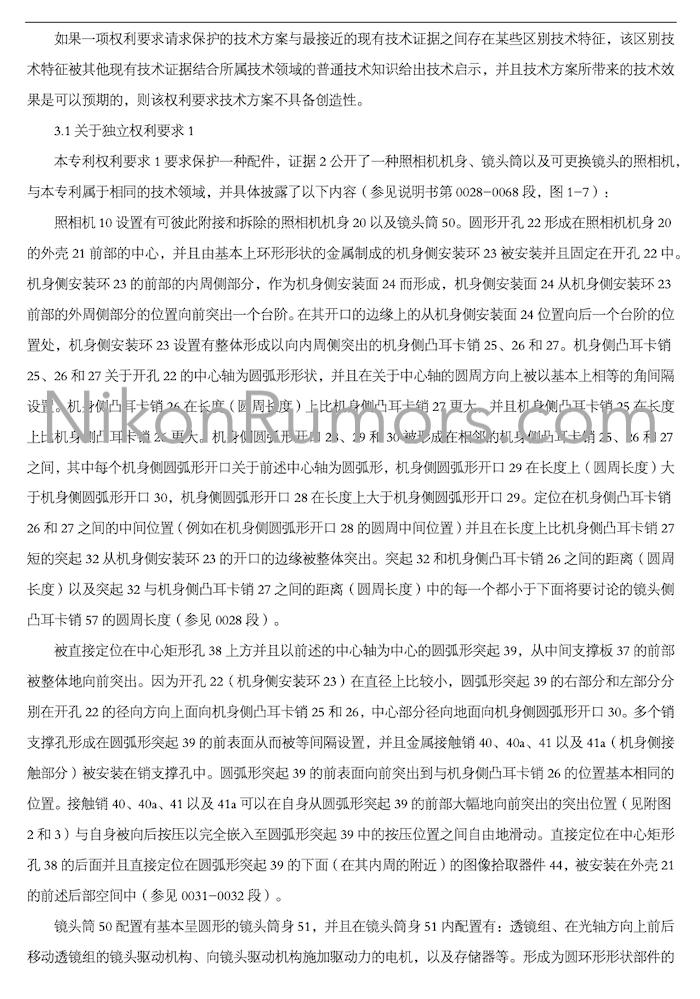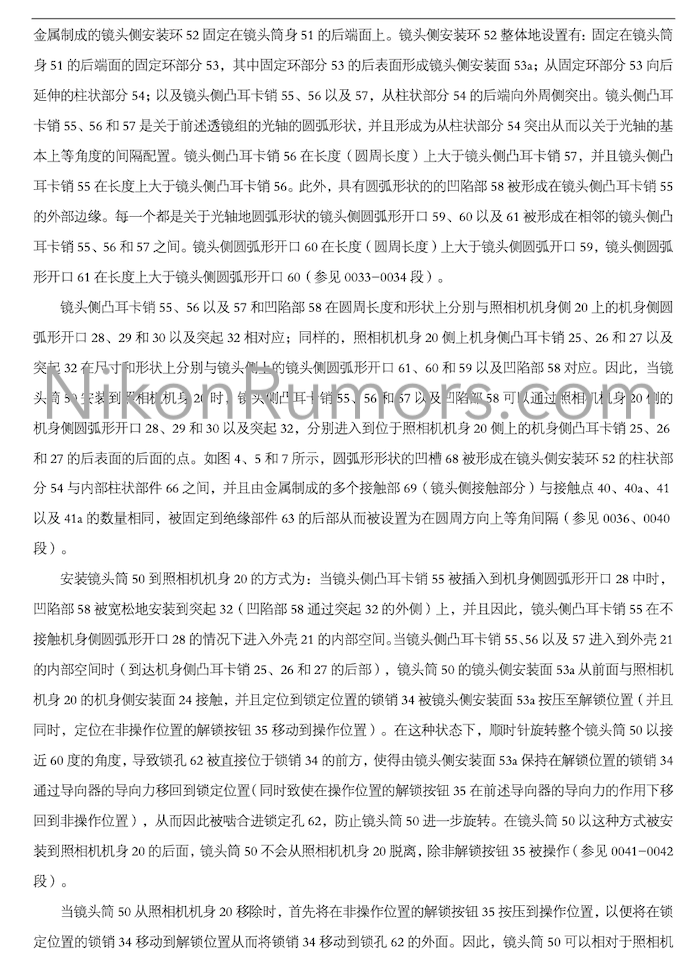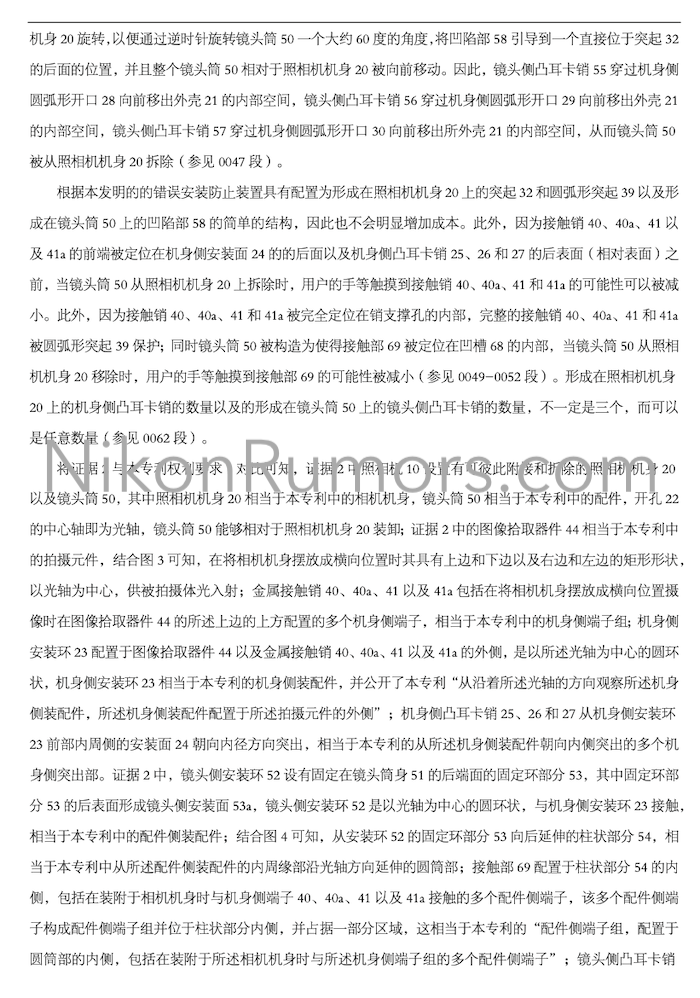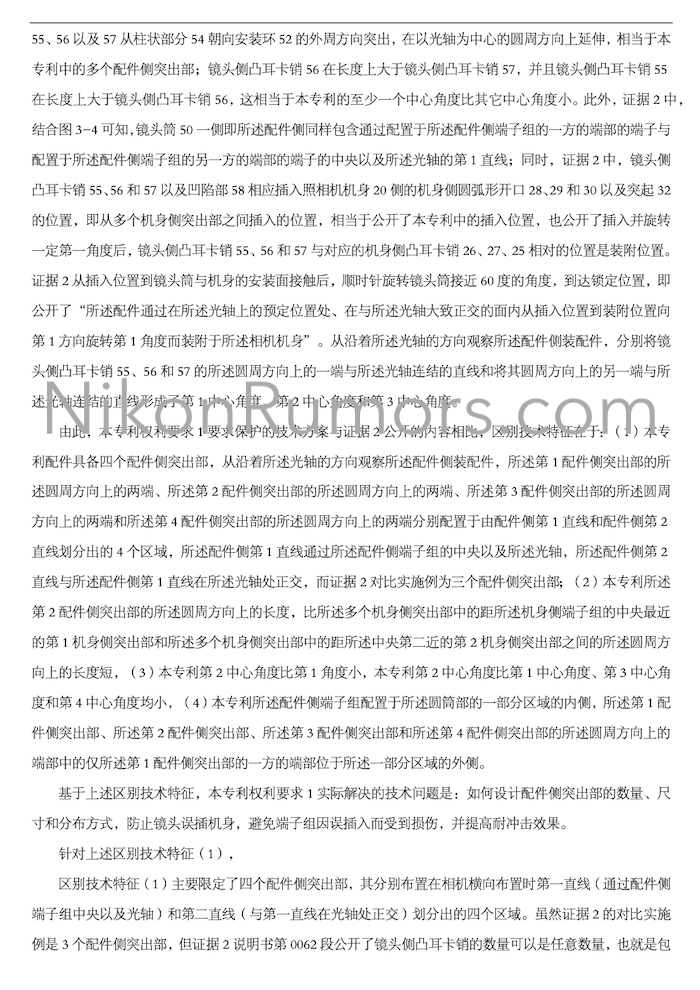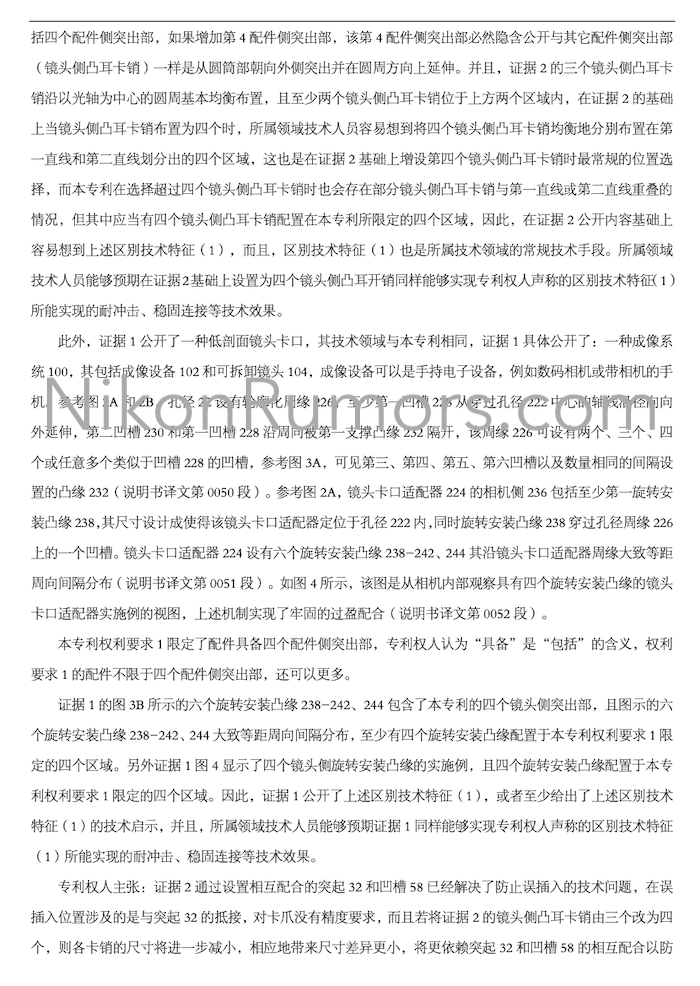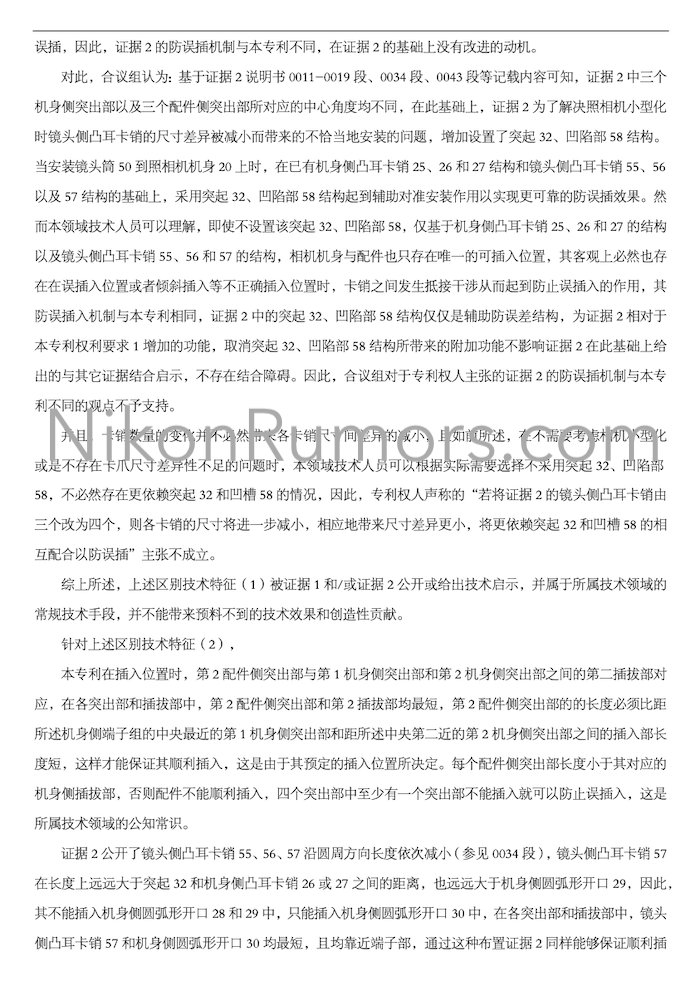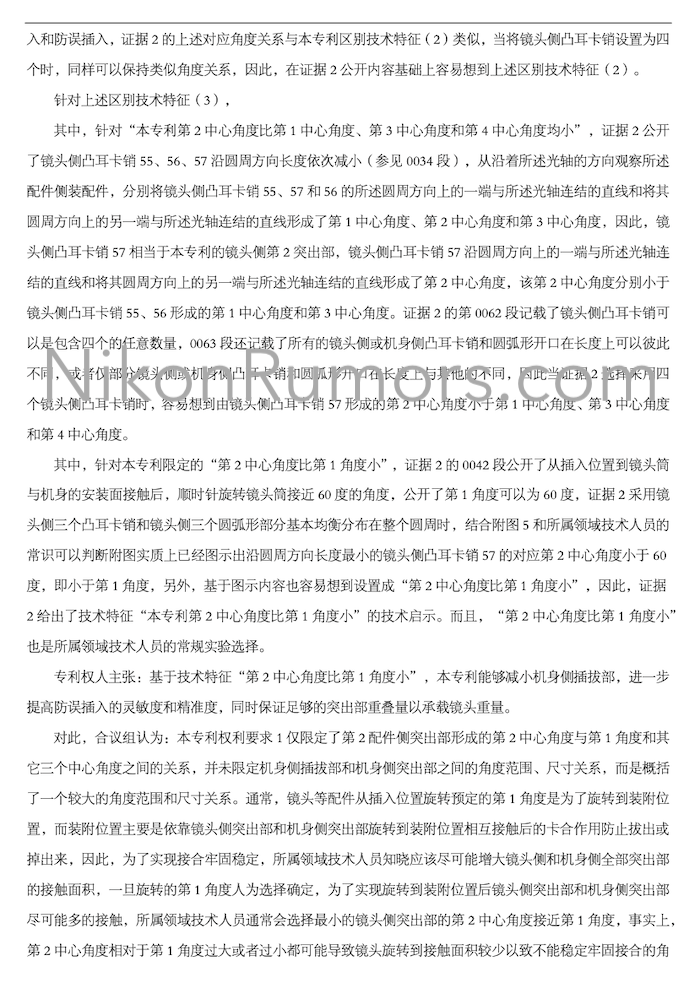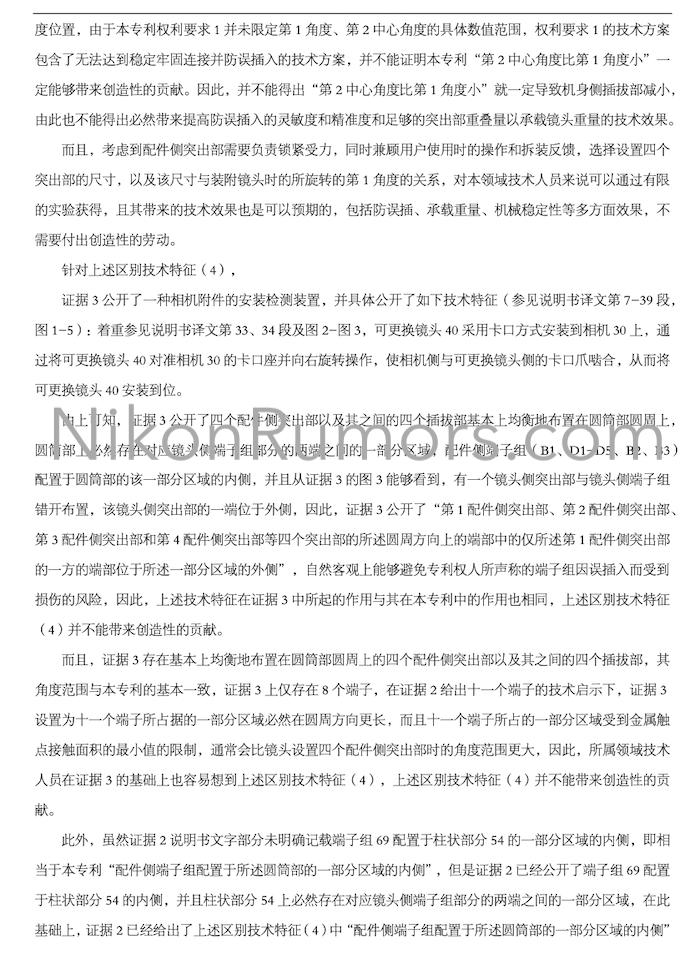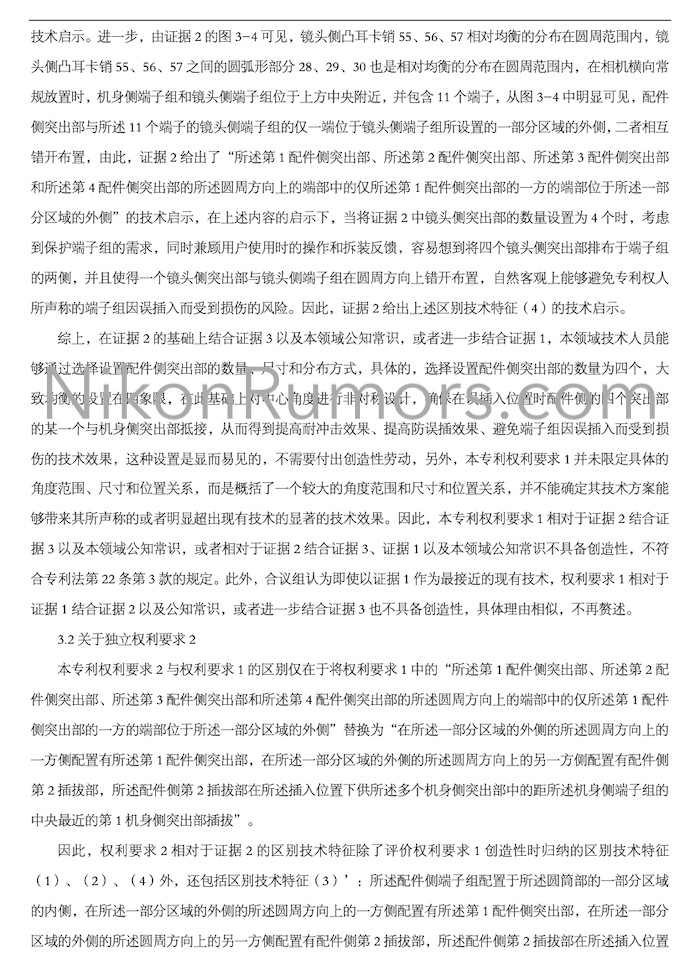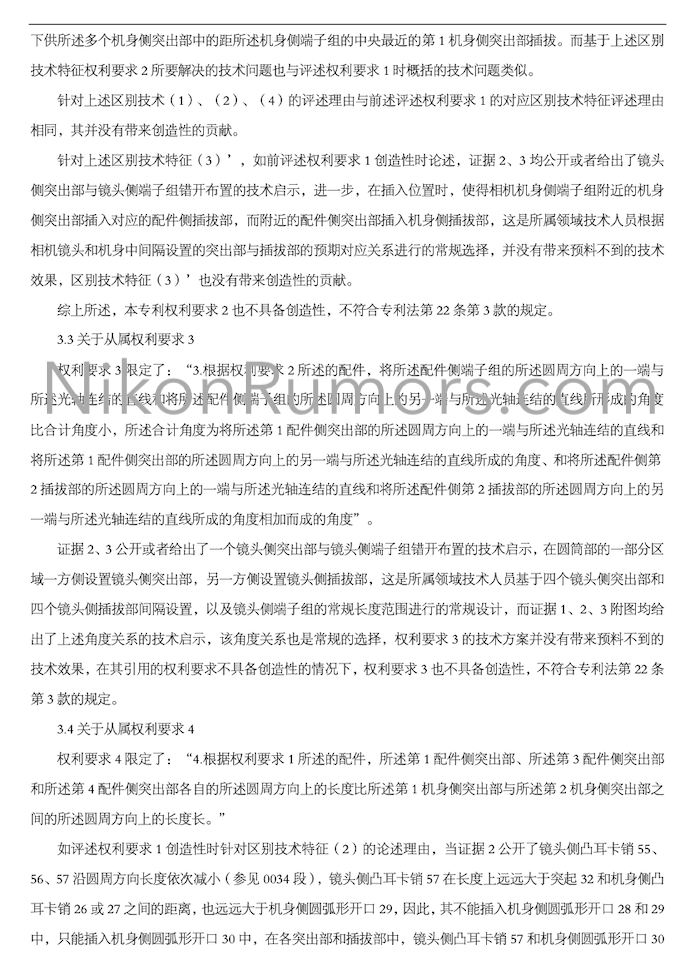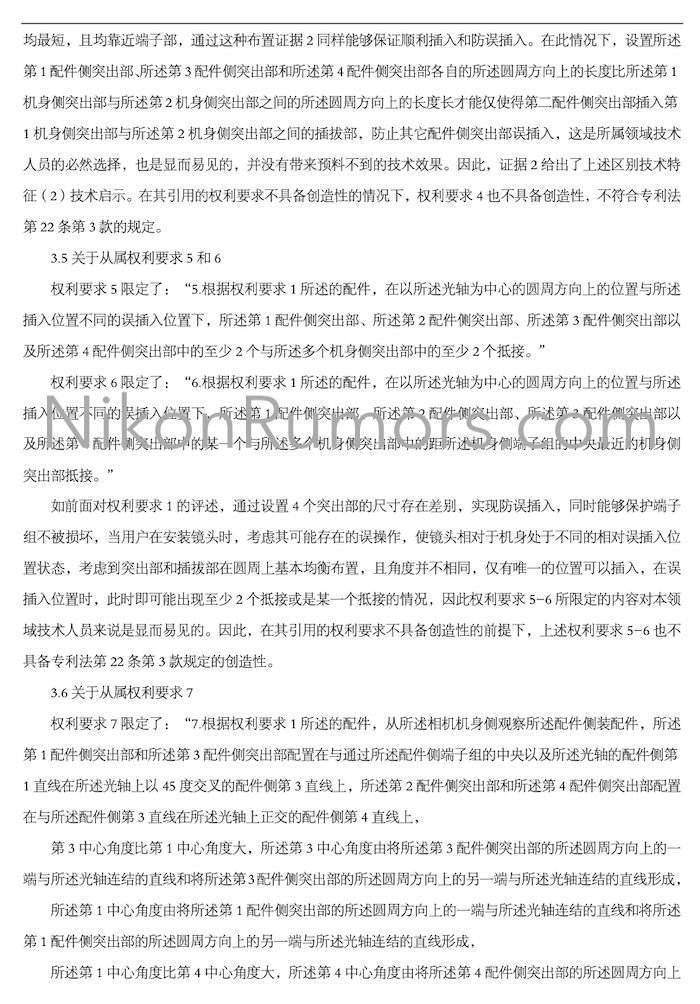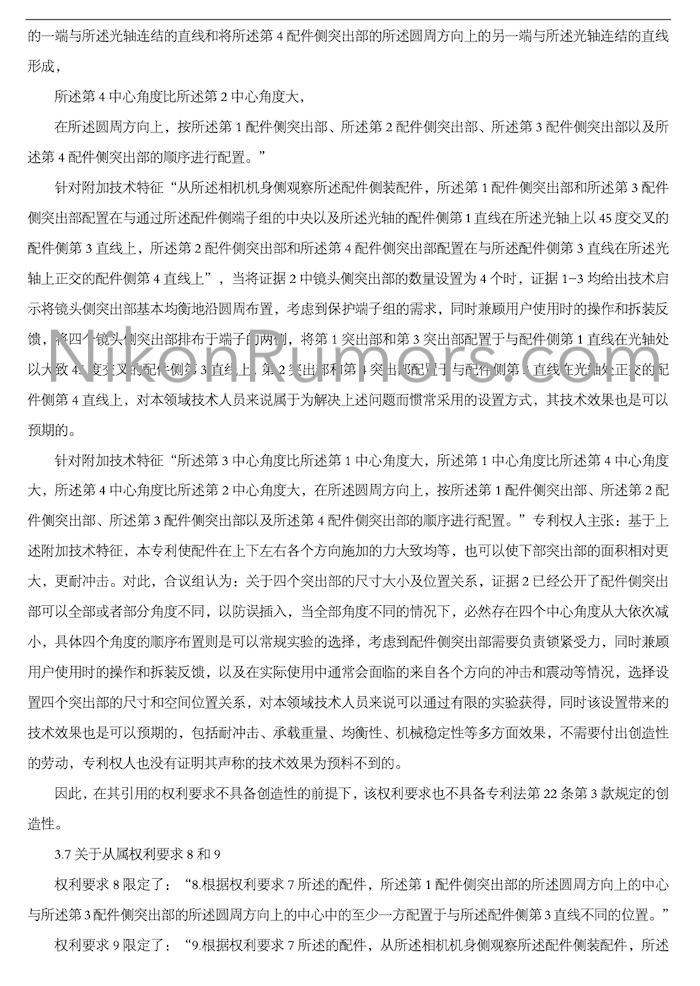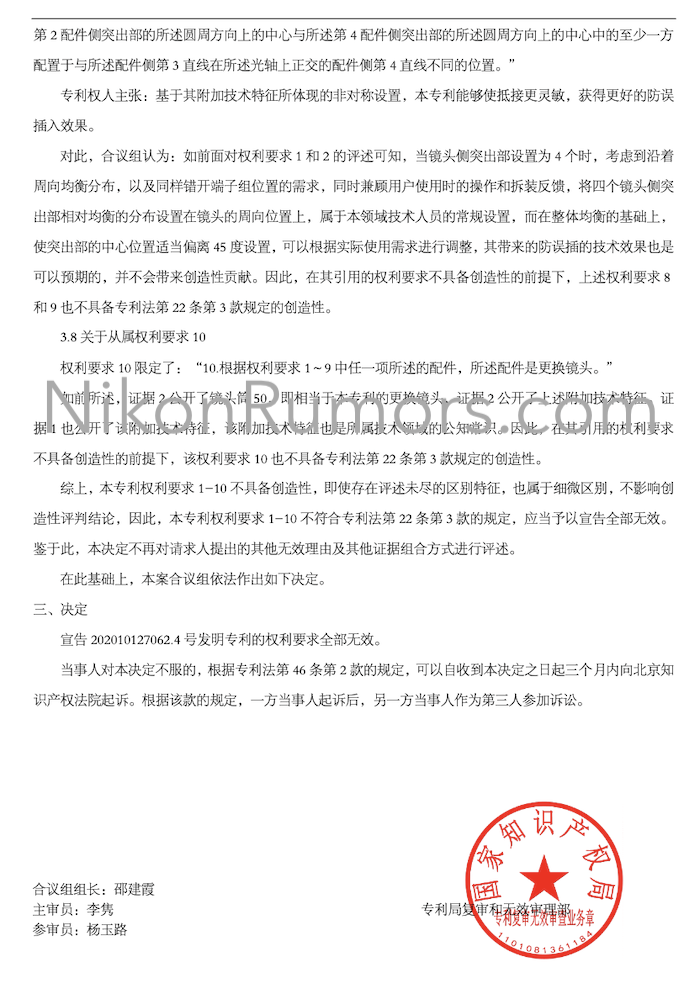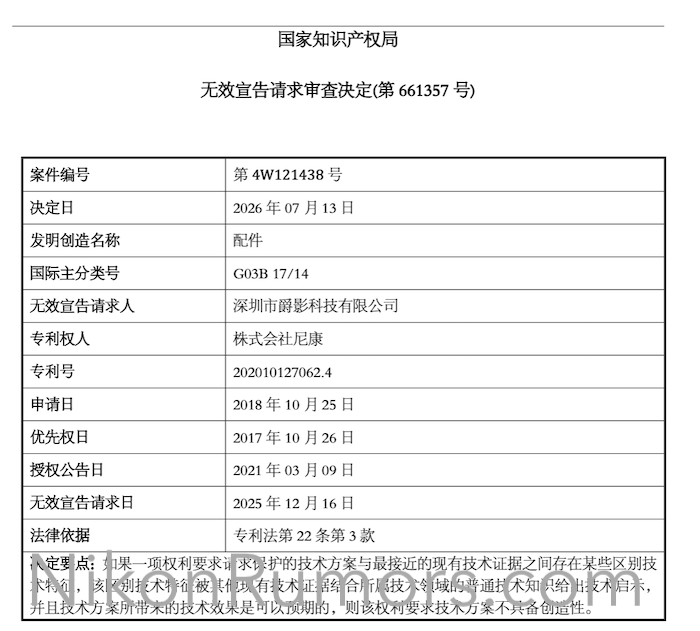
I have the full court ruling (all 25 pages are attached at the bottom of this post), and I can now confirm my report from yesterday: Nikon lost the patent lawsuit against Viltrox in China. The documents are in Chinese – here is the AI recap:
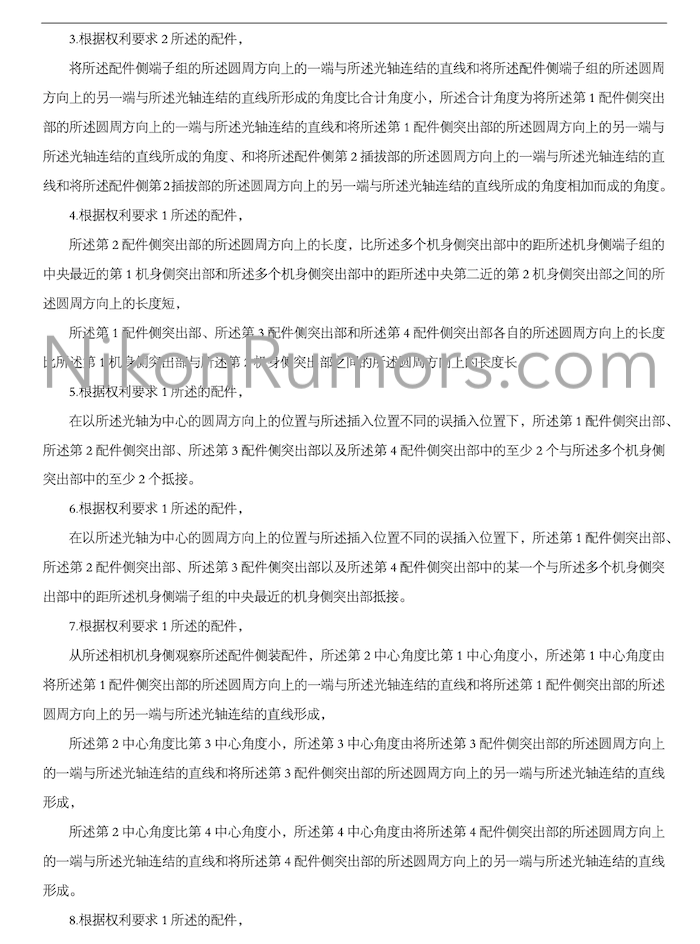
Recap of the full CNIPA Invalidation Decision (No. 661357)
This is the complete official decision from the Patent Reexamination and Invalidation Department of the China National Intellectual Property Administration (CNIPA) regarding Nikon’s Chinese invention patent 202010127062.4.
Basic Case Information
- Document Type: Patent Invalidity Examination Decision (无效宣告请求审查决定书) issued by the National Intellectual Property Administration, PRC (CNIPA / 国家知识产权局).
- Decision number: 第661357号
- Case number: 4W121438
- Patent number: 202010127062.4
- Title: 配件 (Accessories)
- International classification: G03B 17/14
- Patentee: 株式会社尼康 (Nikon Corporation)
- Invalidation requester: 深圳市爵影科技有限公司 (Shenzhen Jueying Technology Co., Ltd. Viltrox)
- Application date: 25 October 2018
- Priority date: 26 October 2017 (Japanese priority)
- Grant date: 9 March 2021
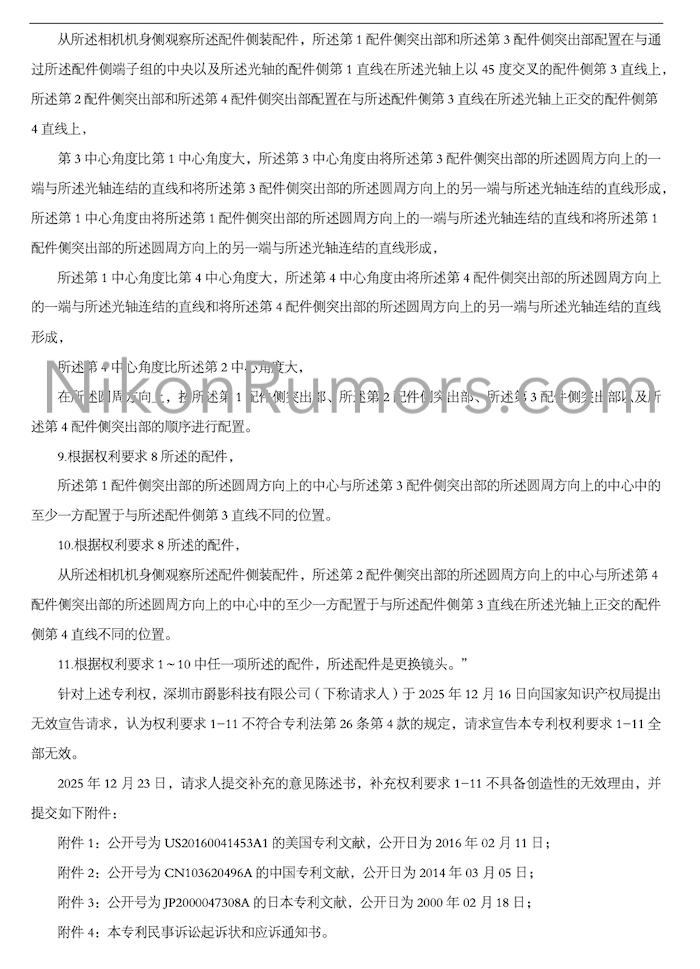
- Invalidation request filed: 16 December 2025
- Decision date: 13 July 2026 (document issued 17 July 2026)
- Legal basis for invalidation: Article 22(3) of the Chinese Patent Law (lack of inventiveness / 创造性)
What the Patent Covers
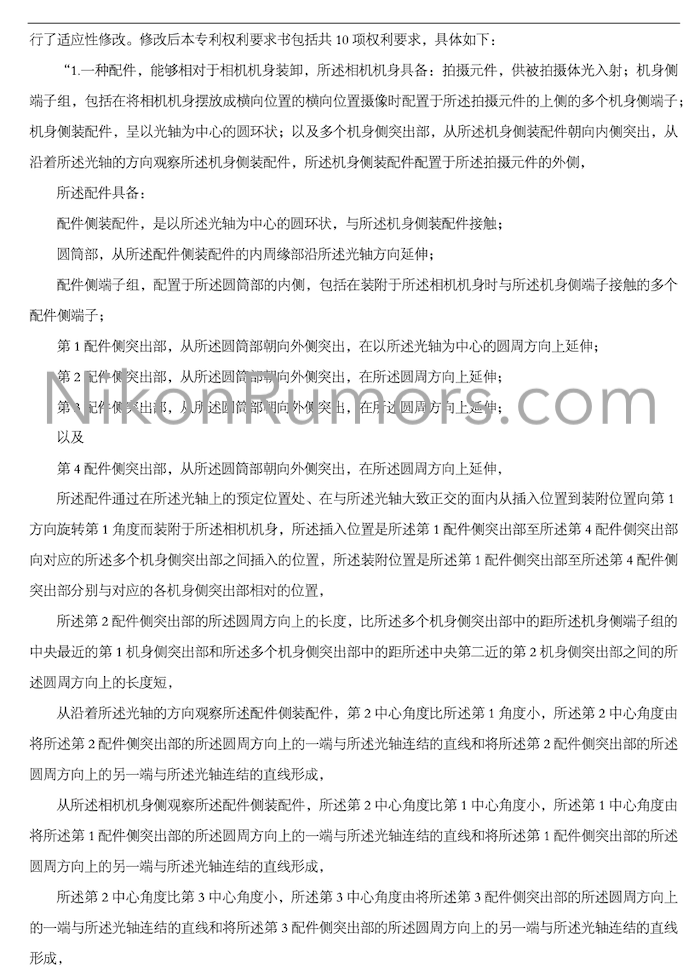
The patent claims a mechanical interface design for a camera accessory (primarily a lens) that mounts to a camera body. Key claimed features include:
- A specific arrangement of four protruding parts (配件侧突出部) on the accessory side and corresponding recesses/protrusions on the camera body.
- Precise angular relationships (center angles) between these protrusions relative to the optical axis.
- Placement of the electrical terminal group in a limited sector of the cylindrical portion.
- Design details intended to:
- Prevent incorrect insertion (mis-mounting)
- Protect the electrical contacts from damage
- Improve impact/shock resistance
- Ensure proper locking after rotation by a defined first angle
Background & Proceedings
Patent Details: The patent was filed on October 25, 2018 (divisional application derived from 201811247662.3, claiming priority from October 26, 2017) and granted on March 9, 2021.
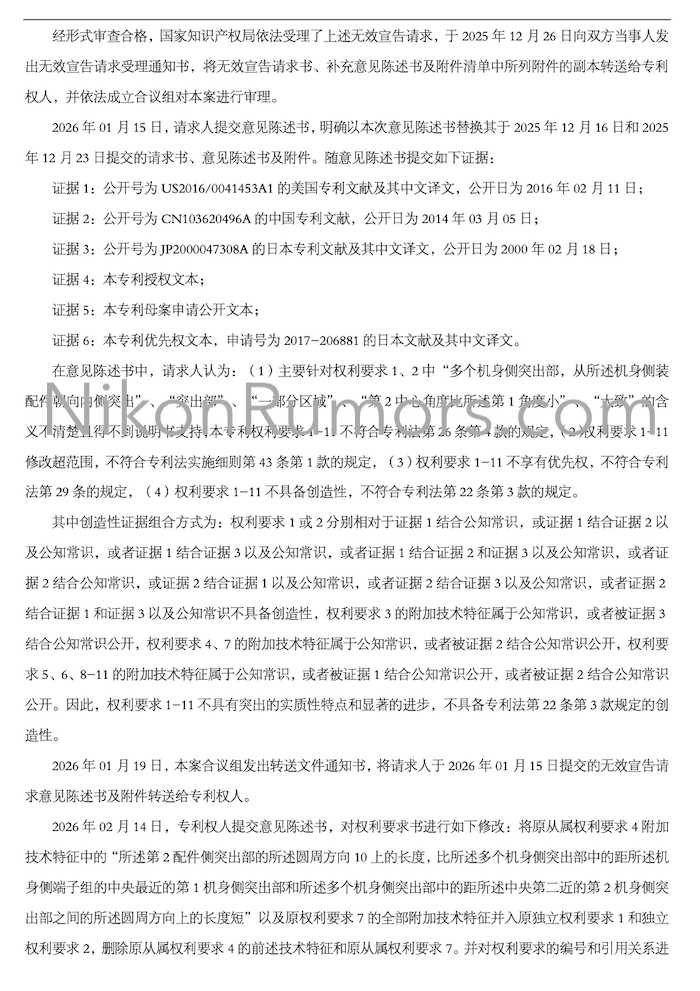
Invalidation Request: On December 16, 2025, Shenzhen Vaxis Tech filed an invalidation request against all claims (1–11), citing clarity issues (Article 26.4), support issues, amendment beyond scope (Article 33 / Rule 43.1), lack of priority (Article 29), and lack of inventive step (Article 22.3) using prior art references:
- Evidence 1: US2016/0041453A1
- Evidence 2: CN103620496A
- Evidence 3: JP2000047308A
Patentee Response: On February 14, 2026, Nikon submitted amended claims (reducing claims from 11 to 10 by merging features into independent Claim 1).
Panel Finding: The Examination Board found that the amended independent claims and dependent claims do not possess an inventive step when considering Evidence 1, 2, and 3 combined with common knowledge in the technical field. Consequently, the patent is declared entirely invalid.
Grounds Raised by Viltrox
Viltrox primarily argued that all claims lack inventiveness. They also raised clarity issues (Article 26.4) and amendment/priority issues, but these were secondary. The main evidence used against inventiveness:
- Evidence 1: US20160041453A1 (published 2016) – low-profile lens mount system
- Evidence 2: CN103620496A (published 2014) – camera body + interchangeable lens with bayonet structure, terminals, and anti-misinsertion features (this was treated as the closest prior art)
- Evidence 3: JP2000047308A (published 2000) – camera accessory mounting detection device
Panel’s Reasoning (Core of the Decision)
The collegial panel (合议组) found that the differences between the claimed invention and the closest prior art (mainly Evidence 2) were either:
- Explicitly disclosed or clearly suggested by Evidence 1 and/or Evidence 3, or
- Belonged to common technical knowledge in the camera lens mount field, or
- Would have been obvious design choices for a person skilled in the art (e.g., choosing four protrusions instead of three, adjusting relative lengths and angles of the lugs, positioning one lug outside the terminal sector to protect contacts, arranging the angular relationships for better anti-misinsertion and load distribution).
The panel repeatedly concluded that the technical effects claimed by Nikon (better mis-insertion prevention, terminal protection, improved impact resistance, more balanced force distribution) were predictable and did not involve an inventive step. Setting the number of bayonet lugs to four, making their circumferential lengths different, and arranging them in specific angular sectors relative to the terminals were viewed as routine optimizations once the prior-art structures were known.
As a result, independent claims 1 and 2 and all dependent claims 3-10 were found to lack inventiveness.
Final Ruling
All claims of patent 202010127062.4 are declared invalid (legal basis: Article 22, Paragraph 3 of the Chinese Patent Law, lacks inventive step / 创造性).
Nikon (or any interested party) may file an administrative lawsuit with the Beijing Intellectual Property Court within three months of receiving the decision.
In short: This is a thorough rejection of inventiveness. CNIPA held that Nikon’s specific mechanical arrangement of the four bayonet lugs, their relative sizes, angles, and relationship to the electrical terminals did not rise above the prior art (especially a 2014 Chinese patent and related US/Japanese documents) plus ordinary skill in the lens-mount field.