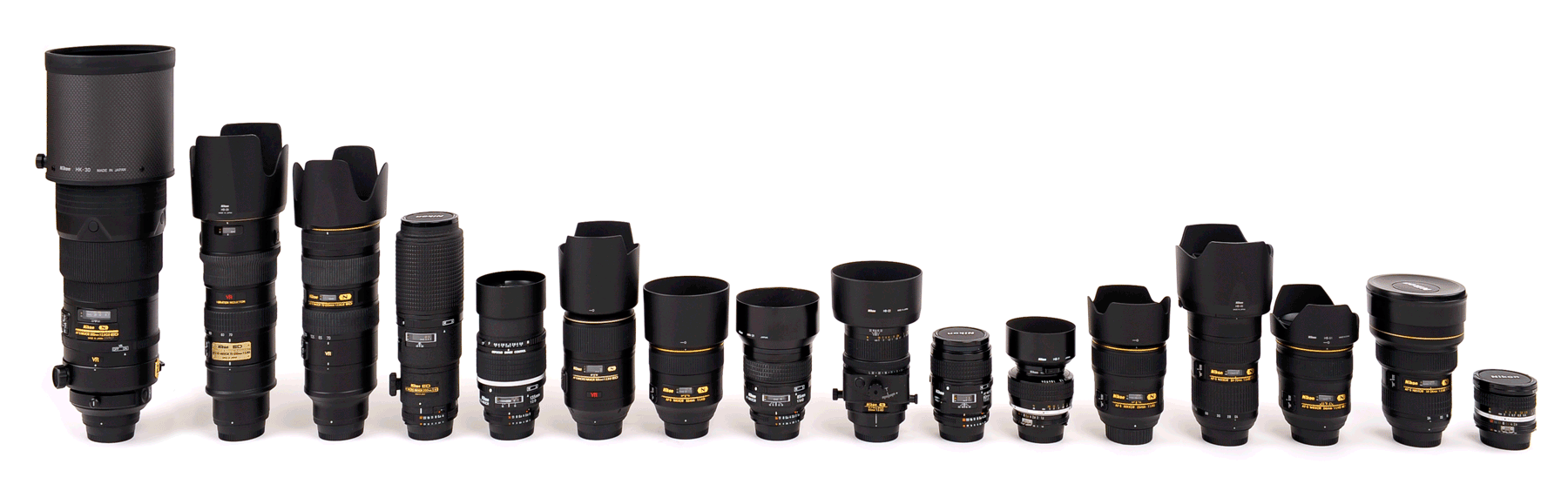
Here is another great guest post from Fabrizio Belardetti who wrote also the Nikkor 19mm f/2.8 Macro lens review few months ago (see also part 2 of that review). Fabrizio did a sharpness comparison of 16 full frame Nikon lenses at different focal lengths (300mm vs. 70-200mm and tc-17 will come later). Here is a list of the tested lenses:
AFS 300 2.8 VRII
AFS 70-200 2.8 VRI
AFS 70-200 2.8 VRII
AFD 200 4 Micro
AFD 135 2 DC
AFS 105 2.8 Micro
AFS 85 1.4
AFD 85 1.4
PCE 85 2.8
AFD 60 2.8 Micro
AIS 58 1.2 Noct
AFS 35 1.4
AFS 24-70 2.8
AFS 24 1.4
AFS 14-24 2.8
AIS 20 2.8
Because of the large file size, I had to upload the images on flickr (you can select "original size" of each test for better view):
Test conditions: Nikon D3s body, no vignette control, no sharpness, neutral image control, no post production, only 100% crop from original jpg.
You can find all previous guest posts here. If you have an interesting topic you would like to write about on [NR], please contact me.
Related posts:

126 Comments
Ok great,,,now where is my new D400?
ow sucha nice range of lenses, that’s nikon porn ! However, evaluate sharpness with a white wall behind…For instance, are the 35mm tests useful for anybody who do not have a 30 inches screen ??
By the way, the sharpest lens of all is a canon one. No matter which one as long as it is mounted on a 5d mark II.
Duh, he test a bunch of black lens and forgets the 200F2 and he calls himself a photographyer, ROFL
So, was there a ranking?
Meh, so he’s done what http://www.photozone.de/ http://lenstip.com/ http://www.slrgear.com/ have had for years.
Thanks for this amazing collection. That’s a lot of work and dedication, and I really appreciate it.
IS/VR lenses are a great development over the last couple of decades, and in certain situations I wouldn’t be without one on my SLR. However, as some would say, “there’s no such thing as a free lunch”; they do have some disadvantages. Essentially, they use a wobbly lens group to move the image back to what it was before you wobbled the camera. This internal movement clearly comes with a tolerance, and this can sometimes result in less sharp (static) images when said wobbly group is in the “wrong” position. I’ve no idea which tests of IS/VR lenses have been affected by this “issue”, even less about a test procedure to allow for it. Personally, I don’t think it matters, as tests should be real world practical examinations, but it could perhaps partly explain some test inconsistencies over the years. I don’t think it matters, but is something to be aware of, and a good reason for avoiding universally designing IS/VR into all lenses, as some would like.
Am I missing something? Where are the 300 2.8 images?
The 70-200mm VRII looks softer than VR version.
Also 200mm 1nd 105mm on VRII loos quite a bit shorter than ON VRI or 105 micro or 200mm prime lens.
Whats up with that, am I seeing this right?