• The new Nikon 300 f/2.8 VRII and the TC-20E teleconverter now available for pre-order

Are those the new new Nikon lenses?

I do not know much about lens design. I went through all existing Nikon lenses and could not find any similarities. Of course such images are not difficult to be photoshopped.

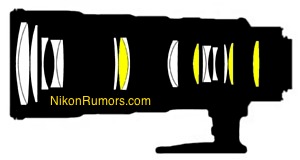
Those are supposed to be the lens constructions for the upcoming Nikon 24mm f/1.4, Nikon 35mm f/1.4 and Nikon 70-200mm f/2.8 lenses:

new nikon 24mm Are those the new new Nikon lenses?

Nikon 24mm f/1.4

Nikon 35mm f/1.4

Nikon 35mm f/1.4

Nikon 70-200mm f/2.8

Nikon 70-200mm f/2.8

Click on the link for more:

For reference/comparisson, here are the corresponding Nikon lenses from the current line-up:

Current model Nikon 24mm f/2.8 AF

Current model Nikon 24mm f/2.8 AF

Current model AF Nikkor 35mm f/2D

Current model Nikkor 35mm f/2D AF

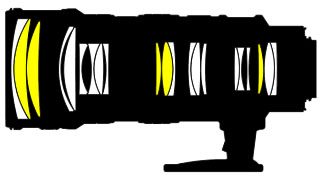
nikon 70 200 current Are those the new new Nikon lenses?

Current Nikon 70-200 f/2.8 model

What do you guys think? Do those lens designs make sense from technical perspective?

NR probability rating: 70%

Related posts:

  1. Lenses, lenses, lenses… 8 new Nikkors expected in 2010
  2. Confirmed: two new Nikon Lenses this Thursday
  3. An updated list of not yet released Nikon lenses based on product numbers
  4. What about those lenses?
  5. AF-S Nikkor 70-200 mm f/2.8G ED VR II details

This entry was posted in Nikon Lenses and tagged . Bookmark the permalink. Both comments and trackbacks are currently closed.

109 Comments

  1. Eric
    Posted July 13, 2009 at 4:01 am | Permalink

    My Leica days I shot with M and R bodies. But about 80 percent of what I shot was with the 35mm 1.4 Åspheric. Unbelievable lens.

    A Nikkor 35 mm 1.4 would be my #1 investment. I will order on the day it’s announced. I already have every mm covered from 14 to 200 at 2.8. So I would go with the 35 first. I have a 24mm 1.4 Canon at work and find it great, but a bit wide for my shooting style with the 1Ds Mark II and 5D Mark II.

  2. Patros
    Posted July 13, 2009 at 9:06 am | Permalink

    … waiting for a AF-S 24mm f:1.4G such a long time…

    • another anonymous
      Posted July 14, 2009 at 10:15 am | Permalink

      +1

  3. Anonymous
    Posted July 13, 2009 at 9:07 am | Permalink

    I think you might mean 70-200 2.8 although I wouldn’t mind having a go with a 70-200 1.4 ;)

    • Nikkorian
      Posted July 13, 2009 at 9:09 am | Permalink

      you would mind after going with it for less than a minute though ;-)

    • Posted July 13, 2009 at 11:04 am | Permalink

      yes, I corrected it – sorry

  4. Nikkorian
    Posted July 13, 2009 at 9:08 am | Permalink

    35 f/1.4 DX with better bokeh than that 1.8 version would be nice…. FX prob too large and heavy.

    • Anon
      Posted July 13, 2009 at 3:48 pm | Permalink

      Not at all. The AI-S 35/1.4 is a neat little 52mm thing :)

      • Nikkorian
        Posted July 14, 2009 at 3:19 am | Permalink

        OK, thanks – didn’t know about that. Well, let’s hope then. The “-S” shouldn’t take that much space…

        Cheers,
        Martin

  5. macross
    Posted July 13, 2009 at 9:13 am | Permalink

    The Nikon world has been waiting for updated the wide, prime FX line for a while (20mm, 24mm, 28mm, 35mm).

    Would be nice to see some updates in that area.

    If a new 70-200 isn’t announced in 2009, I’d be shocked.

    • Bjorn
      Posted July 15, 2009 at 4:40 am | Permalink

      I’m missing two ED-elements in the front group of the 70-200 zoom, CA-correction is less optimal with design like this. In my opinion it’sfake. There is also no indication of a super-ED-element in the frontgroup like the AFS-200 F/2 ED VR .

  6. Nikko
    Posted July 13, 2009 at 9:22 am | Permalink

    Ok, I’ll bite, it’s “supposed to be”, not “suppose to be”, and as mentioned earlier, that’d best be a 70-200 f/2.8 not 1.4….though if they miraculously squeezed out another 2 stops with some special ‘jesus glass’ I wouldn’t complain!

    • jesus glass
      Posted July 13, 2009 at 9:25 am | Permalink

      I would not mind a few pieces of jesus glass either. :)

    • Bryan
      Posted July 13, 2009 at 9:37 am | Permalink

      Could you imagine trying to patent “Jesus Glass”? Lol, that made me smile this morning. I wonder if the lens has an etheral glow…

      • bandwagon
        Posted July 13, 2009 at 10:34 am | Permalink

        Yeah, but, you’d probably have to sacrifice a lot to get a lens with ‘Jesus Glass’ in it.

        • D40-Owner
          Posted July 13, 2009 at 11:03 am | Permalink

          And it would be expensive too. Any lens with “Jesus Glass” would cost 30 pieces of Silver. :D

          • Trademark Office
            Posted July 13, 2009 at 4:52 pm | Permalink

            Well, the Jesus glass would be fine, you just have to waste one hour of your weekend every Sunday to shoot with it.

          • Posted July 14, 2009 at 4:59 am | Permalink

            No miracle glass would create such a thing.
            a 70-200/1.4 would have to be a HUGE thing about 2x heavier than the 200/2. Even with 100% transmission glass.
            The glass itself doesn’t matter, this is a size question, 200mm at 1.4 is a 14cm opening, v.s the 7cm on the f/2.8 version… it is about 2x in a linear measurement, which is equivalent to a 8x diference in weght!!! Taking the current 70-200 as an example, the f/1.4 version would weight 11.7kg!!!

          • Posted July 14, 2009 at 8:45 am | Permalink

            it depends on where diaphragm is, can be (and usually is) smaller then if it would be in front of the lens. reason why fast glass is big is mainly because it is simpler to make it good with big glass.

            optics is nice science

          • Posted July 14, 2009 at 4:39 pm | Permalink

            but if you make it smaller you negate part of the short DoF effects, and it is more complicated to control f-stop accuracy and image quality, and you don’t want to compromise that in such a PRO lens.

          • Posted July 15, 2009 at 4:37 am | Permalink

            DOF level have nothing to do with used glass or optics, it’s quality (bokeh) yes, but not the level.
            Actually not that many compromises need to be, it just makes no sense. Glass is now lot better then in old days, there is however problem that you can have:

            1) affordable
            2) good
            3) reasonably sized

            pick two

          • Ville
            Posted July 15, 2009 at 4:13 pm | Permalink

            The size of the front element has nothing to do with where the diaphragm is. A 200mm f/1.4 lens needs a front element that is AT LEAST 200/1.4 (=143mm) in diameter.

    • Posted July 13, 2009 at 11:03 am | Permalink

      my editor has the day off again…

  7. jon
    Posted July 13, 2009 at 9:36 am | Permalink

    A 1.4 70-200 ? I wish ! If that ever happened, it would be a huge/heavy monster lens considering the size of the current 200mm 2.0VR. Will settle for a new 85 1.4 & 135 2.0.

  8. bast
    Posted July 13, 2009 at 9:49 am | Permalink

    at least the 70-200 blueprint is different from the current one:

    http://www.microglobe.co.uk/cimages/Nikon_70-200mm_lensconstruction.JPG

  9. Anonymous
    Posted July 13, 2009 at 10:12 am | Permalink

    I doubt the 35mm. The current FX AF 35mm is the onlyone faster then 2.8, and some people who got the DX 35mm might be pissed, as they would rather have invested in a new 35mm FX design than in a DX.

    The 24mm seems to be a lot more needed. There isn’t really anything fast out there in this field. A lot of my co workers still carry the AI-S 24mm f/2 with them, because it’s faster than the AF version, and focusing is not that critical at 24mm.
    I really hope the 24mm is not a hoax.

    • Nikkorian
      Posted July 13, 2009 at 10:24 am | Permalink

      for me DX format is fine :-) only the qulity of the 1.8 is not so fine.

    • funny.
      Posted July 13, 2009 at 4:47 pm | Permalink

      “people who got the DX 35mm might be pissed”

      ha ha let them be pissed. they deserve it for buying DX lenses :D

    • Posted July 13, 2009 at 5:01 pm | Permalink

      its a $200 lens I think they can deal with it. They could probably sell it for what they paid.

    • Øystein
      Posted July 14, 2009 at 1:18 am | Permalink

      On the other hand, I’ve had the 35mm 1.8 since the day it arrived in the shops in Norway. And been able to shoot with it from day one. If I had been waiting for the 35mm 1.4, I wouldn’t have had a normal prime at all.

      The price is also a real issue. $199 is no problem, $399 or more and I have to tell the wife…

    • mike
      Posted July 14, 2009 at 3:41 pm | Permalink

      An FX 35/1.4 AF-S would be at least $1200. Why would someone who paid $200 for a 35/1.8 be upset about that? If you can afford the former, why would you care about $200 to have had the 35/1.8 in the intervening year?

  10. Posted July 13, 2009 at 10:13 am | Permalink

    Unless they’re from a reliable source (Notice NR admin likelyhood is 70%) I wouldn’t put much weight behind these – as mentioned easily faked.
    Although a strange thing to try to fake.

    • Posted July 13, 2009 at 11:02 am | Permalink

      those are from a new source, that’s why the rating is only at 70%

      • Posted July 13, 2009 at 6:09 pm | Permalink

        Ah – I was suggesting that 70% was relatively high…

        • Hey-nonny-mouse
          Posted July 14, 2009 at 10:04 am | Permalink

          The correct thing to do would be to measure success rates from the past for different sources and base your future predictions on this.

          So if new sources have only been 10% accurate in the past then this should be given a 10% likelihood. You could even condition your likelihood based on the type of evidence (hearsay, photo, diagram, text) provided with the rumor.

          A little knowledge of statistics and an excel spreadsheet would be all you need ;-)

          Ps. Yes, I know this approach has been rejected in the past, by NR admin… but I think it’s still worth trying.

  11. SimonC
    Posted July 13, 2009 at 10:19 am | Permalink

    The lens profile is different for this “new” 70-200 than the current 70-200. Smoother edges, particularly near front of the barrel where the focus ring is.

    Also note that the front elements are not using ED glass (but more of the rear elements are) compared to the current 70-200.

  12. Posted July 13, 2009 at 10:25 am | Permalink

    But why the lack of ED elements in the front group in the supposed 70-200mm zoom lens?
    If you ask me, it’s a 70-200mm f/4 (or maybe even f/3.5-4.5), not f/2.8 lens … even the old 80-200 lenses have front ED elements … The only reason for the lack of ED elements I can think of, is Nano coating being so good it can actually replace EDs … But is it?
    The current 70-200/VR Nikkor has 21 elements in 15 groups and the image you posted, suggests 18 elements in 13 groups. That could result in less flare, but I don’t know about other benefits of such a design …

    • Astrophotographer
      Posted July 13, 2009 at 2:36 pm | Permalink

      Nano coating is for anti-reflection. ED glass stands for extra-low dispersion, two totally different things.

    • funny.
      Posted July 13, 2009 at 4:49 pm | Permalink

      you can’t really draw much conclusions from these drawings or even glass compositions. A better design may account for less need of ED glass. “work smarter not harder”.

      • Ryan
        Posted July 13, 2009 at 6:58 pm | Permalink

        Thats an extremely good point funny.

    • Alex
      Posted July 13, 2009 at 10:55 pm | Permalink

      I agree, this diagram looks more like a f4 lens when compared with the 2.8.

      The point about drawing conclusions from diagrams is sound though – everything is just speculation for now. They might look different merely because they’re fake.

  13. Roger Moore
    Posted July 13, 2009 at 10:35 am | Permalink

    In a word, no. I don’t think those are realistic designs. I see at least the following problems:

    1) The 24/1.4 is too simple a design and lacks ED glass. That diagram shows a 10 element/10 group design with 2 aspherics. The Canon 24/1.4 L II is a 13/10 with 2 ED and 2 aspherical. I’d expect the new Nikon to have a similar element count and to use ED glass.

    2) The 35/1.4 design looks wrong. The thick, cemented second group is a feature I haven’t seen on any other SLR lens.

    3) The 70-200 has the ED glass concentrated at the back of the lens, which is completely wrong. The big gun telephotos always have large diameter ED elements concentrated in the first few groups because that’s where it does the most good. The element count and ED element count is also down from the current lens, which seems unlikely for a major upgrade.

    • Anonymous
      Posted July 13, 2009 at 11:13 am | Permalink

      mistrer expert you dont have an idea…..anyway if you look closer the elements are strange…lets say a bit misalign….so definitely cs3 work…

      • PHB
        Posted July 13, 2009 at 1:44 pm | Permalink

        Looks fake to me, but for the opposite reason!

        More elements are not a sign of good lens design. Every element in the lens means more light loss and another surface for internal reflections. I would expect Nikon to do a better job than Canon and deliver the specs without so many elements.

        To do that I would expect a Nikon fast wideangle to make use of the massive bulging front element glass that they can make and Canon cannot.

        The diameter of the lenses in the 70-200 is completely wrong. Nikon are having difficulty with falloff on the FX format. They are trying to keep the filter size small. Take a look at the front element and it is clearly bogus.

    • Posted July 13, 2009 at 11:55 am | Permalink

      The blocky element in the rumored 35mm design is reminiscent of the Asymmagon lens of the Gigapixel Project:

      http://www.gigapxl.org/technology-realized.htm

      • RThomas
        Posted July 14, 2009 at 8:37 am | Permalink

        Here is a cutaway diagram of the existing manual-focus 35mm f/1.4 Nikkor:

        http://www.camerarepair.com/Used-Cameras/Nikon-MF-SLR-C3/Lenses-C9/35mm-f1.4-Nikkor-P33/

        Note that it also has a second group that is blocky and cemented.

        • Roger Moore
          Posted July 14, 2009 at 12:20 pm | Permalink

          It’s blocky and cemented, but it’s a cemented positive-negative, with most of the negative power coming from the cemented surface. This is a negative-positive design. I can’t put my finger on precisely why that seems wrong to me, but it does.

    • funny.
      Posted July 13, 2009 at 4:52 pm | Permalink

      some lenses may looks similar to existing designs, but it isn’t a requirement. Look into nikon’s history and you’ll see all sort of wacky designs. how they compare to what you think they should look like has no real relevance on how they actually need to look like.

      • Roger Moore
        Posted July 14, 2009 at 12:02 pm | Permalink

        If there were one odd design out of the three, I would think that Nikon’s engineers were just trying something new on the third design. But when there are suspicious things about all three designs, it makes it seem much more likely that they’re just a bunch of fakes.

    • worminator
      Posted July 14, 2009 at 2:01 am | Permalink

      “2) The 35/1.4 design looks wrong. The thick, cemented second group is a feature I haven’t seen on any other SLR lens.”

      That’s the one that caught my attention. If you told me it was a 105mm micro I wouldn’t have thought anything of it, but as a 35mm it looks pretty odd. I’m not an expert tho…

    • jackdripper
      Posted July 15, 2009 at 8:38 am | Permalink

      i do agree with you, the lens scheme is quite meaningless on all 3 lens, i think that is all fake.

  14. Posted July 13, 2009 at 10:47 am | Permalink

    Like I said; either it’s not an f/2.8 zoom, or it’s fake completely or a front ED element is not yellowed, which is unlikely.

  15. getanalogue
    Posted July 13, 2009 at 11:08 am | Permalink

    Nevertheless, would be a dream come true with regards to 24mm, my favorite focal length (in film). Still missing a 12mm or 14mm 1:1.4 DX prime! That would be something.

    • northy
      Posted July 13, 2009 at 9:50 pm | Permalink

      14 1:1.4 DX would be a waste IMO. should Nikon ever make a glass with these specs, it better not be DX.

      • fotosniper
        Posted July 13, 2009 at 11:30 pm | Permalink

        a 14 1,4 it crazy. but a 12 or 14mm 2.8 DX would be the best money spent. small light fast and able to mount filters? sounds like a dream lens to me.

  16. Marc W.
    Posted July 13, 2009 at 11:25 am | Permalink

    A 35mm 1.4, YES, but I won’t be able to afford it anyway :\

  17. kristupa saragih
    Posted July 13, 2009 at 12:59 pm | Permalink

    if it’s true, it’s interesting how they reduce the use of glass for 70-200/2.8 update and reduced the use of ED glass too.

  18. ArTourter
    Posted July 13, 2009 at 1:02 pm | Permalink

    What is also surprising in this “design” is the total absence of Nano Coated elements. One would have thoughts that such high end lenses would include it now as the 105 micro, 14-24 and 24-70.

    Although it is a rather weird thing to fake, I would suspect they are.

    • PHB
      Posted July 13, 2009 at 1:47 pm | Permalink

      Particularly since the great engineering challenge with a fast wide is the sagital coma flare…

    • Ryan
      Posted July 13, 2009 at 7:02 pm | Permalink

      one of the huge rumors is that there will be Nano too, why wouldn’t you in that lens?

  19. Posted July 13, 2009 at 1:06 pm | Permalink

    its amazing what can be done in cs3/4 :)

  20. joof
    Posted July 13, 2009 at 1:10 pm | Permalink

    I told this to the admin a few weeks earlier (that this lens would be replaced this year, probably around september – october) but, here’s something that happened today.
    As a loving user of the 80-200 IF-ED on a D3 for years (with a strong vignette problem tough. But I don’t care since it’s easily fixed with the internal correction of the D3), I was considering a 70-200. As I’m tired of waiting, I phoned today to a good friend of mine (wich is the only NPS dealer in the biggest town of my country) to check if this lens was in stock. It was in stock but he told me this ; “do not buy now, you’ll thank me very soon”.
    So I guess I’m gonna wait a bit (more) then… ;-)
    Hope this helps !

  21. seemelah
    Posted July 13, 2009 at 1:11 pm | Permalink

    maybe someone can use a software to simulate how does light path look like on them.

    • Anon
      Posted July 13, 2009 at 1:30 pm | Permalink

      Impossible I’m afraid – you’d need much more information. Even if you were able to work out full geometry data from these images, you’d also need to know the refractive index of every different bit of glass…

  22. Astrophotographer
    Posted July 13, 2009 at 2:28 pm | Permalink

    My 1st impression was these look too good to be fakes. But on close inspection they don’t look right.
    Roger Moore above nailed the zoom, ED glass is usually at the front. It also has ED exposed at the back, something they avoid because it’s easy to scratch.
    The 24 has an extreme concave surface after the aperture stop. That should require the next lens to be larger, but it’s not.

    That said, these may be Nikon innovations. Hopefully, I’ll be proved wrong.

    • NikonMan
      Posted July 14, 2009 at 5:38 am | Permalink

      Actually one of the advantages of ED glass over flourite is that it is NOT softer than other optical glasses.

      ED glass can be used anywhere in an optical design, unlike flourite which is so soft that repairers are told the only way to clean it, is to dunk it in ether.

      • Roger Moore
        Posted July 14, 2009 at 12:32 pm | Permalink

        ED glass may be harder than fluorite, but it’s still soft enough that Nikon avoids using it as the outer most element in any lens. Just look at the lens diagrams on their web site. The big telephotos always have at least one non-ED element in front of the first big ED element, either a real refractive element or one of their meniscus protective lenses. The shorter lenses usually have the ED as internal elements, and never as the rear-most element.

  23. Posted July 13, 2009 at 2:48 pm | Permalink

    Sorry but I didn’t see any source…
    As for lens design.. well, Zeiss lenses (35 mm and others) have thick lenses in them, but I’m prone too to think that the 70-200 is very strange without any ED glass in front of it.. Plus, we should see both the VR and/or the N coating somewhere… ???

    • Roger Moore
      Posted July 13, 2009 at 4:19 pm | Permalink

      The lack of VR and nano coated information bothered me, too. Then I double checked with Nikon’s web site. It looks as though they’ve removed that same information from the diagrams there. So if they’re fakes- and I think they are- at least they’re reasonably careful ones.

      One other minor point on the 35/1.4: it doesn’t appear to have a seal around the mount. Nikon’s diagrams are clear enough that you can see it on a lens that size, and I can’t imagine that they’d leave it off a top-of-the-line lens.

      • PHB
        Posted July 13, 2009 at 4:35 pm | Permalink

        Take a look at the front configuration of the 70-200 and look at the difference in diameter of the first and second lens groups on the real and the phony.

        The real 70-200 has ED glass at the front but only a small reduction in diameter for lens group 2. The phony has no ED glass but somehow manages to make do with a much smaller diameter second group. I don’t think that very likely.

        • Nikkorian
          Posted July 14, 2009 at 3:31 am | Permalink

          But ED means “low dispersion”, so you cannot break down to a smaller diamater that fast, which is more likely possible with at high dispersion lens. Still I also think the second group is too small, even if the front element is high dispersion.

          • Roger Moore
            Posted July 15, 2009 at 11:57 am | Permalink

            I think you misunderstand the idea of low dispersion. The property that controls the strength of a lens is its index of refraction, not its dispersion. Dispersion describes how much it tends to induce chromatic aberration. The whole point of ED glass is that it has a fairly normal index of refraction, so it can make strong lenses, while having a lower than expected dispersion, so it doesn’t introduce much CA.

  24. David
    Posted July 13, 2009 at 3:47 pm | Permalink

    a plane front lens element on a 35/1.4 seems pretty unrealistic to me. I believe these are not Nikon lens design graphics, but the fact that these lenses are likely to come out sooner or later is a different subject.

    • Anonymous
      Posted July 13, 2009 at 6:34 pm | Permalink

      all fake .
      especially the 70-200 which is in fact not even a zoom , it is more like a 300 f/2.8

  25. Chad
    Posted July 13, 2009 at 9:05 pm | Permalink

    Sigma has their nice 28mm f/1.8, I think Nikon needs something in this area to compete. A wide, fast prime… Yes, please.

  26. Alex
    Posted July 13, 2009 at 11:03 pm | Permalink

    If I was Nikon Inc, and I wanted to track down the source of a leak, here’s what I’d do: create a series of fake but plausible diagrams or documents, each one slightly different in subtle ways. Store or distribute them within the company, but keep track of who has access to each document. When one surfaces on the web, see who had access to that document and flag them for further investigation.

    • Adam
      Posted July 13, 2009 at 11:46 pm | Permalink

      Yup, Nikon need to learn how Apple kept their product development in a real hush hush situation :D

    • Nau
      Posted July 14, 2009 at 2:07 am | Permalink

      why bother? it builds up interest to the product and probly increases demand whn it just released

    • Nikkorian
      Posted July 14, 2009 at 3:32 am | Permalink

      that is what they do with movies. they use something called a watermark

  27. David
    Posted July 14, 2009 at 1:27 am | Permalink

    I love this site but the black background against the yelloow and white type is BRUTAL!

  28. Anonymous
    Posted July 14, 2009 at 1:42 am | Permalink

    I don’t think these are real, and 70% is probably a real stretch, but if you look at the 35/1.4 Ai design, then it becomes obvious that this big, fat second lens group in the 35/1.4 wouldn’t be without precedent…

  29. heartyfisher
    Posted July 14, 2009 at 2:38 am | Permalink

    I vote false, The ed glass colours seem to be on the wrong elements.

  30. Zuma
    Posted July 14, 2009 at 3:51 am | Permalink

    I want that 35mm 1.4!

  31. Rik
    Posted July 14, 2009 at 8:22 am | Permalink

    I believe the last one is not the 70-200 but a prime telephoto lens… maybe the 400mm f5.6 many people are waiting for

    • Astrophotographer
      Posted July 14, 2009 at 2:34 pm | Permalink

      This is definitely a zoom configuration. The 2nd lens group (#4-6) is smaller and immediately after the 1st (#1-3). That a classic zoom in its shortest focal length. The 2nd group moves away from the 1st as you zoom in. Notice how in this configuration not all the light hitting the 1st group will enter the 2nd. Also the 1st group is positive and the 2nd is negative, a standard zoom configuration.

      I find this very peculiar as a fake (which I think it is) as it has correct general features, so someone knew a little, but it’s missing the ED glass in front.

      Note the 1st 3 elements are almost identical to the 80-200 without the ED.

  32. Cesar
    Posted July 14, 2009 at 10:19 am | Permalink

    To be honest, a 35mm f1.4 would be nice. It would be very nice indeed! Same goes for a 24mm f1.4 :) I’ll start saving right away!

  33. shivas
    Posted July 14, 2009 at 10:48 am | Permalink

    i have my doubts on the 35 1.4

    I’m REALLY leaning towards the 24 1.4 G (same design philosophy of the 50 1.4G) simply because they have ALREADY released a 35 1.8 (yes DX, but. . ..) this year. . . .

    I think the 24 1.4 will have a significantly higher price point than the 35 1.8 did – I’m assuming around $899 or $999 or maybe as high as $1199??

    • Hey-nonny-mouse
      Posted July 14, 2009 at 12:18 pm | Permalink

      Look at the price of the Canon equivalent than add 10-15% because it’s nikon….

      • shivas
        Posted July 14, 2009 at 2:34 pm | Permalink

        that would be $1689 + 10%??

        I could get the 14-24mm for that!!

        Nope – I think this prime will fall between the 10-24mm and 14-24mm in terms of WA options. . .which means, $899 – $1800

        • mike
          Posted July 14, 2009 at 4:01 pm | Permalink

          How many lenses does Nikon sell for less than the Canon equivalent? If Nikon ever releases a 24/1.4, it will be $2k. Personally, I’m not sure they’ll ever do that, since they never sold enough of the 28/1.4 at $1800.

  34. Tommy
    Posted July 14, 2009 at 11:20 am | Permalink

    It is serious poor blog form to open everything with a question. Just state fact like “Potential Future Nikon Lens Designs Emerge”

    Not “OMG LOL is this new Nikon Lens??? you tell me- oh MY!

    you sound inexperienced. You are the rumor leader. Act like it.

    • Posted July 14, 2009 at 11:28 am | Permalink

      two reasons:
      1. I do not know if those are the next set of lenses from Nikon. Different from other blogs/sites, I do not give my own opinion – I just present you what I got.
      2. A question mark triggers a discussion and this is one of the most valuable aspect of running a blog – otherwise I could just have a static site, like back in the 90’s where I do not have to do much work.

      Rumor leader? I like that :)

      • Tommy
        Posted July 14, 2009 at 4:06 pm | Permalink

        1. thats why we say “potential”
        2. we know what to discuss. We are super smart.

        keep up the good work

      • Posted July 14, 2009 at 4:22 pm | Permalink

        oh yeah and I forgot – MacRumors is doing it, then it must right :)

  35. James
    Posted July 14, 2009 at 12:30 pm | Permalink

    The 70 -200 is fake, don’t know about the others. All of Nikon’s longer pro lenses use ED glass in the front element grouping to correct CA. Note that the 180, 200, both 300’s, 400, 500, 600, 200 Micro primes and the 80-200, 70-200 and even the consumer 70-300 employ ED elements in or near the front groups.

    Also, in reference to the 70-200 being F2.8, not by that lens design, at best F4 to F4.5.

    • RM
      Posted July 15, 2009 at 8:37 am | Permalink

      Thats what I first thought as well when I saw the 70-200 – the outer barrel design is different and the elements look smaller in general than the current 70-200, so maybe this is a constant f4 zoom (something which has been lacking for quite some time now…). It definately is not an f2.8 lens, if it is real. I’d be happy with an f4 70-200 VR lens (though it does not appear to have VR either).

  36. joeyboy
    Posted July 14, 2009 at 11:36 pm | Permalink

    i want this 24mm 1.4G, wish its sharpness at 1.4 should be like the 14-24 at wide open.. WOW! time to save more…

  37. Astrophotographer
    Posted July 15, 2009 at 2:15 am | Permalink

    OK, I tried an experiment with optical design software on the 35mm 1.4. Using the F-mount flange (44mm) as a basis for measurement from the diagrams I estimated the radius and spacing of the elements. I then plugged the numbers into OpTaliX. For refractive index I guessed elements 3, 4 and 6 as flint glass (a WA lens needs a lot of refraction on the positive elements), the rest as crown. I expected the rays to not pass though the system and let alone converge. In fact they do, including off axis rays. And comes (very) approximately to focus at the right place. Not bad for guess work.

    The conclusion is if someone faked the 35mm, they managed to create at least a rough approximation of a retrofocus WA lens. Someone would need to know something about optics.

    • RumpelHund
      Posted July 15, 2009 at 4:22 am | Permalink

      Excellent work, thanks a lot!!

    • RThomas
      Posted July 15, 2009 at 7:02 am | Permalink

      Thanks for your experiment! Hopefully this 35mm f/1.4 is the real deal. The existing manual-focus model dates to 1970 so it would not surprise me if a (hypothetical at this point) new model had significantly different optics. We need some more fast AF-S primes (FX-format) from Nikon.

  38. getanalogue
    Posted July 15, 2009 at 3:48 am | Permalink

    astrophotographer, thank you, super job!

  39. Mike
    Posted July 15, 2009 at 4:27 am | Permalink

    I’m still waiting for my every day walk-around 14-200/f1.4 lens… and max weight 1Kg
    did you hear that Nikon?

    • another anonymous
      Posted July 15, 2009 at 1:08 pm | Permalink

      yes, yes, we heard you Miky.. will be the senzor of half size of the smallest compact enough to you? ;)

  40. rwpl
    Posted July 15, 2009 at 7:11 am | Permalink

    what’s the source?

  41. low
    Posted July 15, 2009 at 2:02 pm | Permalink

    the outer casings of the new lenses dont even look like nikon casings…more like sigmas or something along the likes.