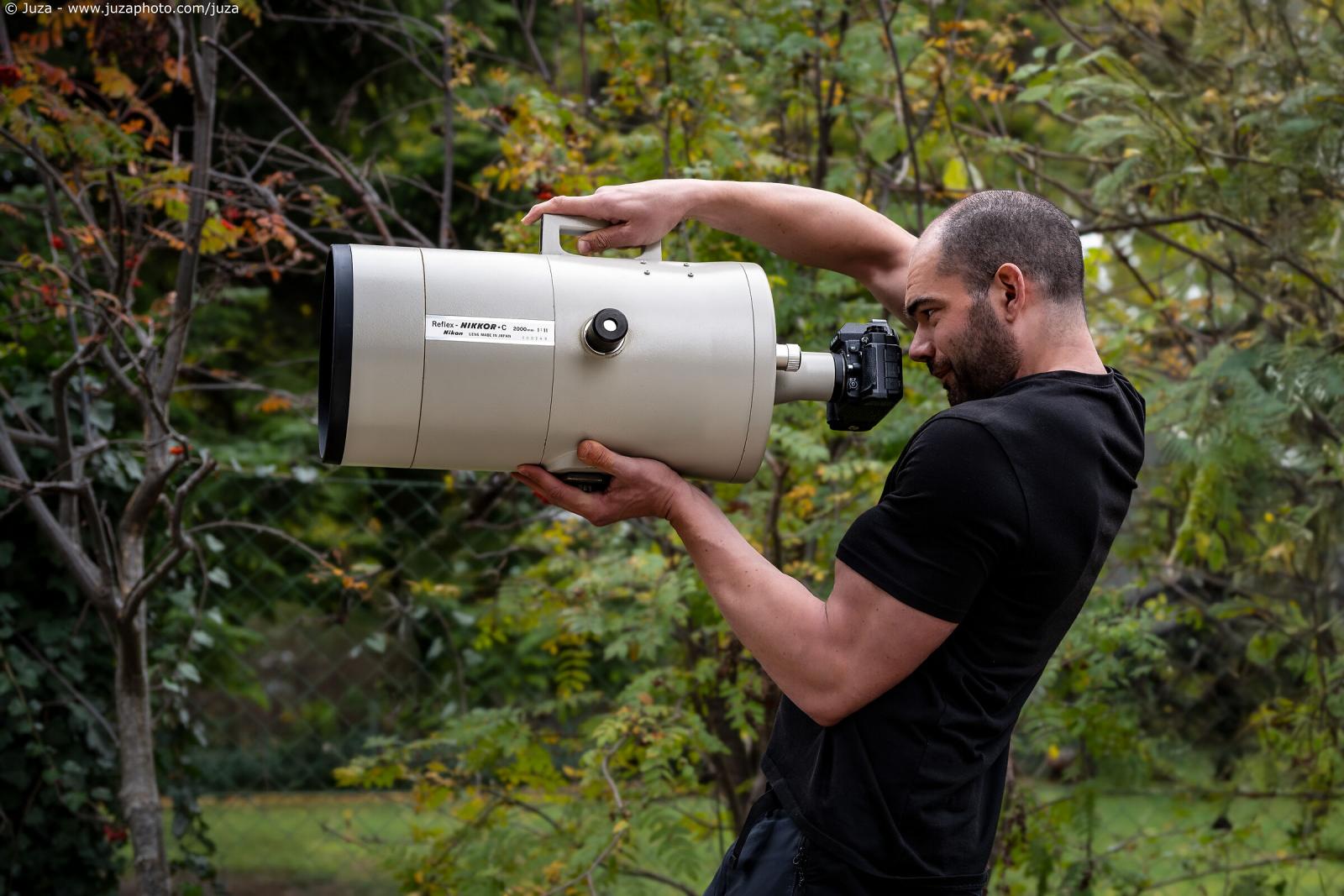
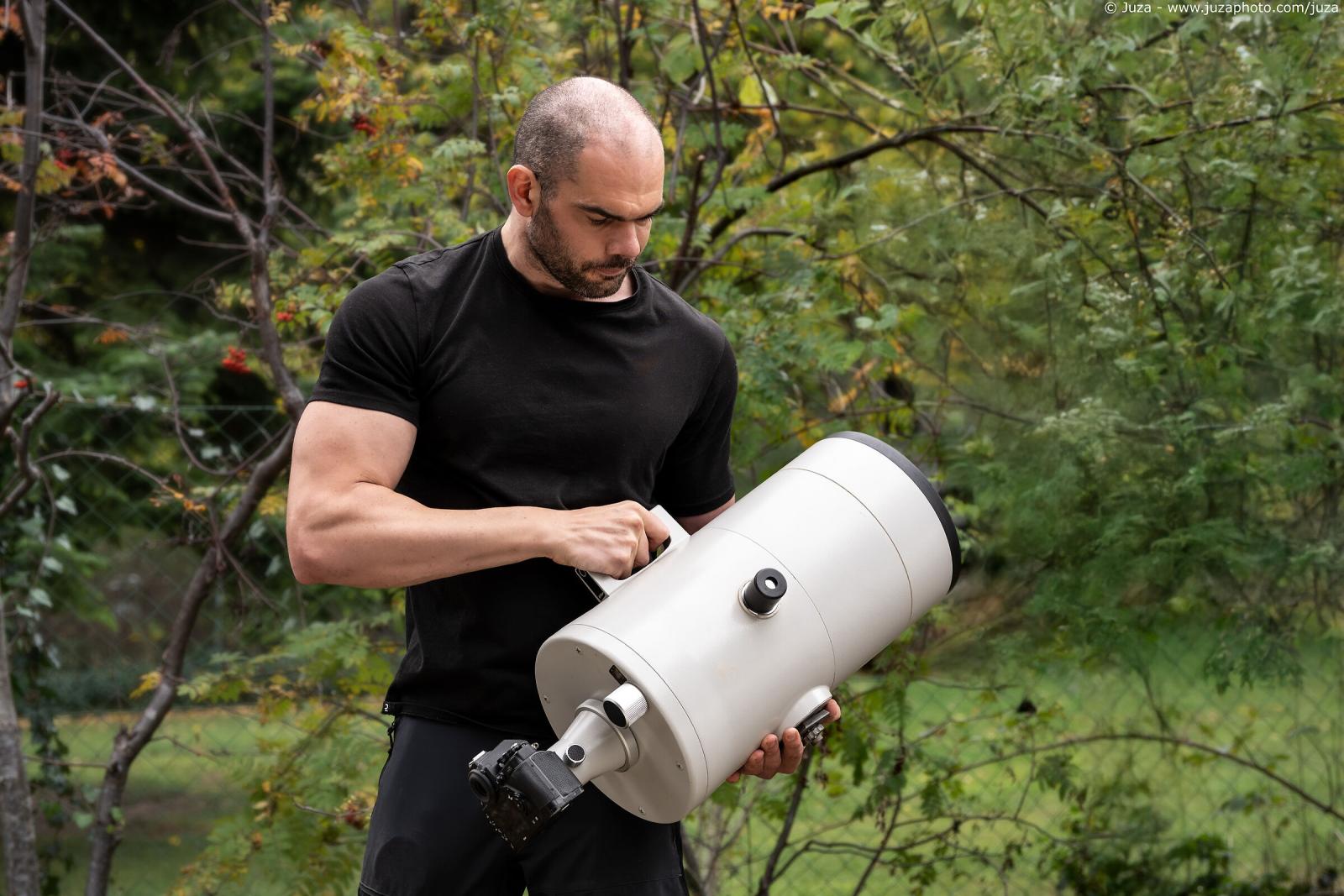
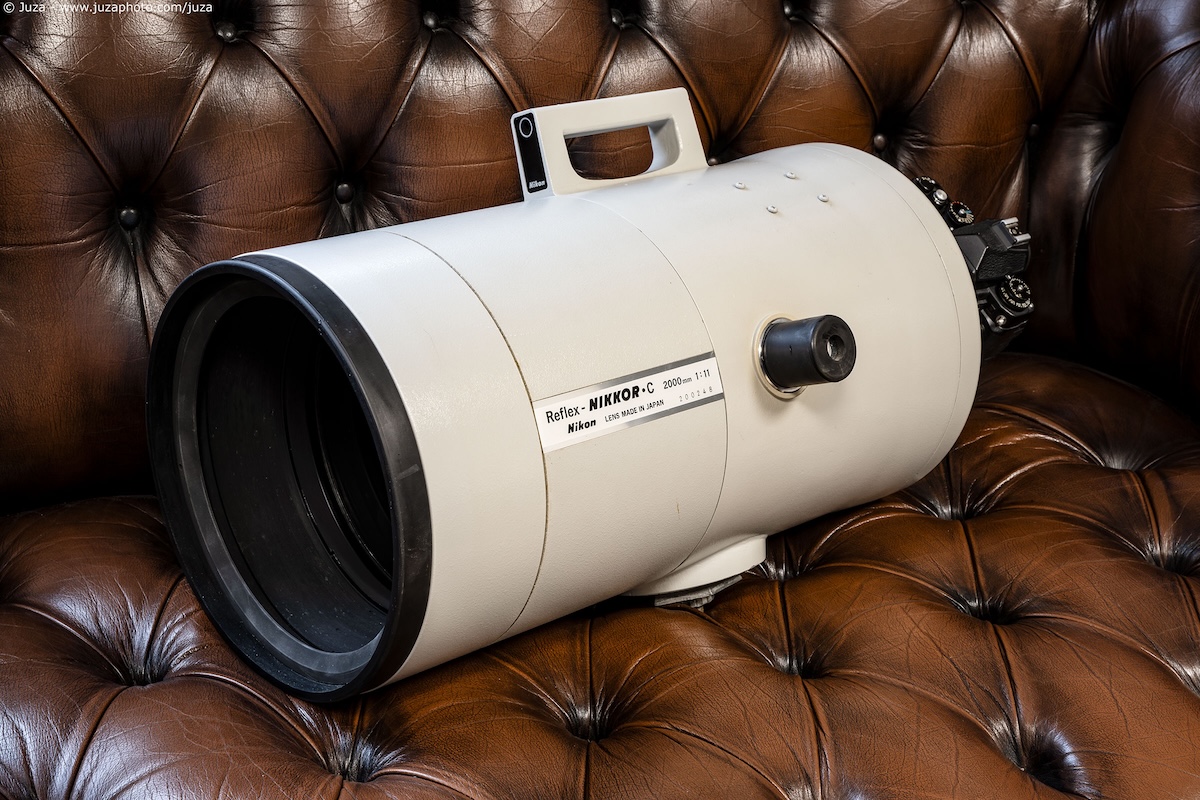
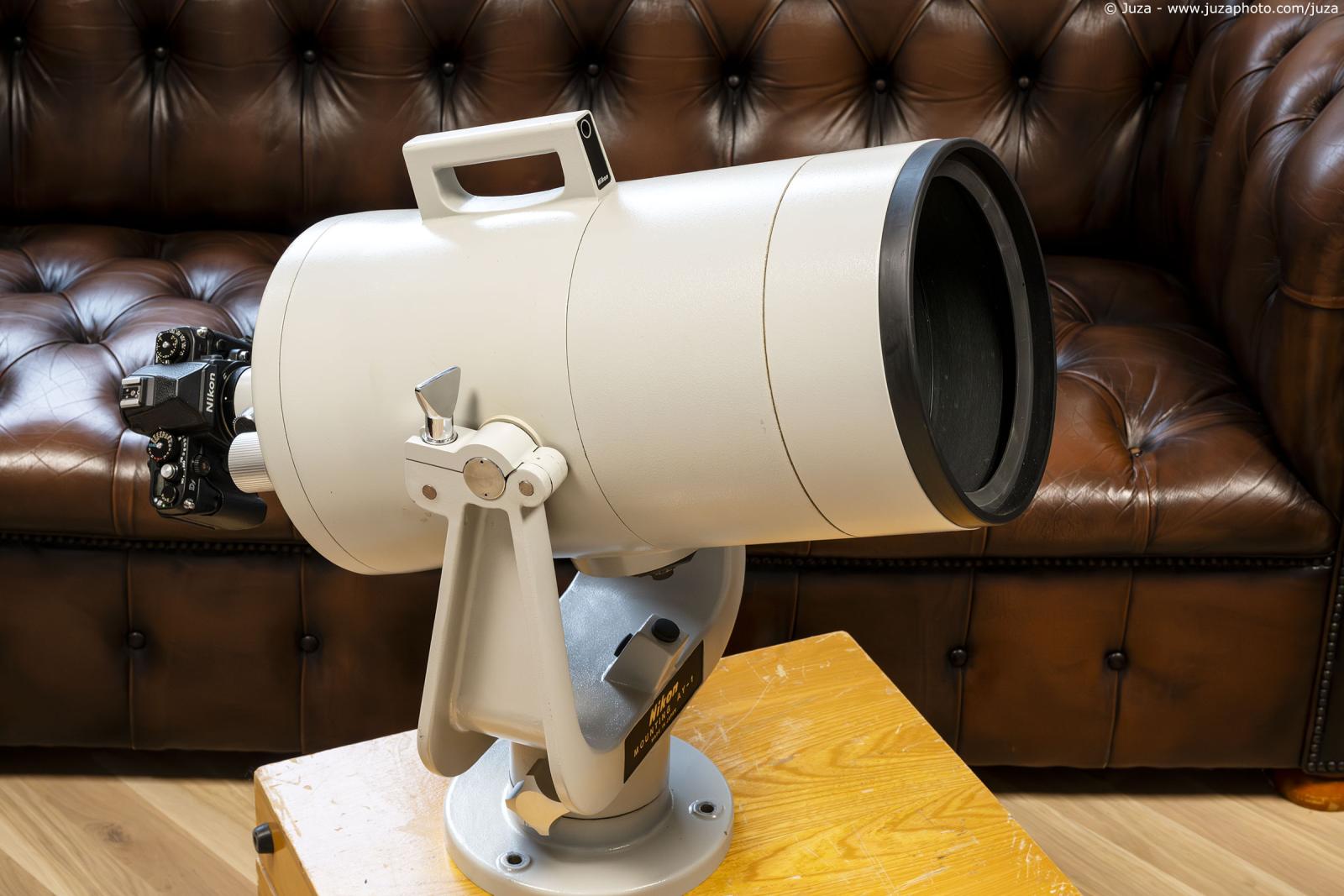
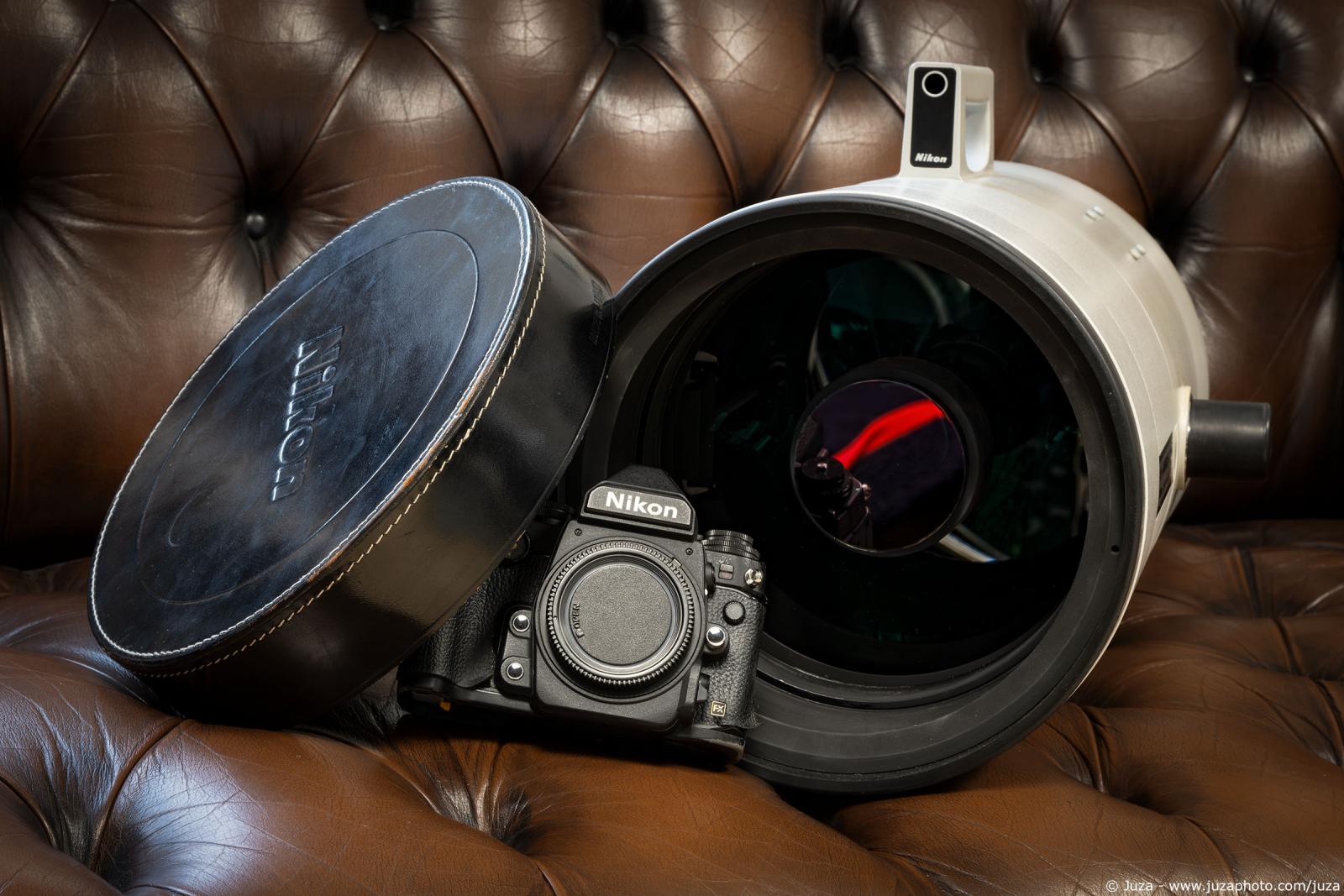
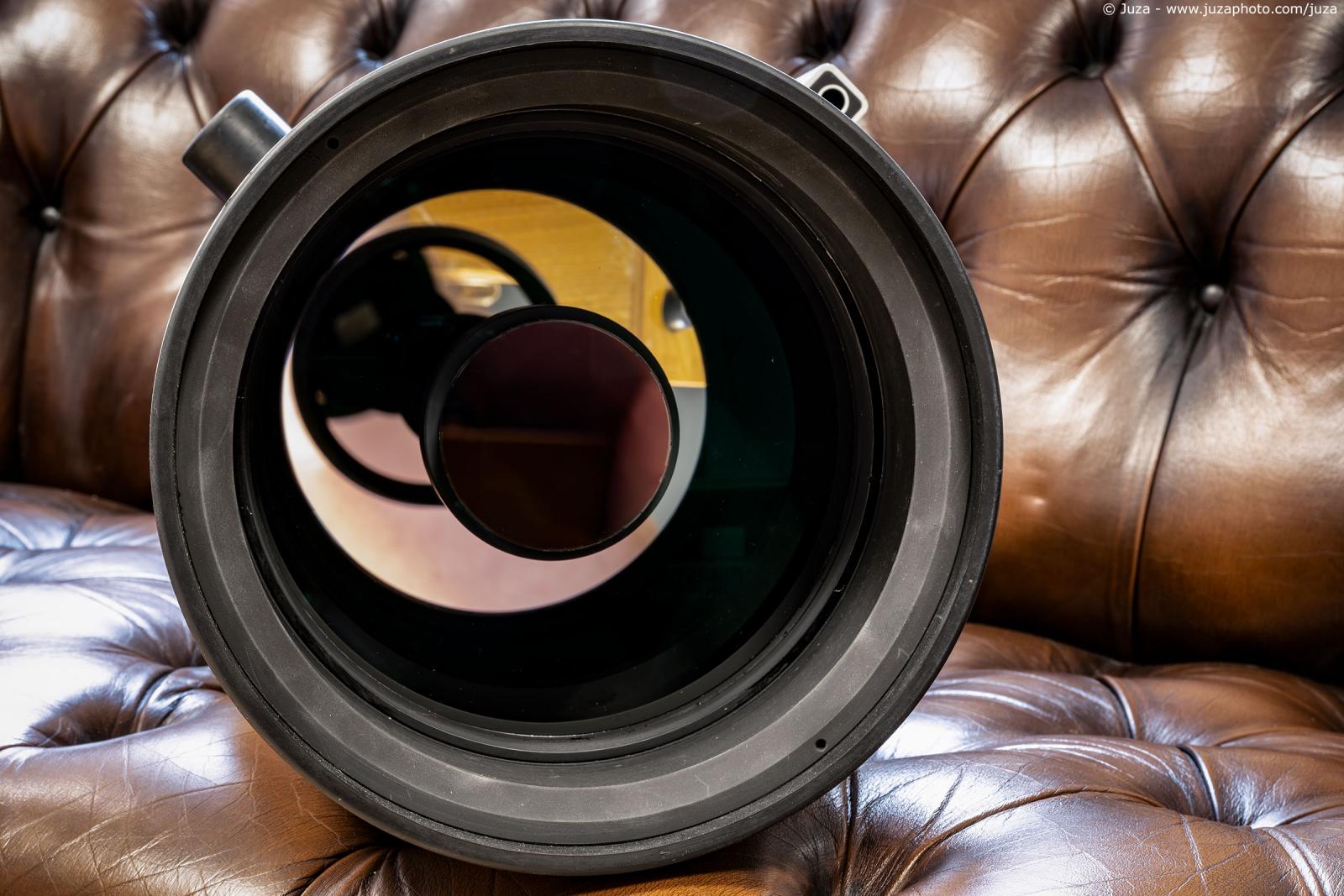
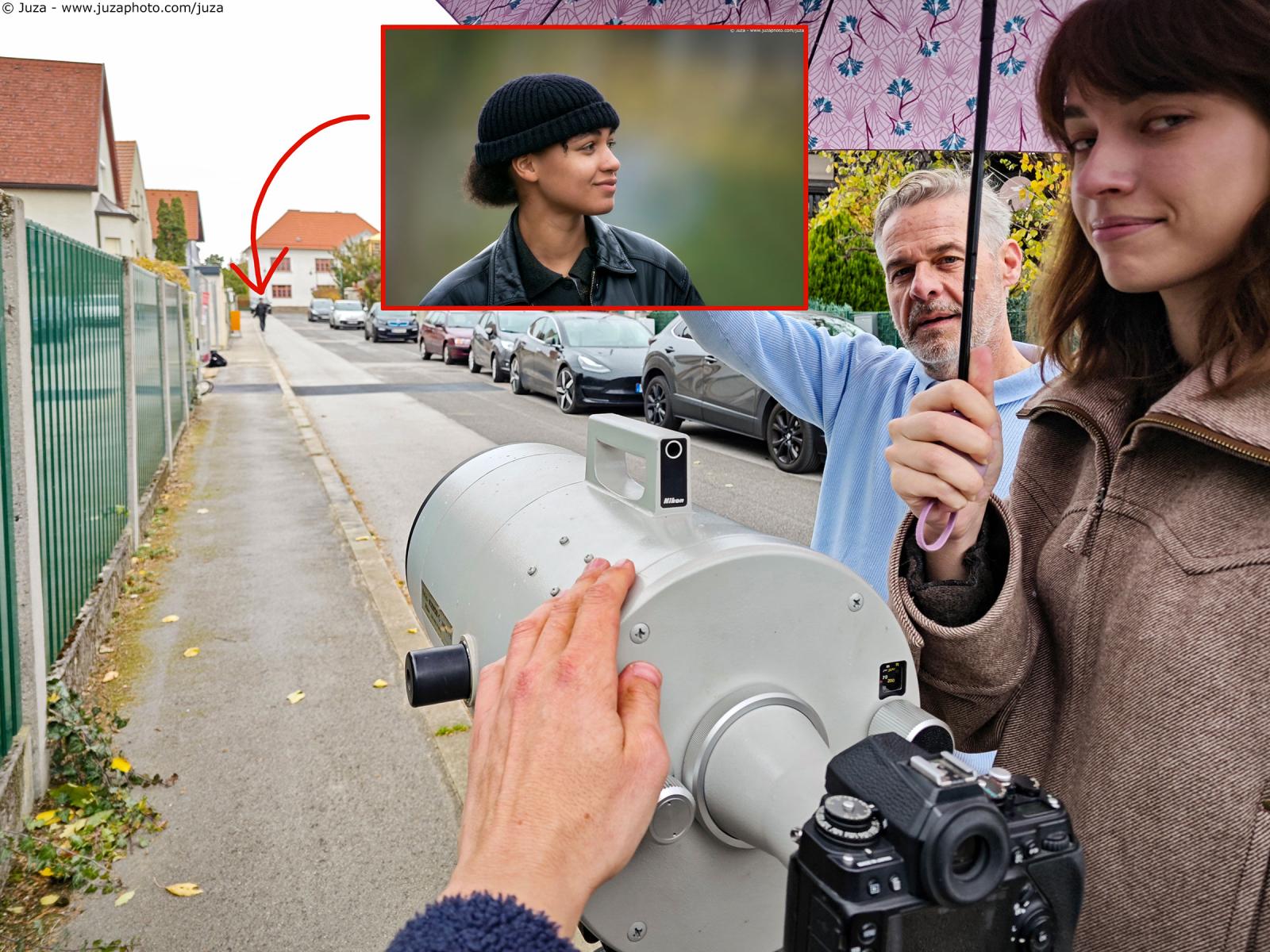
Jo Geier published a review with sample photos taken with the Nikon Reflex Nikkor 2000mm f/11 lens (see eBay listing of this lens). Here is a recap:
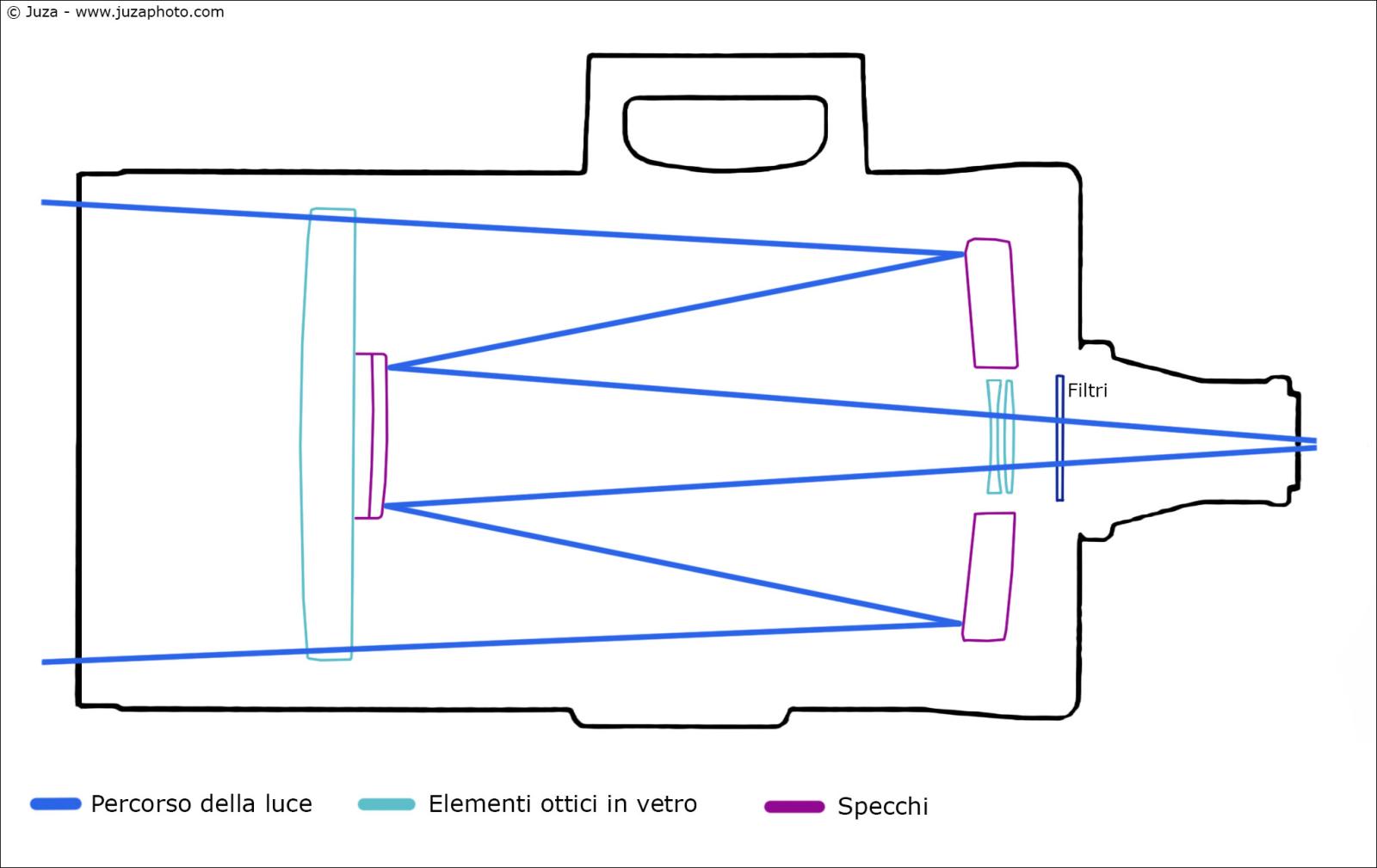
- Background & Design: Longest focal-length Nikon lens ever made (prototype shown 1968, production 1970-1978). Catadioptric (mirror/reflex) design with just 5 elements in 5 groups compresses 2000mm into a 60 cm physical length. Weighs 17.5 kg (25 kg with dedicated gimbal head). Fixed f/11 aperture; three built-in color filters (yellow, orange, red) plus neutral for B&W film work. The tested sample is the improved “Reflex-Nikkor-C” version (1973–1975) with better coatings.
- Build Quality: Machined from a solid block of metal, extremely robust, but no weather sealing. Huge 262 mm diameter × 594 mm length, white finish (early units were gray). Short fixed hood, rotatable camera mount, and massive tripod collar (almost 20 cm diameter) that needs a special AY-1 gimbal head.
- Handling & Ergonomics: Fully manual focus via side knob; minimum focus distance 18 m. Tiny 1.2° angle of view makes the built-in top grip/finder essential for locating subjects. No AF or stabilization – tripod (or very sturdy head) is mandatory. Total rig weight makes it cumbersome; best for static or very slow subjects.
- Optical Performance: Sharpness is impressive for a 55-year-old film-era mirror lens, though not up to modern standards on digital sensors. Characteristic catadioptric “donut” bokeh (ring-shaped highlights) is usually harsh but softens to almost creamy at extreme distances. Fixed f/11 is relatively slow, so high ISO is often needed. Atmospheric conditions (heat, humidity) can degrade results quickly.
- Real-World Use & Image Quality: Tested on a Nikon Df (one of the few modern bodies that works well). Sample portraits shot from ~70 m away show massive magnification and usable sharpness even at high ISO (3200–6400). Bokeh can look “watercolored” on uniform backgrounds. Built-in finder proved very helpful. Teleconverters (for 2800 mm or 4000 mm) were not tested due to the expected quality drop.
- Pros:
- Achieves extreme 2000 mm reach in a relatively compact package thanks to mirror design.
- Solid, over-engineered metal construction.
- Built-in finder and filters are genuinely useful.
- Historical rarity and “wow” factor – still commands €20,000–€40,000 today.
- Cons:
- Extremely heavy and bulky; impractical for most photographers.
- Fixed f/11, no stabilization, manual focus only.
- Distinctive (often unattractive) ring bokeh.
- Requires a massive tripod/head and is sensitive to vibration and atmospheric interference.
- Overall Verdict: A fascinating piece of 1970s optical engineering and Nikon history rather than a practical everyday lens. The author calls it a “passion project” that’s more about the experience and heritage than clinical performance. Great fun for the few who can actually use one, but definitely not for everyone.
- Conclusion:
“The Nikon Reflex 2000mm f/11 is the oldest lens and the longest focal length I have ever photographed with. It was a journey through time — starting from the idea of a Nikon engineer in the late 1960s, who could never have imagined that his creation would inspire my journey through Austria decades later.
From a technical and photographic perspective, the 2000mm is an extraordinary product for the era in which it was introduced, despite its inherent limitations. I often wondered who once owned this lens: What images were created with it? Have we seen them in books or magazines without ever knowing they were made with this lens? What remarkable experiences did its owners have? One thing is certain: you do not carry 25 kg of lens “just because” — anyone who did so must have been determined and under either significant professional pressure or driven by immense passion.”
- Sample photos:



Previous coverage of the Nikon Reflex Nikkor 2000mm f/11 lens can be found here.