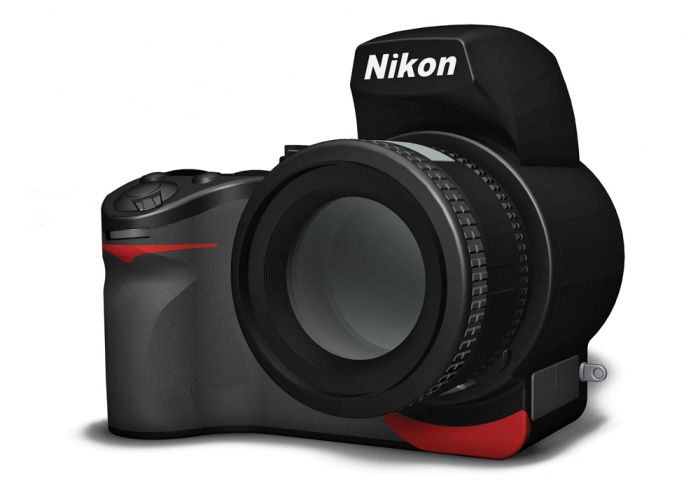
Nikon D5R concept camera

 Nikon D5R concept camera

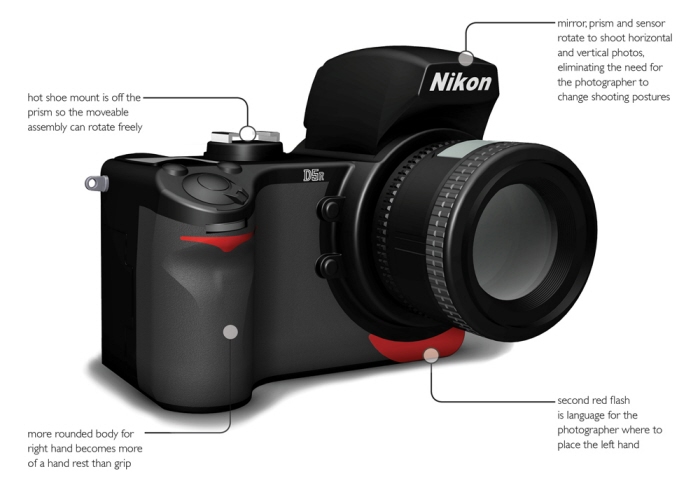
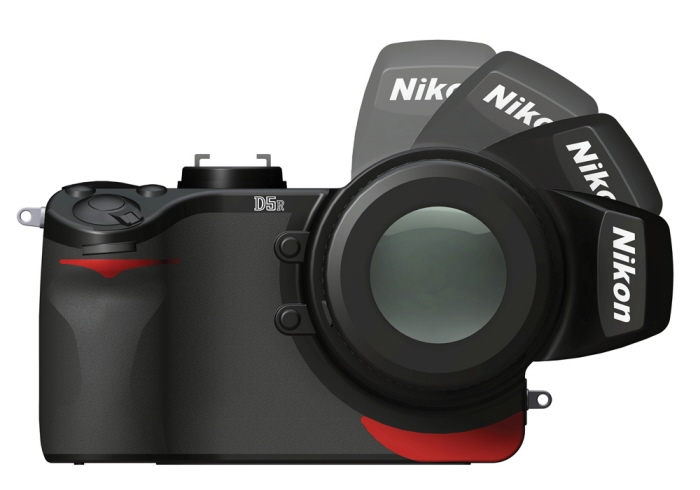
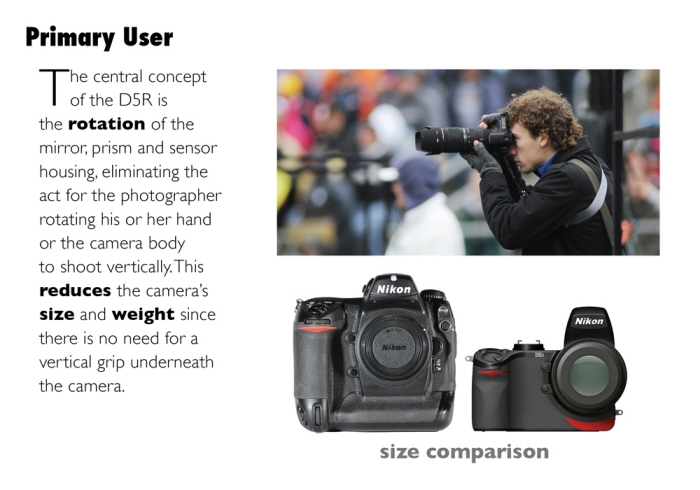
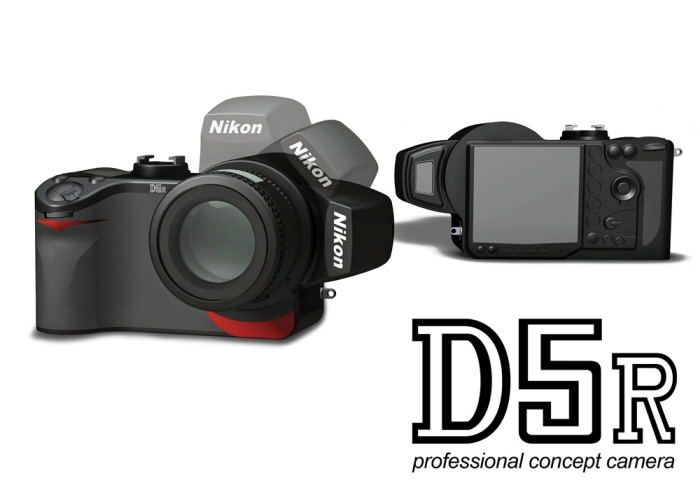
This Nikon D5R camera is a designer's concept created by Ned Mulka. The idea is to include the mirror, prism and sensor into a rotating element that can reduce the camera size and weight (see this slideshow for a detailed description of this concept).
Nikon D5R concept camera 1 300x210 Nikon D5R concept cameraNikon D5R concept camera 2 300x210 Nikon D5R concept cameraNikon D5R concept camera 3 300x210 Nikon D5R concept camera

 Nikon D5R concept camera

Please note that  this is only a concept camera that is not associated with Nikon Corporation in any way. As always, I am interested in your opinion and feedback.


Related posts:

  1. Nikon D800 design concept camera
  2. Nikon Coolpix 3M concept camera
  3. Nikon plans new concept camera as early as this year
  4. Another Nikon Coolpix concept
  5. More Nikon concept cameras
This entry was posted in Other Nikon stuff and tagged . Bookmark the permalink. Both comments and trackbacks are currently closed.

212 Comments

  1. Ben Frockwell
    Posted May 3, 2011 at 11:27 pm | Permalink

    I’m glad to see that several people in this thread have suggested a square sensor. I’ve been hoping for a Nikon square-sensor DSLR (perhaps 30×30 millimeters) for quite some time now. After reading this thread, it is quite clear that I am not the only photographer wanting that format. Are you listening, Nikon?

    • Hello World
      Posted May 6, 2011 at 1:20 pm | Permalink

      A square sensor would eliminate the pain-in-the-ass flash bracket that is used on DSLRs by wedding photographers. And it would similarly eliminate this scenario: an amateur photographer shooting vertically with a DSLR’s built-in flash and getting ugly side shadows.

  2. tere
    Posted May 3, 2011 at 11:42 pm | Permalink

    another vote for square sensor

    • The invisible man
      Posted May 5, 2011 at 8:50 am | Permalink

      I vote for a triangle sensor, I often do trips in Egypt.
      :)

  3. steve
    Posted May 4, 2011 at 12:10 am | Permalink

    A square sensor means no landscape or portrait as they become the same, so there’s no need for a mobile grip or whatever, so a square sensor isn’t really what the concept is about. Personally, I think a square sensor is an awful native format for pictures and will require cropping 90% of the time so no thank you. I still think 3:2 is ideal.

    • Mim
      Posted May 4, 2011 at 12:26 am | Permalink

      Size has never been an issue. Weight has.
      And dust
      And moving parts

      This may go well against the D3100, but a pro would never want this.

      • goose
        Posted May 4, 2011 at 1:06 am | Permalink

        hey hey, dave black shot great images with a nikon point and shoot (forgot what model) during a golf match/game and the compact camera done a great job, try looking at his website.

        • goose
          Posted May 4, 2011 at 1:11 am | Permalink

          oh fuck, i think i misread your comment lol, sorry lol

      • Posted May 4, 2011 at 5:17 am | Permalink

        I was going to say exactly the same thing; this is completely impractical for professional shooting.

        Not from the perspective of outright image quality, sure, but the reason people by D3′s over the smaller bodied full frame cameras is because they’re built to withstand anything and super fast to work with. This concept seems to be neither of those things…

        • Posted May 4, 2011 at 9:55 am | Permalink

          I disagree completely (and muchly with Steve, too). First, I think all the pro squares in the past (say 2 1/4 square) provides ample evidence that you’re wrong about “completely impractical” pro shooting, no?

          But more to Steve’s point, with a ‘full frame’ square (square on the long side dimension of an FX sensor), you could simply shift positions a tad to compose between portrait/landscape with no rotation change (faster generally, but especially advantageous on a ‘pod). Indeed, some shots might even allow for usable vert and horizontal 2:3 crops! Also, how pro shots (and a D5 would be a pro cam) do you use with no cropping whatsoever – none? I hardly ever do that and whether it’s to correct a horizon or to move something at the edge of the frame out or some other minor improvement, it’s as quick or as slow to do that as it is to take a 2:3 crop out of a square.

          I’d love to see Nikon take that direction (square), ‘though I see no need for this cam. Steve nailed it with “they become the same” – you just keep shooting with the cam in one position and all rectangular ‘shots’ are just post processing crops. The *only* downside that I see is a larger, pricier sensor, that BTW, takes far better advantage of your oh-so-expensive glass. My $.02.

          • jack
            Posted May 4, 2011 at 12:50 pm | Permalink

            I second— I would LOVE a square sensor (either full framer or DX)– takes full advantage of the image circle–would demand a larger mirrorbox–but I would appreciate the extra real estate there too. You can always adjust for crop in camera if you want (e.g. panasonic cameras or dx crop in d3x)

          • Geraldo
            Posted May 5, 2011 at 7:07 pm | Permalink

            BrettA makes an excellent point: most photographers are already cropping their photos anyway. In addition to various composition-related reasons for cropping, there is also the issue of prints. If you make a 5×7 or 8×10 print, it requires cropping from the 2:3 image. In fact, the only common print size that does not require cropping from a 2:3 image is 4×6. So you might as well start with square and crop from there. Hey, I just created a catchy slogan: Start with square and crop from there.

            • Posted May 6, 2011 at 1:42 am | Permalink

              Excellent, thanks…

              Start With Square and Crop From There!

    • dave
      Posted May 4, 2011 at 11:42 am | Permalink

      I didn’t see anything that said it was a square sensor design, and as you and others have pointed out, you don’t need to rotate with a square sensor. Remember this is a design concept, and not one of Nikon’s either, but it’s not necessarily a bad one. I see this more as something that would follow the D700/D800. I like the idea of being able to transition to portrait orientation while keeping my flash on top of the camera. If there is a market for mirrorless cameras that cost twice as much and do a lot less than a D3100, then I’m sure there would be a market for this thing, whether YOU like it or not.

      • Posted May 6, 2011 at 9:07 pm | Permalink

        Start With Square and Crop From There! :-)

    • hah
      Posted May 4, 2011 at 12:32 pm | Permalink

      3:2 is just a square sensor pre-cropped. square FTW, no stupid pre-crop.

  4. Nathan
    Posted May 4, 2011 at 12:11 am | Permalink

    It most definitely would be different.

  5. Brian
    Posted May 4, 2011 at 12:51 am | Permalink

    I would never buy a camera like this. Looks like it would break super easy! Doesn’t look like a professional camera.

    • hah
      Posted May 4, 2011 at 12:33 pm | Permalink

      compare to film cameras, digital cameras are made of glass.

      • Jeremy
        Posted May 5, 2011 at 11:02 am | Permalink

        So is the zoom ring on the 14-24mm f/2.8.

  6. goose
    Posted May 4, 2011 at 1:00 am | Permalink

    has designer ever went out to the field…?

    function button is even far beyond easy reach.

    grip looks mega fat. like a bar of soap, i think it’ll just slip slowly no matter what the material is.

    weight is the issue (just like what others said).

    shamanamanmaan…i think the heat is making me grumpy. 32 degrees.

    • Zograf
      Posted May 4, 2011 at 3:13 pm | Permalink

      Further, the thing looks like is a dSLR but doesn’t have the optical eyepiece to look into(optical viewfinder)? Looks like the designer is clueless about camera ergonomics and functionality…
      On the positive side, as an idea it is interesting.
      lol

      • James P Dehnert
        Posted May 4, 2011 at 8:12 pm | Permalink

        There is an optical eyepiece on the camera.

  7. M!
    Posted May 4, 2011 at 1:04 am | Permalink

    as many pointed out already the flaws of the design.

    ergonomically, it will not work for the professional photographers, who can switch from landscape to portrait without leaving the eye off the viewfinder.
    this design? your eye have to be pulled away from the hand and back. this is more of a nuisance than flipping your hand from horizontal to vertical grip.

    functionally, large lenses with tripod mounts will be useless and there will be no good way to rotate those with this rotating lens mount/mirror/sensor/viewfinder complex.

    mechanically, the seal will be a big issue.

    just make a square or circle sensor. :D

  8. Posted May 4, 2011 at 1:21 am | Permalink

    Why not try to see the advantages, that are quite profound? Sure, there will be disadvantages as well, but that´s what conceptcameras are for – ironing them out.
    Having said that, I would like to point out that my fingers doesn´t seen to be long enough to reach the fn/depth of field-buttons next to the lensattatchment, or whatever they are on this camera.
    Now ,continue to develop something that is good to use, and don´t worry about the traditionalists, they tend to disappear when the new innovations show their worth.

    Niclas

    • Ronan
      Posted May 4, 2011 at 1:15 pm | Permalink

      I’m guessing you have never shot professionally?

      • Mock Kenwell
        Posted May 4, 2011 at 9:12 pm | Permalink

        Cheap shot.

  9. Claude
    Posted May 4, 2011 at 2:02 am | Permalink

    Very interesting idea that should be investigated by Nikon or some other camera manufacturer. I have my doubts about it though. First photographers that have grown up with the traditional body would have to relearn how they worked – lots of things in different places and would need different fingers to operate – perhaps too much to do with the right hand. Battery space looks to be a problem as space for batteries does not appear to have been allowed for. I often need my right hand for something when holding my camera – I hold with my left but when letting go with my right hand I rotate my wrist so the camera rests vertically in my open hand. The balance would not be there with the proposed grip. The left wrist gets a little in the way for some rotations of the prism. The electronic connections would be a source of worry as they would take extra wear and tear. The Viewfinder/Prism protrudes and may be subject to more knocks.

  10. Posted May 4, 2011 at 2:16 am | Permalink

    I find it interesting when people put so much effort into something that noone is likely to ever want. Changing from landscape to portrait often needs to be done very quickly, and with a ‘traditional’ camera, this can be done almost instantly without even having to take your eye from the viewfinder. And when the action calls for it, you don’t even need to, or have time to, change your grip on the camera. It all looks flimsy and utterly breakable to me.

    • NisseHult
      Posted May 4, 2011 at 5:44 am | Permalink

      Seams like a typical school project.

  11. C.W.
    Posted May 4, 2011 at 2:16 am | Permalink

    A sophomoric design by someone who’s not a working photographer.

  12. Posted May 4, 2011 at 2:22 am | Permalink

    Some sketches by a University student who may have never used a camera. Would not be robust

  13. hq
    Posted May 4, 2011 at 2:36 am | Permalink

    Yes, another vote for a square sensor. Gets the most out of glass, in the expense of further travel for the shutter curtain (slower flash sync, slower max shutter speed, etc?).

    • hq
      Posted May 4, 2011 at 2:38 am | Permalink

      I like the idea of a circle sensor, too. Will be very useful if you need to rotate the image before you crop.

      • VJ
        Posted May 4, 2011 at 9:02 am | Permalink

        Apart from the construction problems (addressing mainly) of the circular sensor; you would still have to rotate images: the pixels are still horizontal lines…

  14. TommyDe
    Posted May 4, 2011 at 2:44 am | Permalink

    The disadvantages and possible issues (some of which are already above) of that design greatly surpass the advantages. I know, designing the whole camera has never been the purpose of it. Showing the idea of that rotating thingy was. Now we know it’s pointless. Thanks.

    It’s nothing personal, but that’s why designers should be kept away from (pro) SLR cameras and focus on point&shoots. Desigers, leave the designing to engineers. And isn’t a rotating sensor and lens a Nikon’s patent for an EVIL camera?

  15. Rich
    Posted May 4, 2011 at 2:52 am | Permalink

    Would never buy that; doesnt seem to have much functionality . Looks like a glorified point and shoot. I don’t mind the square format, I miss using my old Hasselblad that used a 6×6 back. This camera makes no sense though.

  16. kaze kaze
    Posted May 4, 2011 at 3:18 am | Permalink

    I’ll give them credit for the concept and effort (and courage to post it).
    Will I use it in real life? N-O but thanks for asking.
    Reading from other comments, many has voiced for the squard sensor… that’s a may be from me, one major thing is the extra load that is going to added on our already packed schudale (having to corp every single frame instead of “touch’n'go”).
    Haivng the hot-shoe “always on top” is not a problem for me, as I do “available light” most the time or if flashed is called-upon for duty i use an off-board one, just use command mode to triger if i’m under the roof or I can added a cord and “direct link” to flash as I did in one of my recent assignment. Else to get technical, the big-S has already release a flash with the rotating head, which indicated it was technically possible.
    Some had point out (and I’d like to 2nd it) that this is prob a design for C-camp or big-S, one of the primary reason I’d prefer a Nikon over the c-camp was the egonomics, having a design like this is just like one from c-camp line up (5D mkII 7D etc), which suggests relatively more “induced torque”, instead of of D700, D7000 etc.

  17. ElPadre
    Posted May 4, 2011 at 3:28 am | Permalink

    completely unusable. the only saving grace of a rotating solution would be that the flash would remain upright… well, hello, this solution doesn’t even have that. and good luck balancing a 70-200/2.8 af-s vr on a body like this.

    this design is good for one thing only: as proof that this designer doesn’t know the first thing about photography.

  18. Anonymus Maximus
    Posted May 4, 2011 at 3:42 am | Permalink

    Many unkind comments here.

    The basic idea and the resulting design is original.
    I am not sure if it would be usable in a pro range (many disadvantages have been mentioned above)
    Could it be used in a mid range consumer camera once the pixel and iso races are over and can no longer generate sales? Maybe.

    • Ronan
      Posted May 4, 2011 at 1:18 pm | Permalink

      Original? No, it’s been done before.

      Good for a school project? Absolutely, i hope he gets high marks.

      Do Pro’s want this? Absolutely NOT, i hope we never get that.

      Good to milk $$$ out of rich amateurs? Probably, they already spend $300 on P&S so…

  19. Posted May 4, 2011 at 4:15 am | Permalink

    I wonder how you would hold it when shooting portrait format? Your would probebly need to grasp the prism in your palm~

  20. phentex
    Posted May 4, 2011 at 5:26 am | Permalink

    wtf was the designer smoking ? Has he ever held a dslr with integrated/additional grip in portrait position ?

    Why couldn’t there simply be a square sensor the size of the large side of FX format, with a crop button to switch between portrait/landscape and that would would in the scope “blacken” (LCD overlay) the cropped area ? That way, one grip would be enough in all conditions, no turning the camera anymore, less buttons, less weight, smaller size.

    An other solution : mechanically rotate the FX sensor inside the camera.

  21. xjrx
    Posted May 4, 2011 at 5:26 am | Permalink

    neatly executed work, no substance, typical design-sandbox-stuff.
    i see no stealth-improvement, also no orthopedical wonders…

  22. Posted May 4, 2011 at 5:42 am | Permalink

    Great idea.

    Next,a hydrazine-powered* D4 with floats in the air,so you don’t have to hold it!

    *May vaporize your tripod.
    50 gallon external tank sold separately.
    Mileage may vary.

    • kaze kaze
      Posted May 4, 2011 at 10:54 am | Permalink

      +1
      while we are at it, the next SB flash will be powered by an external “anti-matter smasher generator” (before the reconstruction of Tesla “power tower”), full recycle time of 0.02 ms, up to 200 full power strobe per second, angle of view zoom range equal to 135 format of 4mm to 2200mm and GN of 18km (limited by curvity of the earth as Tesla finds out during the design of the power tower).

  23. Eebee
    Posted May 4, 2011 at 6:14 am | Permalink

    A brilliant display on how to overcomplicate a problem that doesn’t exist!!

    If you had to do it. Simplify. Rotate the sensor.

    • 2cents
      Posted May 4, 2011 at 3:20 pm | Permalink

      I agree and said that earlier in the discussion. Makes much more sense.

    • bean
      Posted May 4, 2011 at 5:21 pm | Permalink

      It is not just done by rotating the sensor. The mirror and the pentaprism need to be rotated to, otherwise you cannot see the whole image in the viewfinder. Just making the mirror bigger is no solution at all since there is not that much place for it because of the flange focal distance.

      For hand held shooting, just turning the whole camera and lens works really nice. But not on a tripod when using a lens withount a tripod collar at near distances (portrait, repro, macro).

      • phentex
        Posted May 5, 2011 at 10:06 am | Permalink

        so make the fucking mirror & prism to deal with a square picture instead of a 3:2 one. What’s the big deal ?

  24. Posted May 4, 2011 at 6:15 am | Permalink

    why camera designers cannot impressed us with impovement in dynamic range, color density and other image quality spheres instead of these silly & insane design concepts…

    • Ronan
      Posted May 4, 2011 at 1:19 pm | Permalink

      Because it’s the engineer’s job to do that, not the designers.

      LOL!

    • Mock Kenwell
      Posted May 4, 2011 at 9:18 pm | Permalink

      Yeah. Just think how silly and insane the first SLRs were when compared to their RF and bellows-based counterparts.

      Let’s all try not to act like a bunch of crotchety grandparents when we are presented with some different thinking. Frankly, I think Nikon design innovation could use a good kick in the ass.

  25. Fishnose
    Posted May 4, 2011 at 6:43 am | Permalink

    Pointless.
    I always, always have the grip on top when shooting in vertical mode. Would never occur to me to have my right hand squashed down under the camera. So this camera is unusable in vertical mode.
    I like Eebee’s idea – “rotate the sensor.” Smart!!
    Also, the last thing I need is a SMALLER camera. I use a battery grip on my D90 just to make the camera bigger – for my very big hands. And to put a hand strap on the side, which should be standard for all serious cameras.

    • Posted May 4, 2011 at 4:28 pm | Permalink

      Same here. My hands are just too big for the D90. The larger FX-Bodies are so much easier to handle than the DX-Ones!

  26. Posted May 4, 2011 at 7:34 am | Permalink

    Good toy but not great idea.

  27. Rob
    Posted May 4, 2011 at 8:37 am | Permalink

    People suggesting you simply rotate the sensor don’t seem to realize that would require the camera to have a larger, square mirror so that it has full coverage of the long dimension of the sensor in both landscape and portrait orientations. That being the case, you might as well just have a square sensor.

  28. Posted May 4, 2011 at 8:57 am | Permalink

    I like it!
    well done

  29. Stuart
    Posted May 4, 2011 at 9:13 am | Permalink

    The flash is off centre – shadows every time you use it?

  30. ATK
    Posted May 4, 2011 at 9:37 am | Permalink

    I am not buying it.
    there are more disadvantages than advantages.

    1. this design will never be super durable. you can’t hold the body with 1-2 kg lens by one hand.
    2. It seem to be very difficult and slow to switch from vertical to horizontal position.
    3. off center flash issue
    4. no place for big batteries

  31. Bullsnot
    Posted May 4, 2011 at 9:47 am | Permalink

    As Rob pointed out, the “square” sensor would require a much taller mirror to cover the vertical image plane. What would also be required for this is a much larger pentaprism and viewfinder. Imagine all of the data at the bottom of your viewfinder having a large black space between it and the bottom of the viewfinder image just to accomodate the “portrait” mode… not nice. They would end up having to project this information over top of the viewfinder image.

    There are many issues beyone the immediately obvious when talking “square sensors” for portrait mode.

    • Zen
      Posted May 4, 2011 at 12:43 pm | Permalink

      Why should I rotate the sensor if it is square format?

      • Bullsnot
        Posted May 6, 2011 at 10:16 am | Permalink

        No need to rotate a square sensor – that’s what this whole thing is about. I’m saying that using a square (non-rotating) sensor has its issues as well.

  32. WoutK89
    Posted May 4, 2011 at 9:49 am | Permalink

    No left side buttons to the screen = fail.

  33. Mikael
    Posted May 4, 2011 at 9:51 am | Permalink

    Nice work! :)

  34. Anu L
    Posted May 4, 2011 at 10:27 am | Permalink

    This looks like a design student’s work project (see original link). Why not?
    They have to show innovative thinking.

  35. D700guy
    Posted May 4, 2011 at 10:52 am | Permalink

    This camera due out in 2024

  36. broxibear
    Posted May 4, 2011 at 11:09 am | Permalink

    Photoradar running the information I posted here weeks ago about camera shortages http://www.photoradar.com/news/story/us-retailers-running-out-of-top-digital-cameras
    Although there was talk of limited power cuts across Japan during the summer and an agreed 15-25 % cut in usage the situation seems to have changed.
    “Japan’s Kyushu Electric Power may face power shortages of up to 25% this summer if it does not restart two of its nuclear reactors, local media reported this week
    Kyushu Electric plans to shut down its Sendai NPP’s 890MW No 1 reactor for scheduled maintenance this month, which will see the Fukuoka-based company lose at least 2.6GW of power generation capacity.
    Toshio Manabe, president of Kyushu Electric, said that unless the company restarts its Genkai NPP’s 559MW No 2 and 1.18GW No 3 reactors in Saga prefecture, the company could face a 20-25% power shortage this summer, according to a report by the Nihon Keizai Shimbun (Nikkei).”
    http://www.icis.com/heren/articles/2011/05/04/9456631/japans-kyushu-electric-may-face-25-power-shortage-in.html

    • broxibear
      Posted May 4, 2011 at 1:22 pm | Permalink

      canonrumors are reporting sources are telling them all Canon equipment including new products have been delayed due to the eartquake in Japan.
      Some models rumoured to be announced in 4th quarter 2011 are now more likely to be 2nd or 3rd quarter 2012.
      As I’ve said before I think Nikon have the same issues if not worse.

  37. Jaye
    Posted May 4, 2011 at 11:24 am | Permalink

    Impractical. Go back to the drawing board!

  38. tix
    Posted May 4, 2011 at 11:28 am | Permalink

    Why not just add a square sensor in the camera and press a button if you want portrait or landscape format.

  39. Posted May 4, 2011 at 11:36 am | Permalink

    Moving parts = dust :(

  40. FM-2 fan
    Posted May 4, 2011 at 11:57 am | Permalink

    The design of coolpix remains unmatched … simple, small, light-weight. For a full-size camera it becomes difficult here – you need to rotate the entire housing and mechanics of the mirror.

    Even if this has been done: the total system weight is the camera PLUS lens. The size is sometimes necessary to provide a proper grip. Remobing weight means to me: don’t ask for 1.4 but feel good having a 2.0 or 2.8 lens …

    Anyway: there are cameras being lighter than a D3X.

  41. Alex
    Posted May 4, 2011 at 12:14 pm | Permalink

    This would be very handy for people who find it difficult to rotate an entire camera. Bring out the D800 please!

  42. Jul's
    Posted May 4, 2011 at 12:25 pm | Permalink

    Definitely not… Awful…

  43. hah
    Posted May 4, 2011 at 12:35 pm | Permalink

    I would much rather have RF CLS straight from nikon to put pocketwizards out of business as they should be. talk about a middle man nobody wants/needs.

  44. imjohnsmith
    Posted May 4, 2011 at 1:50 pm | Permalink

    Ugly device.

  45. randini
    Posted May 4, 2011 at 3:42 pm | Permalink

    You guys crack me up. All this uproar over a university student’s senior project.

    I’m sure you can all rest easy in that Nikon isn’t taking this anywhere near as seriously as most of the posters above.

    • Ronan
      Posted May 4, 2011 at 7:40 pm | Permalink

      They are taking it as seriously as you posting your comment.

  46. FM-2 fan
    Posted May 4, 2011 at 3:49 pm | Permalink

    Seriously: if any of us would have problems to rotate a camera … then it might fit a need.

    One aspect of the rotation is however interesting: if the camera is rotated: why is the back-side screen not rotating the image? i.e. a larger screen and a setting to rotate automatically (i.e. horizon remains OK) or preset to 0 / 45 / 90 deg. No moving parts, but probably more useful than reading in columns instead of lines when rotating todays cameras

    • Posted May 4, 2011 at 4:35 pm | Permalink

      I’ve always wondered why this hasn’t been implented yet. Since they already have figured out how to set the image rotation while shooting, it shouldn’t be a big deal to use the same sensor for the display, no?

  47. AJ
    Posted May 4, 2011 at 6:09 pm | Permalink

    I’m impressed by the artwork and designer trying something different, but I don’t really see this as a professional solution – perhaps better implemented as a consumer camera?

    What happens in a fast moving situation when you need vertical and horizontal compositions of fleeting scenes? ( e.g. in the aerial photography that I do I frequently flip the camera between H and V positions – this needs to occur instantly). What would happen if you hit the shutter button and the moving section isn’t locked in place in H or V position?

    A further issue with the flash hotshoe is that the flash coverage doesn’t shift with the frame, so vertical shots would be a risk of inadequate flash coverage (dark at top and bottom), as the flash head is always in the horizontal position.

  48. Luncheon Ticket
    Posted May 4, 2011 at 6:42 pm | Permalink

    The intentions are good (a more compact and lighter professional camera body), but the final result is flawed. Why not make something like a digital FM3a with D3X (or D4?) internals? I mean, you could even make it more like the original F: a system camera with several vertical grip add-ons, interchangeable pentaprisms and light meters, etc. That would be the best of both worlds IMHO.

  49. Geoff
    Posted May 4, 2011 at 8:45 pm | Permalink

    Gimmick

  50. Posted May 4, 2011 at 9:40 pm | Permalink

    As a fully pro tool, I don’t see it.
    As a concept for an EVIL camera, now we’re talking!